

G20 Leaders: Who Leads the World’s Major Economies?
The G20 Leaders play an important role in discussions about the global economy, international trade, financial stability, development, energy, and other major international issues. The Group of Twenty brings together some of the world’s largest and most influential economies, making its leaders important figures in global politics and economic decision-making. However, the G20 is not a world government. Each leader remains responsible for their own country or institution, while the group provides a forum for cooperation and negotiation.
The G20 includes 19 countries along with the European Union and African Union. Together, its members account for roughly 85% of global GDP, more than 75% of international trade, and about two-thirds of the world’s population.
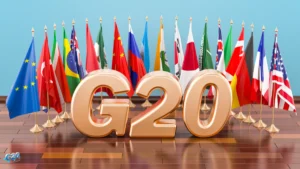
What Is the G20?
The Group of Twenty, commonly known as the G20, is an international forum focused mainly on economic and financial cooperation.
It was established in 1999 after financial instability highlighted the need for greater coordination among major economies. Initially, meetings primarily involved finance ministers and central bank governors.
The role of the G20 expanded significantly after the global financial crisis. In 2008, the forum was elevated to a leaders-level platform, allowing presidents, prime ministers, and other heads of government to participate directly in discussions about major global challenges.
Today, the G20 agenda extends beyond traditional financial issues. Discussions can include trade, sustainable development, climate and energy, health, food security, technology, employment, taxation, and international financial stability.
The group has no permanent secretariat or permanent staff structure. Instead, its presidency rotates among members, with the host country responsible for organizing the year’s agenda and meetings.
Who Are the G20 Leaders?
The term G20 Leaders refers to the heads of state or government who represent the member countries at the G20 Leaders’ Summit.
The exact title of each leader depends on the country’s political system. Some members are represented by presidents, while others are represented by prime ministers.
The European Union and African Union are also G20 members, so their institutional representatives participate in the group’s work alongside national leaders.
This makes the G20 different from a simple meeting of presidents. It brings together leaders from different political systems, regions, and economic backgrounds.
The participating governments may have very different national interests, but they meet because their economies and policies are closely connected.
Which Countries Are in the G20?
The G20 consists of 19 individual countries plus two regional bodies.
The 19 countries are:
Argentina, Australia, Brazil, Canada, China, France, Germany, India, Indonesia, Italy, Japan, Mexico, Russia, Saudi Arabia, South Africa, Türkiye, the United Kingdom, and the United States.
The two regional members are the European Union and the African Union. The African Union became a full member in 2023, strengthening Africa’s institutional representation within the group.
This membership gives the G20 a broad geographic reach.
It includes major economies from North America, South America, Europe, Asia, the Middle East, Africa, and Oceania. That diversity is one reason G20 discussions can involve competing priorities.
A policy that benefits one economy may create challenges for another. Reaching agreement therefore requires negotiation rather than simple majority rule.
Why Are G20 Leaders Important?
G20 leaders matter because the countries and regional bodies they represent have a large combined share of the world economy.
When these governments coordinate on economic issues, their decisions can influence international expectations about trade, investment, development, financial stability, and other areas.
The G20 also gives emerging economies a platform alongside established industrial powers.
This is particularly important because global economic power is not concentrated in one region. Countries in Asia, Latin America, Africa, Europe, North America, and the Middle East all have different economic interests and policy priorities.
The G20 provides a setting where those interests can be discussed at the highest political level.
What Do G20 Leaders Discuss?
The G20 agenda has expanded considerably since the group’s creation.
Economic and financial stability remain central topics, but discussions now cover a much wider range of global issues.
Global Economic Growth
Economic growth is a major concern for G20 governments.
Leaders discuss policies intended to support stronger and more sustainable economies while dealing with inflation, unemployment, debt, investment, and economic inequality.
Because the member economies are interconnected, economic problems in one major market can affect businesses and consumers elsewhere.
International Trade
Trade is another important area of G20 cooperation.
The member economies account for a large share of global trade, meaning their policies can influence supply chains, exporters, manufacturers, consumers, and investors around the world.
G20 discussions can address trade barriers, investment, supply-chain resilience, and the broader international trading system.
However, G20 members do not always agree on trade policy. Governments may prioritize domestic industries or national economic objectives even when those policies create disagreements with other members.
Financial Stability
The G20 also works on issues related to international financial stability.
Financial crises can spread quickly across borders, particularly when major economies and financial institutions are closely connected.
Coordination among major economies can therefore help governments discuss common risks and possible policy responses.
International financial institutions and organizations often contribute expertise to G20 discussions, although the G20 itself does not replace those institutions.
Climate and Energy
Climate change and energy security have become increasingly important parts of the G20 agenda.
The members have different energy systems and development needs. Some depend heavily on fossil fuels, while others are investing rapidly in renewable energy and other technologies.
This creates both opportunities and disagreements.
G20 discussions can bring these different perspectives together and encourage cooperation on energy transitions, investment, technology, and sustainable development.
Technology and Artificial Intelligence
Technology has also become a growing part of international economic discussions.
Artificial intelligence, digital services, data governance, cybersecurity, and technological innovation can affect productivity, employment, education, and economic competitiveness.
G20 members have increasingly discussed how emerging technologies can support development while addressing risks and governance challenges.
The group’s 2024 leaders’ declaration, for example, highlighted continued G20 work on artificial intelligence and innovation.
How the G20 Presidency Works
The G20 presidency rotates annually among member countries.
The country holding the presidency is responsible for organizing the year’s agenda, hosting meetings, and coordinating discussions among members.
The presidency is not the same as becoming the leader of the G20.
There is no single president or prime minister who governs the organization. Instead, the host country guides the process for its year while working with the other members.
The G20 also uses a troika system to provide continuity between presidencies. The troika consists of the current, previous, and next presidency.
This arrangement helps maintain continuity when the agenda moves from one host country to another.
The G20 Leaders’ Summit
The Leaders’ Summit is the highest-profile G20 meeting.
Heads of state and government come together to discuss major economic and international issues. Ministers, senior officials, experts, and representatives from international organizations also participate in other meetings throughout the year.
The summit is therefore the final stage of a much larger process.
Hundreds of meetings can take place through different G20 working groups, ministerial tracks, and engagement groups before leaders meet at the summit.
The result is intended to reflect negotiations that have taken place throughout the year rather than decisions made by leaders in isolation.
Why G20 Leaders Do Not Always Agree
The G20 brings together countries with very different political systems, economic models, strategic interests, and development levels.
That naturally creates disagreements.
One government may prioritize rapid economic growth, while another emphasizes climate policy. A developed economy may have different trade priorities from a developing economy. Countries can also disagree over geopolitical issues even when they cooperate on economic matters.
As a result, G20 declarations often require extensive negotiation.
The purpose of the forum is not to eliminate every disagreement. Instead, it provides a platform where major economies can identify areas of common interest and work toward practical cooperation.
G20 Leaders and the Global Economy
The influence of G20 leaders extends beyond the summit itself.
Their governments control large economies and represent enormous consumer markets, financial systems, industrial bases, and trade networks.
When leaders announce a common direction, investors, businesses, governments, and international organizations pay attention.
However, G20 statements should not be confused with automatically binding international law.
The G20 is an informal forum. Its influence comes largely from political coordination, economic weight, shared commitments, and the ability of member governments to implement policies domestically.
This distinction is important when evaluating claims about what G20 leaders have actually decided.
A Changing G20
The G20 has changed significantly since its creation.
The inclusion of the African Union as a full member strengthened the representation of the African continent in the forum. The group has also expanded its agenda beyond financial crisis management into development, climate, health, digital technology, energy, and other global challenges.
The wider agenda reflects a simple reality: economic issues are connected to many other international problems.
A disruption in energy supplies can affect inflation. Climate events can affect food prices and economic growth. Technology can transform employment and trade. Political instability can disrupt investment and supply chains.
For this reason, understanding G20 Leaders requires looking beyond the annual summit and considering the wider international system in which these governments operate.
G20 Leaders by Major Regions
The G20 brings together leaders from economies with very different political systems and regional priorities. Looking at its members by region makes it easier to understand why the group covers such a wide range of economic and geopolitical interests.
The countries represented in the G20 include some of the world’s largest economies as well as important emerging markets. Their leaders approach issues such as trade, energy, investment, development, and international security from different perspectives.
North American G20 Leaders
United States
The United States is represented at the G20 by its president, Donald J. Trump.
As the world’s largest economy by nominal GDP and a major financial, technological, and military power, U.S. policy has a significant effect on international markets and global economic discussions.
At G20 meetings, the United States is particularly important in conversations involving trade, financial stability, technology, energy, international security, and relations among major economies.
The American president also has to balance international commitments with domestic political priorities, meaning that U.S. participation in G20 discussions can reflect both global and national economic objectives.
Canada
Canada is another major North American G20 economy.
Its participation is closely connected to international trade, energy, natural resources, financial services, and its economic relationship with the United States.
Canada’s position also gives it an important role in discussions involving sustainable development and cooperation among advanced economies.
Mexico
Mexico provides an important connection between North America and Latin America.
Its economy is deeply integrated with the United States and Canada through regional trade relationships. As a result, Mexican leadership can have an impact on manufacturing, supply chains, migration, energy, and cross-border investment.
Mexico also gives the G20 a perspective from one of Latin America’s largest economies.
European G20 Leaders
Europe has several G20 members, including the United Kingdom, France, Germany, and Italy. The European Union itself is also a G20 member.
United Kingdom
The United Kingdom participates in the G20 as one of the world’s major advanced economies.
Its leadership brings perspectives on financial markets, international trade, investment, technology, energy, and global security.
London’s position as a major international financial center also gives the UK a particularly important connection to global financial discussions.
Germany
Germany is one of Europe’s largest economies and an important manufacturing and industrial power.
German leadership is closely watched during discussions involving European economic conditions, trade, energy, industrial policy, and investment.
Germany’s position within the European Union also means that its national priorities frequently interact with broader European policy.
France
France is another major European G20 member.
Its leadership combines economic priorities with a strong focus on diplomacy, defense, energy, and international relations.
France’s permanent seat on the UN Security Council also gives its government a distinctive role in international affairs beyond its economic weight.
Italy
Italy is a major European economy and an established G20 member.
Its priorities can include economic growth, trade, energy, migration, development, and cooperation across the Mediterranean.
Italy also plays an important role in discussions involving European and Mediterranean interests.
Asian G20 Leaders
Asia contains several of the G20’s most economically and strategically important members.
China, India, Japan, Indonesia, and other Asian members represent very different economic models and political systems.
China
China is represented by President Xi Jinping.
China’s enormous manufacturing base, international trade network, population, and growing technological capabilities give its leadership major influence over global economic discussions.
China is also one of the most important participants in debates about supply chains, technology, energy, investment, and international trade.
India
India is represented by Prime Minister Narendra Modi.
India’s rapidly expanding economy and large population give it significant importance within the G20.
Its leadership often emphasizes economic development, digital technology, infrastructure, energy, food security, and the interests of developing economies.
India’s participation also provides an important bridge between advanced economies and the broader developing world.
Japan
Japan is represented by its prime minister.
As one of the world’s most advanced economies, Japan brings expertise and interests related to technology, manufacturing, finance, trade, and Indo-Pacific security.
Its close relationship with other major economies also makes Japanese leadership important in regional economic and strategic discussions.
Indonesia
Indonesia is Southeast Asia’s largest economy and one of the world’s most populous countries.
Its participation gives Southeast Asia a strong voice within the G20.
Indonesian priorities can include economic development, infrastructure, energy, trade, food security, and sustainable growth.
Middle Eastern G20 Leaders
Saudi Arabia
Saudi Arabia is the only Middle Eastern country that is a permanent G20 member.
Its importance comes partly from its major role in global energy markets. Oil production and energy policy give Saudi leadership an influence that extends well beyond the region.
The country is also involved in investment, infrastructure, regional diplomacy, and economic diversification.
Its Vision 2030 program has increased international attention on Saudi Arabia’s efforts to reduce dependence on oil and expand other sectors of the economy.
Latin American G20 Leaders
Brazil
Brazil is Latin America’s largest economy and one of the G20’s most influential emerging-market members.
Its leadership brings major issues such as agriculture, energy, climate policy, development, trade, and the Amazon rainforest into global discussions.
Brazil also plays an important diplomatic role in South America and among developing economies.
Argentina
Argentina is another important Latin American G20 member.
Its participation is closely linked to agriculture, energy, inflation, economic reform, international finance, and regional trade.
Because Argentina has experienced major economic challenges, its leadership can bring the perspective of a country dealing directly with questions of debt, inflation, investment, and economic restructuring.
African G20 Leaders
South Africa
South Africa is the G20’s long-standing African country member.
Its economy, regional influence, and diplomatic relationships make it an important representative of African interests in the forum.
South African leadership often brings issues such as development, inequality, energy, trade, infrastructure, and the needs of developing economies into G20 discussions.
The African Union’s full membership has further strengthened Africa’s representation within the G20.
G20 Leaders and Emerging Economies
One of the G20’s most important characteristics is the combination of advanced and emerging economies.
Countries such as the United States, Germany, Japan, France, and the United Kingdom have highly developed economies. At the same time, China, India, Brazil, Indonesia, South Africa, Argentina, Mexico, and Türkiye provide major emerging-market perspectives.
This diversity makes the G20 more representative of the global economy than a forum limited to advanced industrial economies.
It also makes negotiations more complicated.
Economic priorities can differ sharply between countries at different stages of development. A developing economy may prioritize infrastructure and employment, while an advanced economy may focus more heavily on financial regulation or technological standards.
The G20 provides a place where these priorities can be discussed together.
G20 Leaders and Global Economic Cooperation
G20 leaders do not create a single global economic policy.
Instead, they coordinate where common interests exist.
Their discussions can encourage cooperation on issues such as financial stability, taxation, development, investment, energy, trade, and sustainable growth.
The practical impact depends on what individual governments do after the summit.
A declaration can establish political commitments, but implementation generally takes place through national governments, international institutions, and other organizations.
This is why readers should distinguish between a G20 announcement and a legally binding international agreement.
Why the G20 Matters to Ordinary People
G20 discussions may sound distant from everyday life, but many of the issues discussed by its members can affect households and businesses.
Trade policies can influence product prices and supply chains. Energy decisions can affect fuel costs. Economic policies can influence investment and employment. Financial instability can affect markets and savings.
Climate and energy policies can also influence long-term costs and investment decisions.
The connection is not always immediate, but decisions made by major economies can gradually affect the wider global economy.
G20 Leaders and Global Politics
Although the G20 is primarily an economic forum, politics cannot be separated completely from economics.
Trade relationships, wars, sanctions, energy security, diplomatic tensions, and strategic competition can all affect economic cooperation.
G20 leaders may therefore discuss economic issues while operating within a much broader geopolitical environment.
At the same time, the group provides an opportunity for governments with significant disagreements to continue communicating.
That makes the G20 valuable even when members cannot reach agreement on every major international issue.
The G20 Is Not a World Government
A common misunderstanding is that the G20 can directly govern the world’s economies.
It cannot.
The G20 is a forum for cooperation among member governments. It does not replace national governments, parliaments, courts, central banks, or international organizations.
Each member remains responsible for its own domestic policies.
The G20’s influence comes from the economic weight of its members and their ability to coordinate positions on major international issues.
Understanding this distinction is important when evaluating headlines about G20 decisions.
Keeping G20 Leader Information Current
Because national governments change, information about G20 leaders can quickly become outdated.
Elections, resignations, party leadership changes, appointments, and other political events can change who represents a country at international meetings.
For that reason, a reliable G20 guide should verify current leaders through official government sources before publication or whenever the article is updated.
This is especially important for an article using the word “leaders,” because a person who attended a previous summit may no longer hold the same office at a later meeting.
For NexaVice, this article should be treated as a supporting resource that can be updated when major leadership changes occur while the broader Current World Leaders pillar provides the wider political context.
How the G20 Presidency Works
The G20 does not have a permanent president who leads the organization throughout the year. Instead, the presidency rotates among member countries.
The country holding the presidency sets priorities for its term, organizes meetings, and works with other members to move discussions forward. This gives each host an opportunity to highlight issues that are important to its economy and region.
The rotating system also helps distribute responsibility among members.
A troika system provides additional continuity. It connects the previous, current, and upcoming presidencies so that major discussions do not simply end when a new host takes over.
What Happens at the G20 Leaders’ Summit?
The G20 Leaders’ Summit is the highest-level meeting of the group.
Presidents, prime ministers, and other heads of government come together to discuss major international economic and political challenges. However, the summit is only one part of a much larger process.
Throughout the year, ministers, government officials, experts, working groups, and engagement groups hold meetings on specific subjects.
These discussions help prepare the issues that eventually reach the leaders.
The final summit therefore represents the culmination of months of diplomatic negotiations rather than a single meeting where every decision is made immediately.
How Do G20 Leaders Make Decisions?
The G20 generally works through discussion, negotiation, and consensus.
Members have different economic interests and political priorities, so reaching common language can take considerable diplomatic effort.
A final declaration may identify shared commitments or common goals, but implementation normally depends on individual governments.
This is one of the most important facts to understand about the G20.
A G20 commitment does not automatically become domestic law in every member country. Governments must use their own legal and political systems to implement policies.
Why G20 Leaders Matter for Global Development
The G20 also plays an important role in discussions about development.
Many developing countries face challenges involving infrastructure, debt, food security, energy access, employment, and investment.
Because the G20 includes major emerging economies as well as advanced economies, it provides a platform for discussing these challenges at a high political level.
The inclusion of the African Union as a permanent member has also strengthened Africa’s representation in the forum.
This broader membership allows G20 discussions to include perspectives from countries and regions with different development needs.
G20 Leaders and Global Crises
The importance of G20 cooperation often becomes more visible during periods of global instability.
Financial crises, pandemics, energy disruptions, supply-chain problems, and geopolitical tensions can cross national borders quickly.
No single country can always address these problems alone.
The G20 provides a channel through which major economies can exchange information, coordinate responses, and discuss policies that may reduce international economic risks.
Its ability to respond effectively depends on the willingness of members to cooperate, particularly when their political interests conflict.
How to Verify G20 Leaders
Because political leadership changes frequently, readers should verify the identity of a G20 representative before relying on an online list.
The best starting point is the official website of the relevant national government.
Presidential offices, prime ministerial offices, foreign ministries, and national government portals can provide primary information about current officeholders.
For information about the G20 itself, the official G20 website is a stronger source than an undated third-party list.
Reputable international news organizations can then be used to provide additional context about elections, leadership transitions, diplomatic disputes, or major policy changes.
Using multiple reliable sources is especially important when a leadership change has happened recently.
Frequently Asked Questions
Who are the G20 Leaders?
G20 leaders are the heads of state or government who represent the G20’s member countries and regional organizations at the leaders’ level. Their official titles vary according to each member’s political system.
How many members are in the G20?
The G20 consists of 19 individual countries plus the European Union and African Union. This gives the forum representation across major regions and economic systems.
Is the G20 a world government?
No. The G20 is an international forum for economic and policy cooperation. It does not replace national governments or create a single global government.
What does the G20 Leaders’ Summit do?
The summit brings national leaders together to discuss major global economic and international issues. It follows months of meetings involving ministers, officials, experts, and working groups.
Who controls the G20?
No single country permanently controls the G20. Its presidency rotates among members, and the host country organizes the agenda and meetings during its term.
Why is the G20 important?
The G20 is important because its members represent a very large share of global economic activity, trade, and population. Their cooperation can influence international economic discussions and policy coordination.
Can G20 decisions become law?
Not automatically. G20 agreements and declarations generally represent political commitments. Individual governments must use their own legal and political systems to implement policies.
Why does the G20 include the African Union?
The African Union became a permanent G20 member in 2023. Its inclusion gives the African continent stronger institutional representation within the forum.
Conclusion
The G20 Leaders represent some of the most economically and politically significant governments and institutions in the world.
Their meetings cover much more than financial markets. Trade, investment, development, energy, climate policy, technology, financial stability, and global economic risks can all become part of the discussion.
Yet the G20 should not be misunderstood as a world government.
Its members remain independent governments and institutions with their own laws, political systems, and national interests. The strength of the G20 comes from bringing these different perspectives together in one forum.
For readers following global politics, the most useful approach is to look beyond the names of leaders and understand the countries, institutions, and economic interests they represent.
Because leadership changes over time, G20 information must also be kept current. Elections, resignations, appointments, and political transitions can change who represents a country at future meetings.
For NexaVice, this article serves as a supporting resource within the broader Global Leaders topic. Readers who want a wider overview of presidents, prime ministers, and other national leaders can continue to the main Current World Leaders pillar page.
- G20 Official Website — Use in the introduction or “What Is the G20?” section for the group’s official structure, membership, and purpose. G20 Official Website
- G20 Members — Use in the “Which Countries Are in the G20?” section to support the current membership information. G20 Members
- G20 Presidency — Use in the “How the G20 Presidency Works” section to explain the rotating presidency and its role. G20 Presidency
- G20 Leaders’ Summit — Use in the “What Happens at the G20 Leaders’ Summit?” section. G20 Leaders’ Summit
- G20 Rio de Janeiro Leaders’ Declaration — Use when discussing G20 commitments, AI, development, and African Union membership. G20 Rio de Janeiro Leaders’ Declaration
- G20 Trade and Investment Working Group — Useful for the sections covering global trade, investment, and economic cooperation. G20 Trade and Investment Working Group
- United Nations — Use in the “G20 Leaders and Global Politics” or “Trusted Sources” section for broader international institutional context. United Nations
- UN Main Bodies — Useful when explaining the difference between the G20 and formal international organizations such as the United Nations. UN Main Bodies


[…] partner with policy bodies to analyze diplomatic outcomes from major international summits like the G20 Leaders Agenda. Aligning higher education and academic research with global affairs ensures that scholarship […]
[…] media savvy. Much like major policy disputes debated by participants at gatherings similar to the G20 leaders summits, courtroom battles require strategic foresight. Blanche navigates these high-stakes […]