
What is Athletics? Definition, History, and Core Disciplines Explained
When you ask what is Athletics, you are looking at the oldest and most fundamental form of human physical competition. Athletics is a unified collection of sporting events that tests an athlete’s basic natural movements through running, jumping, throwing, and walking. It forms the absolute foundation of the modern Olympic Games and brings together athletes from every corner of the globe. Understanding what is Athletics requires a close look at how simple human movements convert into structured world-class competitions.
Understanding the Core Definition and Scope of Athletics
Athletics represents a wide array of individual and team-oriented physical contests governed internationally by World Athletics. At its heart, the sport measures raw speed, endurance, explosive power, and precise coordination. Unlike team-based sports that rely heavily on complex tactical equipment or scoring systems, athletics focuses directly on measurable human physical limits.
The term itself holds slightly different meanings depending on geographical regions and cultural contexts. In North America, people often use the word broadly to describe all physical sports and general exercise routines. However, across Europe, the United Kingdom, and the global sporting community, the word strictly describes track and field events, road running, cross-country running, and race walking.
Every event within this sport operates on strict numerical measurements of time, height, or distance. Competitors do not rely on subjective judges to score their performance in most track and field contests. Instead, a digital clock or a measuring tape determines the clear winner. This objective structure makes the sport uniquely direct, fair, and universally understood across different cultures and languages.
The core discipline relies on natural biomechanics developed over thousands of years. Humans evolved to run long distances, sprint away from danger, jump over obstacles, and throw objects with force. Athletics organizes these basic survival traits into standardized competitive disciplines with unified international rules and precise measurements.

The Historical Origin and Evolution of Athletics
The roots of organized running, jumping, and throwing trace back to ancient civilizations that recognized the vital importance of physical strength and agility. Early humans engaged in these activities for survival, military readiness, and community celebration before converting them into organized contests.
Ancient Greek Traditions and the Early Olympics
The formal history of the sport began in ancient Greece, where organized athletic festivals played a central role in religious and cultural life. The first recorded Ancient Olympic Games took place in 776 BC in Olympia, Greece. The very first recorded event was a simple footrace known as the stade, which covered roughly 190 meters across a flat dirt track.
Over time, the ancient Greeks expanded the competition to include longer running races, jumping contests, and heavy throwing events like the discus and javelin. They viewed athletic perfection as a deep harmony between mind, body, and spiritual duty. Victorious athletes received olive wreaths and gained massive fame throughout their city-states.
These early contests established the fundamental framework for modern competition. The ancient Greeks created standardized track lengths, implemented rules against early starts, and categorized different events based on skill requirements. Their dedication to athletic competition set a precedent that survived long after the fall of their civilization.
The Revival and the Modern Olympic Era
After the ancient games ended, organized athletic competitions continued in various local forms throughout Europe during the Middle Ages and the Renaissance. However, the true revival of standardized global athletics began during the nineteenth century in English public schools and universities.
English educational institutions began organizing structured track and field meets with standardized rules, measured distances, and formal timing mechanisms. This Victorian sports movement quickly spread across Europe and North America, creating dedicated sports clubs and national athletic organizations.
The ultimate breakthrough occurred in 1896 when Baron Pierre de Coubertin founded the modern Olympic Games in Athens, Greece. Athletics served as the undisputed flagship sport of the 1896 Games and has maintained that central position ever since. The establishment of the International Amateur Athletic Federation in 1912 brought complete global consistency to track measurements, equipment specifications, and world record validation.
Major Sub-Disciplines within Global Athletics
To fully grasp the scope of the sport, it helps to break down its primary competitive categories. While track and field represents the most famous division, the overall sport includes several distinct environments and disciplines.
Track Events: Speed, Stamina, and Barrier Racing
Track events take place on an oval 400-meter running track that features a synthetic surface designed to maximize energy return and reduce injury risks. Competitors run within designated lanes or merge into inner lanes depending on the total distance of the race.
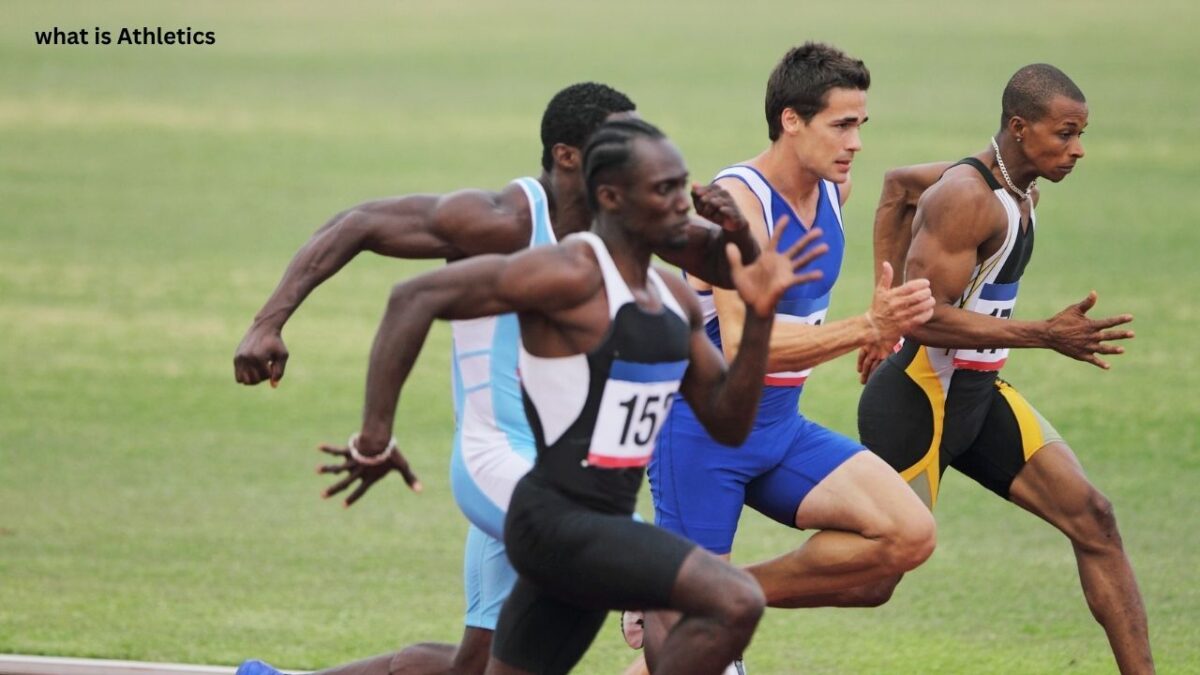
Sprints represent the ultimate test of explosive power and top speed. These short races include the 100-meter, 200-meter, and 400-meter distances. Sprinters use specialized starting blocks to push off with maximum force when the starter pistol fires. Every fraction of a second matters, requiring perfect running mechanics and immense explosive leg power.
Middle-distance races bridge the gap between pure speed and strategic endurance. The standard middle-distance events are the 800-meter and 1500-meter races. Athletes in these categories must balance tactical positioning, physiological pacing, and a final burst of speed near the finish line.
Long-distance events test deep aerobic capacity, mental toughness, and energy conservation. Events like the 5,000-meter and 10,000-meter races require athletes to cover dozens of laps around the track while maintaining a grueling pace. Runners must monitor their breathing, muscle fatigue, and competitor moves over extended periods.
Hurdle and steeplechase events add physical barriers to traditional track racing. Standard hurdle events force sprinters to clear evenly spaced wooden or plastic barriers at full speed. The 3000-meter steeplechase combines long-distance track running with large wooden barriers and a deep water pit that runners must clear on every lap.
Relay races introduce team cooperation into an individual sport. Teams of four runners pass a hollow baton inside a strict passing zone while running at maximum speed. The 4×100-meter and 4×400-meter relays are widely considered some of the most exciting events in all of international sports.
Field Events: Jumping for Height and Distance
Field events take place inside the inner grass area of the stadium, known as the infield. These events separate into jumping disciplines that measure vertical height or horizontal distance.
Horizontal jumps include the long jump and the triple jump. In the long jump, athletes sprint down a runway and launch themselves off a wooden board into a sand pit, attempting to cover maximum horizontal distance. The triple jump requires a precise sequence of three distinct movements known as the hop, the step, and the jump before landing in the sand.
Vertical jumps challenge athletes to clear high horizontal bars without knocking them to the ground. The high jump requires athletes to curve their approach run and flop over the bar backwards using the Fosbury Flop technique. The pole vault involves using a flexible fiberglass or carbon-fiber pole to propel the athlete over an elevated bar that can exceed six meters in height.
Field Events: Throwing Implements for Maximum Distance
Throwing events require massive muscular strength, rotational speed, and precise technical execution. Competitors throw standardized implements from inside a circular ring or down a dedicated runway.
The shot put involves pushing a heavy metal sphere away from the shoulder using either a glide or a rotational spin technique. The discus throw challenges athletes to spin within a circle and release a flat circular disc into a designated landing sector.
The javelin throw is the only throwing event that uses a linear approach runway rather than a circle. Athletes run at high speed and hurl a long spear-like implement into the field. The hammer throw involves swinging a heavy metal ball attached to a steel wire around the head and releasing it after multiple high-speed rotations inside a protective protective cage.
Combined Events and Outdoor Road Disciplines
Combined events identify the ultimate all-around athletes by combining multiple track and field disciplines over two continuous days of competition. Men compete in the ten-event decathlon, while women compete in the seven-event heptathlon. Competitors earn points based on their performance in each individual event rather than their finishing position, and the highest overall point total wins.
Road running and race walking take athletes out of the stadium and onto public roads. Road events include half-marathons and the full 42.195-kilometer marathon. Race walking requires strict adherence to biomechanical rules, ensuring that the athlete maintaining continuous visual contact with the ground at all times while keeping the supporting leg straight from the moment of contact until it passes under the body.
Modern Technical Frameworks, Rules, and Cross-Sport Connections
When exploring what is Athletics, it is essential to examine the technical frameworks and governing rules that maintain fairness across global competitions. The sport operates under precise international guidelines managed by World Athletics, ensuring that performance records set in different countries remain directly comparable. Understanding what is Athletics means recognizing how unified regulations transform simple physical movement into a highly standardized competitive environment.
Governing Bodies and Global Competition Structures
The international administration of track and field relies on a clear hierarchy of organizations that maintain rules, approve world records, and organize world-class meets. Without centralized governance, modern athletic achievements could not be accurately measured or verified across different stadiums worldwide.
World Athletics and Continental Federations
World Athletics serves as the global governing authority for the entire sport. Founded in 1912, this organization creates uniform rulebooks, certifies competition tracks, sets equipment specifications, and enforces anti-doping policies. It also manages the official ratification process for all world records, ensuring that timing systems, wind measurements, and track dimensions meet strict standards.
Below the global authority, six continental associations manage regional championships and development programs across Africa, Asia, Europe, North America, South America, and Oceania. National governing bodies operate within each country to run national trials, select Olympic teams, and promote grassroots participation in local schools and sports clubs.
The Structure of Elite International Tournaments
The World Athletics Championships and the Olympic Games represent the absolute peak of competitive achievement in track and field. Held every two years, the World Championships gather thousands of elite athletes to compete for world titles across all standard outdoor disciplines.
The Olympic Games remain the most prestigious event for any track athlete, taking place every four years. In addition to these major championships, the Diamond League circuit offers a seasonal series of single-day elite meets where athletes accumulate points and earn prize money across global host cities.
Essential Rules Governing Track and Field Competitions
Strict rules preserve integrity across all running, jumping, and throwing disciplines. Athletes must follow precise regulations regarding starting procedures, lane boundaries, measurement protocols, and equipment standards to avoid immediate disqualification.
False Start Regulations and Lane Infringements
Track races rely on an absolute zero-tolerance policy regarding early movement at the start line. Electronic sensors embedded inside the starting blocks detect pressure changes and reaction times. If an athlete reacts in less than 0.100 seconds after the starter pistol fires, the system automatically registers a false start, resulting in an immediate disqualification for that runner.
Lane discipline is equally critical during curved track races. If a runner steps on or over the inner lane line to gain a distance advantage, officials will disqualify them from the race. In relay events, runners must complete the baton pass within a designated twenty-meter exchange zone, or the entire team faces elimination.
Foul Lines and Wind Measurement Rules
Field events enforce strict spatial boundaries during jumps and throws. In the long jump and triple jump, an athlete’s shoe cannot break the vertical plane past the front edge of the wooden take-off board. In throwing events, competitors must remain entirely inside the concrete circle during the throw and exit from the rear half of the ring only after the implement lands within the sector lines.
Environmental conditions also impact record validity. Horizontal jumps and short sprint events require official wind gauges placed alongside the track. If the trailing wind speed exceeds +2.0 meters per second, any performance achieved during that attempt cannot qualify as an official national or world record, even though the result still counts toward winning the specific competition.

Technical Equipment and Stadium Standards
Modern track and field relies on highly technical equipment built to exact scientific specifications. From synthetic running surfaces to custom-engineered athletic footwear, technological advances continue to redefine human athletic performance.
Synthetic Tracks and Stadium Layouts
Standard competition tracks measure exactly 400 meters along the inside lane and feature six to eight dedicated lanes. Modern tracks use polyurethane synthetic materials laid over asphalt, offering optimal shock absorption and maximum energy return for running shoes.
The central infield contains high jump aprons, pole vault runways, sand pits for horizontal jumps, and specialized throwing circles surrounded by high steel safety cages to protect spectators and officials during hammer and discus events.
Footwear Evolution and Specialized Gear
Athletes use specialized footwear tailored specifically to their exact discipline. Sprinters wear lightweight spike shoes with rigid front plates that force the runner onto their toes to maximize stride power. Distance runners use cushioned racing shoes designed to reduce fatigue over thousands of foot strikes.
In field events, high jumpers use spikes with heel pins for traction during tight curved approaches, while throwers wear smooth, flat-soled shoes that allow rapid rotation inside smooth concrete circles. Equipment like vaulting poles, javelins, and discus implements must meet precise weight, dimensions, and center-of-gravity standards set by international rules.
Cross-Sport Athletic Foundations and Team Connections
The fundamental physical skills developed within track and field form the physical foundation for almost every major team sport. Athletic training builds linear speed, lateral agility, jumping height, and rotational power, making track concepts vital across global sports leagues.
Transferable Skills to Field and Court Sports
The explosive acceleration perfected by short-distance sprinters directly transfers to field sports where fast breakaways determine success. Developing proper running mechanics, hip drive, and foot placement allows athletes in multi-directional sports to accelerate faster and change direction with greater efficiency.
Similarly, the vertical jump mechanics taught in field events closely mirror the jumping skills required in competitive team sports. Athletes who master plyometric takeoff techniques in track events gain a distinct advantage when contesting high balls or jumping near the net in court games.
If you want to understand how structured tactical plays rely on raw human speed and agility, reading about 5v5 flag football rules reveals how field positioning depends on sprinting mechanics and precise footwork.
Physical Conditioning Across Sports Disciplines
Endurance training methodologies derived from long-distance track running form the backbone of conditioning programs in professional team sports. Building a deep aerobic base allows players to maintain fast movement rates over extended match durations without suffering severe fatigue or technical breakdown.
Rotational power developed in throwing events like the discus and shot put parallels the core torque needed in striking sports. Understanding how energy transfers from the ground up through the hips and shoulders improves performance across diverse athletic activities.
To see how endurance, rotational mechanics, and running between points come together in dynamic outdoor team environments, exploring how is cricket played offers great insight into how foundational athletic traits support specialized sport strategies.
Health Benefits, Grassroots Development, and Global Impact
When considering what is Athletics, one must look beyond elite world records and examine how the sport transforms physical health, grassroots education, and global sports culture. The sport offers an accessible entry point into physical fitness that requires minimal specialized equipment for beginners. Exploring what is Athletics at a community level reveals how running, jumping, and throwing serve as the primary building blocks for lifelong human wellness and physical literacy.

Comprehensive Health and Physical Fitness Benefits
Engaging in regular running, jumping, and throwing activities delivers profound cardiovascular, musculoskeletal, and metabolic adaptations. Because the sport incorporates both high-intensity explosive movements and steady-state endurance exercises, participants develop balanced overall physical health.
Cardiovascular Endurance and Metabolic Health
Distance running and race walking strengthen the heart muscle, increase stroke volume, and lower resting heart rates over time. Sustained aerobic exercise expands capillary networks within skeletal muscle, improving oxygen delivery throughout the entire cardiovascular system.
These aerobic adaptations significantly reduce the long-term risk of developing chronic metabolic conditions, such as high blood pressure, type 2 diabetes, and arterial stiffness. Regular running routines also burn substantial caloric energy, making track disciplines highly effective for maintaining healthy body composition and managing weight.
Bone Density and Musculoskeletal Strength
High-impact athletic activities like sprinting and jumping stimulate bone remodeling through mechanical loading. When an athlete impacts the ground during running or landing from a jump, the skeleton experiences controlled stress that encourages osteoblast activity, resulting in denser and stronger bones.
Sprinting and throwing events also build functional muscle power across major muscle groups. Sprints target the hamstrings, glutes, quads, and calves, while field events recruit core and upper-body musculature. This comprehensive strength development protects joints from injury, improves posture, and preserves functional mobility into older age.
Grassroots Development and Youth Participation
The simplicity of track and field makes it a core component of physical education curricula in schools worldwide. Children naturally run, jump, and throw, allowing educators to teach fundamental movement skills without requiring complex team tactics or expensive personal gear.
School track meets provide inclusive opportunities for young people of varying physical body types. A student who may not excel at long-distance running might possess the explosive strength needed for the shot put or the vertical coordination required for the high jump. This wide variety of events helps youth find physical activities that match their natural talents.
Community running clubs, youth sports leagues, and regional developmental meets create clear pathways from introductory physical fitness to elite competitive sport. Organizations like World Athletics provide standardized youth coaching frameworks and physical education resources that help national sports federations grow the sport at local community levels.
Frequently Asked Questions
What is the fundamental difference between track events and field events in athletics?
Track events consist of running and hurdling races held on the stadium’s 400-meter synthetic track, focusing purely on speed, pacing, or barrier navigation. Field events take place on the central grass area or designated runways, focusing on jumping for height or distance and throwing standardized objects for maximum distance.
How many total events are contested in Olympic track and field?
The modern Olympic track and field program features 48 distinct official events divided across track, field, combined, and outdoor road disciplines for both male and female competitors.
What makes a false start occur in elite track racing?
A false start occurs when an athlete moves off the starting blocks before the starter pistol fires or reacts to the gun in under 0.100 seconds, as measured by electronic force sensors inside the block plates. In elite international competitions, a single false start results in immediate disqualification.
Why is wind speed measured during sprint and jump events?
Wind speed is measured to ensure fair environmental conditions for official record verification. If an athlete achieves a performance with a tailwind exceeding +2.0 meters per second, the result still counts for winning the current competition but cannot be ratified as an official national or world record.
Is cross-country running considered part of global athletics?
Yes, cross-country running is an officially recognized sub-discipline managed by global track and field governing bodies. It involves long-distance races held over natural terrain like grass, dirt trails, mud, and rolling hills rather than synthetic stadium tracks.

Conclusion
Understanding the full scope of track and field reveals why it remains the bedrock of global physical competition. From ancient Greek footraces to modern high-tech stadium championships, the sport captures the essence of human physical ambition by measuring speed, strength, and endurance in their purest forms. Its direct objective measurements ensure that every running time, jump height, and throwing distance reflects true human performance without subjective bias.
Beyond the bright lights of Olympic stadiums, running, jumping, and throwing provide the essential framework for worldwide health, youth physical development, and athletic cross-training. Whether a person aims to break a world record on a synthetic track or simply runs through a neighborhood park to maintain personal fitness, engaging with these basic movements connects every individual to the enduring global tradition of human athletic movement.



[…] Breaking What Are the Events in Track and Field? Full BreakdownWhat is Athletics? Ultimate Guide, Events & Rules ExplainedEU Carbon Tax: Real Impact on Imports and Global MarketsHow US Foreign Policy Really Works and […]
[…] Reviews: Is Google AI Tool Worth It? (2026)What Are the Events in Track and Field? Full BreakdownWhat is Athletics? Ultimate Guide, Events & Rules ExplainedEU Carbon Tax: Real Impact on Imports and Global MarketsHow US Foreign Policy Really Works and […]