
– Worked the focus keyword into the opening sentences of the first paragraph.
– Included the focus keyword in the wording of the first H2 heading.
– Removed repeated phrases about cumulative vs. per-query AI energy impact.
– Removed the redundant opening question in the ChatGPT query energy section.
– Cleaned up double spacing and formatting around headings.
– Removed the irrelevant asteroid link and replaced it with a valid anchor.
AI Energy Crisis: Power Demand, Data Centers & Grid Strain
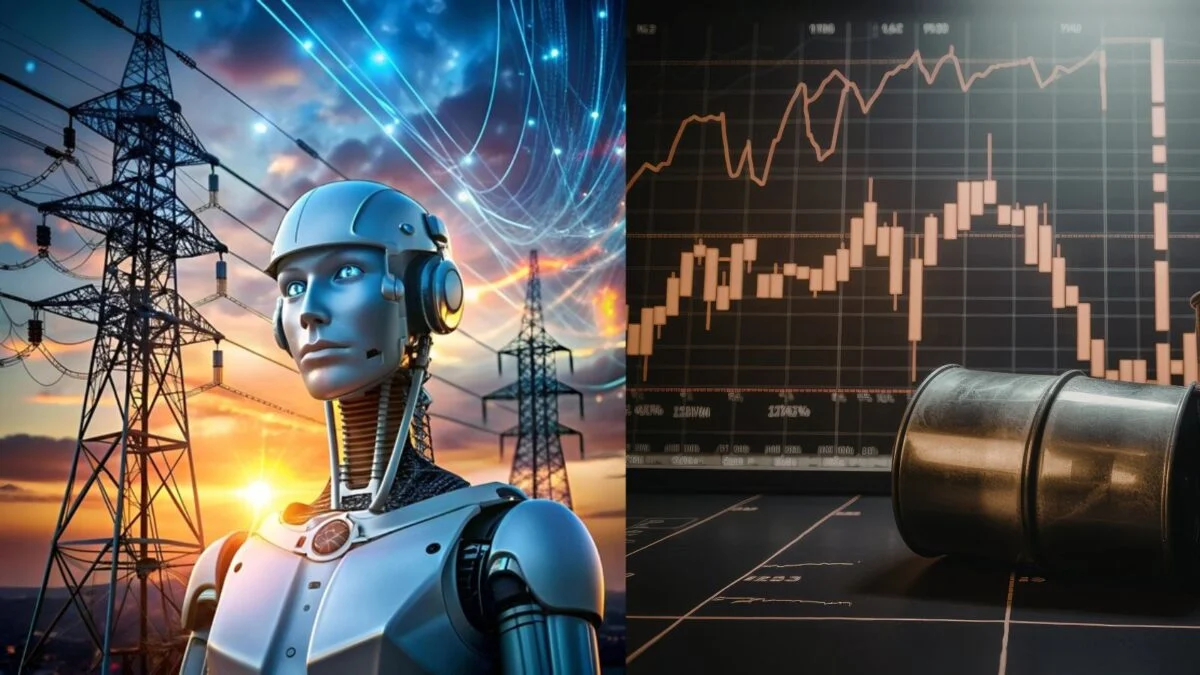
The AI Energy Crisis: Power Demand, Data Centers & Grid Strain is no longer just a technology issue, but a major global energy, environmental, and economic challenge. Modern AI models like ChatGPT, Gemini, Claude, and others have made our daily lives easier, but the large data centers behind them are consuming an unprecedented amount of electricity and water. According to recent international reports, if the current pace continues, the electricity demand of AI data centers could equal the total consumption of many countries by 2030. In such a situation, the question becomes important: is artificial intelligence really leading the world to an energy crisis, or could this technology also prove to be the solution to this crisis in the future?
As millions of people and businesses adopt AI-powered tools, technology companies are building larger and more powerful data centers to process billions of AI requests every day. These facilities require enormous amounts of electricity to run high-performance AI servers and additional energy to keep them cool, placing unprecedented pressure on power grids worldwide. Concerns have intensified because AI adoption is expanding much faster than energy infrastructure can keep pace. Many electricity networks were not designed for such a rapid increase in demand, raising fears of higher electricity prices, increased dependence on natural gas, greater carbon emissions, and growing competition for water resources used in data center cooling.
Governments and technology companies argue that artificial intelligence can also become part of the solution. AI is already helping improve electricity grid management, optimize renewable energy production, reduce industrial energy waste, and increase overall efficiency across multiple sectors. This creates a complex challenge: while AI is accelerating global energy consumption today, it also has the potential to reduce energy use in many industries over the long term. The future impact of AI will largely depend on how quickly clean energy, nuclear power, and more efficient computing technologies can scale alongside the world’s growing demand for artificial intelligence.
Understanding these trends requires a close look at how individual hardware components draw power during peak loads. Researchers monitor chip temperatures and memory bandwidth to gauge efficiency gains across different cloud regions. Local utility providers also track substation capacity to prevent brownouts during unexpected demand spikes. Balancing these competing pressures remains a top priority for industry leaders.
Understanding the AI Energy Crisis: Power Demand, Data Centers & Grid Strain
What is the AI Energy Crisis and why is there growing concern?
The AI Energy Crisis refers to the rapidly increasing demand for electricity, water, and computing infrastructure caused by the explosive growth of artificial intelligence technologies such as ChatGPT, AI assistants, image generators, and large language models (LLMs). As millions of people and businesses adopt AI-powered tools, technology companies are building larger and more powerful data centers to process billions of AI requests every day. These facilities require enormous amounts of electricity to run high-performance AI servers and additional energy to keep them cool, placing unprecedented pressure on power grids worldwide.
Why do AI data centers consume vast amounts of electricity?
AI data centers consist of thousands of powerful servers to run advanced artificial intelligence models, such as ChatGPT, image generation, video generation, and other large language models (LLMs). These servers are equipped with specialized AI chips, which consume much more power than traditional computer servers. When millions of users ask questions or perform complex AI tasks at the same time, these servers constantly operate at full capacity, which significantly increases power consumption.
Not only computing, but advanced cooling systems are also running at all times to keep these servers at a safe temperature. Data centers spend a large portion of their total energy on air conditioning, liquid cooling, and other cooling systems to keep servers from overheating and damaging them. In addition, backup power, networking equipment, storage systems, and security infrastructure also consume electricity continuously, further increasing the overall energy demand.
According to experts, the bigger and more sophisticated AI models become, the more computing power they require to train them and then provide answers to users’ questions. This is why AI data centers around the world are becoming the biggest drivers of rising electricity demand. Although new AI chips are more energy efficient than before, the rapid increase in AI use largely eliminates all these efficiency gains, which is causing increasing pressure on electricity, water and infrastructure globally.
How much energy does a typical ChatGPT query use?
Energy consumption depends on how complex the question is, how long the answer is, which AI model is being used, and how much computing power it requires. A short text question typically uses relatively little energy, while tasks such as longer research-based answers, complex math, code generation, image or video creation, and advanced reasoning can use many times more power.
AI hardware and software performance have improved significantly in recent years, with the energy consumption of a typical text prompt now significantly lower than it used to be. However, experts say the real challenge is not the energy per query, but the billions of AI requests that occur every day. When hundreds of millions of users around the world simultaneously use ChatGPT and other AI services, the overall power demand increases dramatically, requiring large data centers to continuously run thousands of AI servers.
While a simple text query uses relatively little power, the rapid rise of video generation, AI agents, real-time reasoning, and other advanced AI features is significantly increasing the energy needs of data centers. That’s why experts believe that the sustainable development of AI in the future will depend on more energy-efficient chips, better data centers, and the use of cleaner energy sources.
Is AI causing electricity bills and water consumption to increase?
The rapid development of artificial intelligence has significantly increased the demand for electricity and water around the world, but its impact is not the same in every country and for every user. AI data centers consist of thousands of powerful servers that work continuously around the clock. These servers require large amounts of electricity to operate, while advanced cooling systems, which also use water extensively, are constantly active to prevent them from overheating. For this reason, areas where new AI data centers are rapidly being established are seeing a significant increase in electricity demand.
When demand for electricity in a region suddenly increases, the pressure on the power grid also increases. If the electricity generation and transmission system cannot grow quickly enough to meet this additional demand, utility companies have to invest in new power plants, transmission lines, and grid infrastructure. In some countries and states, these additional costs may indirectly affect consumers’ electricity bills, although this depends on local energy policy, regulatory systems, and electricity sources. So it would not be accurate to say that AI alone is driving up electricity bills everywhere, but it has certainly become a significant factor in the growing demand for electricity globally.
Water consumption is also becoming a major issue. Most modern data centers use water-based cooling systems, or evaporative cooling, to keep servers cool, which can use millions of gallons of water per day. If such centers are located in water-scarce areas, this can put further strain on local water resources. That’s why big tech companies are now investing in low-water cooling technologies, recycled water, liquid cooling, and renewable energy to meet the growing energy and water needs of AI in a more sustainable way.
In short, AI has certainly increased global demand for electricity and water, but its impact depends on each country’s energy system, water resources, and government policies. More energy-efficient chips, advanced cooling technologies, renewable energy, and robust power infrastructure will play a fundamental role in the sustainable development of AI in the future.
Why are Google, Microsoft, and Meta relying on nuclear energy?
The extraordinary development of artificial intelligence has led to a huge increase in the power requirements of large technology companies such as Google, Microsoft and Meta. Modern AI data centers consist of thousands of powerful GPUs and AI servers, which work continuously day and night. Since AI services need to be available at all times, they require electricity that can be supplied continuously in all weathers and at all times. This is why solar and wind energy alone cannot meet all their needs, as the output of these sources varies with the season and time.
In response to this challenge, Google, Microsoft, and Meta are making nuclear energy a key part of their long-term strategy. Nuclear power provides consistent, reliable electricity with low carbon emissions, known as baseload power. That’s why Microsoft has signed a long-term power purchase agreement with a reactor at Three Mile Island in the United States, Google has invested in the development of future Small Modular Reactors with Kairos Power, while Meta has also begun supporting nuclear energy projects to meet the growing energy needs of its AI data centers.
Although nuclear power is being touted as a key solution for AI, its results will not be immediately apparent. With most new Small Modular Reactors expected to be commercially available in the next decade, many AI data centers will continue to rely on natural gas and other traditional energy sources in the short term. Experts say that a combination of renewable energy, advanced battery storage, and nuclear power could be the most effective way to meet AI’s growing energy needs in an environmentally friendly and sustainable way.

Is AI a threat to the environment or a solution for the future?
It would be inaccurate to label artificial intelligence as solely a threat to the environment or solely a complete solution, because the reality lies somewhere in between. On the one hand, the rapidly growing number of AI data centers is significantly increasing the demand for electricity, water, and computing resources, leading to carbon emissions, pressure on natural resources, and additional burdens on energy infrastructure. If this increasing energy is mostly obtained from fossil fuels, such as natural gas or coal, the problems of global warming and climate change could become even more serious.
On the other hand, AI can also play a significant role in protecting the environment. It is helping to operate power grids more efficiently, predict renewable energy production, reduce energy waste in industries, improve the energy efficiency of buildings, and analyze climate data. In sectors such as agriculture, transportation, and manufacturing, AI is also enabling fuel and electricity savings through better use of resources, which is expected to reduce overall carbon emissions.
Experts say that the environmental impact of AI will depend on how it is developed and used. If AI data centers are powered by renewable energy, nuclear power, advanced cooling technologies and more energy-efficient chips, its negative impacts could be significantly reduced. Conversely, if AI’s growing energy needs continue to rely on traditional fossil fuels, its pressure on the environment could increase further.
In short, AI is neither a threat nor a solution in itself. It is a powerful technology whose impact will depend on our energy policies, investments in clean energy, responsible AI development, and sustainable infrastructure. If governments, technology companies, and the energy sector work together to adopt a sustainable strategy, AI can not only meet our energy needs in a more environmentally friendly way, but also play an effective role in combating climate change.
How can users employ artificial intelligence responsibly?
Artificial intelligence has become an important part of education, research, business and everyday life today, but its responsible use is more important than ever. While a simple text query uses relatively little energy, unnecessarily repetitive complex AI tasks, lengthy video generation or heavy image processing increase the overall energy demand of data centers. That is why users should use AI only where it is really needed, while performing simple tasks themselves or completing them with traditional tools.
An important aspect of responsible use is writing efficient prompts. By providing clear and concise instructions, AI provides better answers in less time, which reduces the need to ask unnecessary questions repeatedly. Similarly, if only information is needed, it is more appropriate to use text-based AI, while energy-intensive features such as image or video generation should be used only when necessary. This not only saves resources but also saves the user’s time.
Consumers should also look at which technology companies they are using. Companies that are investing in renewable energy, energy-efficient data centers, water-efficient cooling technologies, and carbon-reduction projects are taking a more sustainable path to the future. Encouraging such platforms can help promote environmentally friendly technology.
Ultimately, AI should be used as a supporting tool, not a complete replacement for human thinking. Users should verify the information they receive from AI, avoid sharing sensitive or personal information, and critically evaluate each response. If AI is used with the principles of responsibility, awareness, and sustainability, it can not only increase the productivity of individuals but also help limit its negative impact on energy and the environment in the future.
Frequently Asked Questions
What is the AI Energy Crisis?
The AI Energy Crisis refers to the unprecedented increase in demand for electricity, water, and data center energy due to the rapid growth of artificial intelligence. Experts say that if AI usage continues to grow at this rate, global power grids could be put under even more strain in the coming years.
Does each ChatGPT question use a lot of energy?
A simple text question uses relatively little energy, but AI tasks such as complex reasoning, code generation, image or video creation require more computing power and electricity.
Why do AI data centers use so much electricity?
AI data centers consist of thousands of powerful GPUs and AI servers, which operate continuously. These servers require large amounts of electricity and advanced cooling systems to operate and keep them cool, which significantly increases energy consumption.
Can AI increase electricity bills?
In some areas where large AI data centers are being established, the increased demand for electricity could put pressure on the power grid, which could in turn affect electricity prices. However, this depends on each country’s energy policy, power generation, and local laws.
Why are Google, Microsoft, and Meta investing in nuclear energy?
These companies see nuclear energy as a reliable solution to provide stable, low-carbon electricity to their AI data centers around the clock. With this goal in mind, they are investing in advanced Small Modular Reactors and other nuclear power projects.

Conclusion
The AI Energy Crisis is not just a fear of the future, but a challenge that is affecting the energy, environment and technology sectors around the world today. While artificial intelligence has created countless conveniences in business, education, research and daily life, the growing number of AI data centers is also driving unprecedented demand for electricity, water and modern infrastructure. That is why governments, energy providers and big technology companies are investing billions of dollars in renewable energy, nuclear power and more energy-efficient computing to find long-term solutions to this problem.
The other side of the picture is equally important. This same AI has the potential to bring about revolutionary changes in areas such as better energy management, smart grids, industrial efficiency, climate research and carbon emission reduction. Therefore, it would not be correct to describe AI only as a threat to the environment, because with the right policies, clean energy and responsible use, this same technology can also become the basis for a sustainable future.
Ultimately, the question is not whether we should use AI, but how responsibly, transparently, and sustainably we use it. If technology companies, governments, and consumers work together to embrace clean energy, efficient data centers, and responsible AI, artificial intelligence can not only help address global energy challenges but also create a safer, more efficient, and more environmentally friendly future for generations to come.
- International Energy Agency (IEA) – Energy and AI Report
https://www.iea.org/reports/energy-and-ai - International Energy Agency (IEA) – Data Centres and AI
https://www.iea.org - Gartner – Data Center Research
https://www.gartner.com/en/infrastructure-and-it-operations - Google Environmental Report
https://sustainability.google/reports - Microsoft Sustainability
https://www.microsoft.com/sustainability - Meta Sustainability
https://sustainability.atmeta.com - U.S. Department of Energy
https://www.energy.gov - International Atomic Energy Agency (IAEA)
https://www.iaea.org - U.S. Environmental Protection Agency (EPA)
https://www.epa.gov - International Renewable Energy Agency (IRENA)
https://www.irena.org - Our World in Data – Energy
https://ourworldindata.org/energy - United Nations Climate Change (UNFCCC)
https://unfccc.int
Related reading: Science Discoveries: How Research and Exploration Shape Our World




[…] high-powered computing services also connects directly to broader industry discussions about the AI energy crisis and data center power demand taking place globally. Understanding how these tools perform helps creators choose the best systems […]
[…] If the result is sufficient, the verification process can end without requiring government identification. If the result is not conclusive, the process may ask for another form of verification. Character.AI specifically says that an ID may be requested when the selfie does not provide enough confidence. […]
[…] capacity, making the broader AI energy crisis an important part of the technology discussion. AI Energy Crisis: Power Demand, Data Centers & Grid Strain […]