How the Federal Reserve Controls the Global Economy
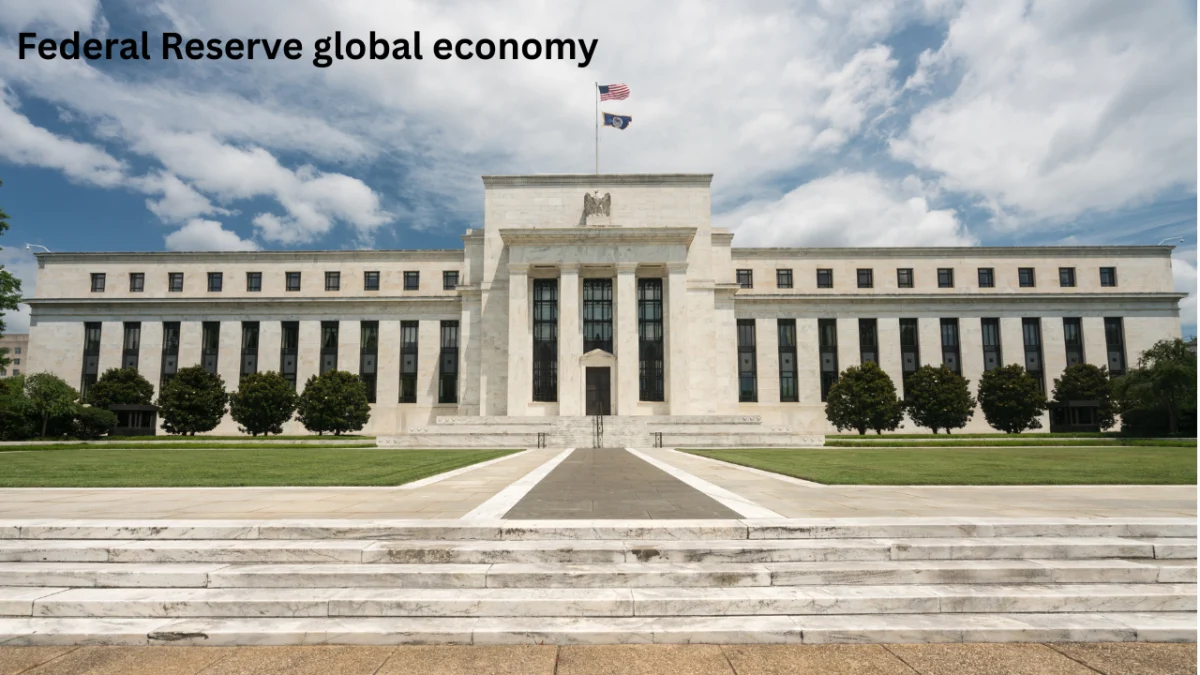
A meeting room in Washington, D.C. is not usually where you’d expect the price of your groceries in Karachi, your remittance from Dubai, or your stock portfolio in London to be decided. But that is exactly what happens roughly eight times a year, when the Federal Open Market Committee (FOMC) sits down and votes on U.S. interest rates. The link between the Federal Reserve and the global economy is closer, and more direct, than most people realize.
The Federal Reserve is the central bank of the United States. It has no authority over Pakistan, Nigeria, Brazil, or Japan. Yet its decisions move currencies, stock markets, and even the cost of a loaf of bread in countries that have nothing to do with America.
This article breaks down exactly how that happens, what’s changed in 2026, and what the Fed’s power really means for ordinary people and investors around the world.
What Is the Federal Reserve global economy and Why Does It Matter Globally?
The Federal Reserve, or “the Fed,” was created in 1913 after a wave of U.S. banking panics made it clear the country needed a central authority to manage money and prevent collapse.
Its job today is built around a dual mandate:
- Keep prices stable (control inflation)
- Support maximum employment
To do this, the Fed doesn’t pass laws or send troops. It controls something simpler and more powerful: the cost of borrowing money in U.S. dollars.
That single lever matters globally because of one fact — the U.S. dollar is not just America’s currency. It’s the world’s currency.
How the Fed’s Interest Rate Decisions Move Markets
Interest Rates Explained in Plain Words
Think of interest rates as the price tag on money itself. When rates are low, borrowing is cheap, so people take loans, buy homes, and businesses expand. When rates are high, borrowing costs more, so everyone slows down.
The Fed sets a target range for the federal funds rate — the rate banks charge each other for overnight loans. That one number ripples out to mortgages, car loans, credit cards, and business financing, not just in the U.S. but wherever dollar-based lending exists.
What Happens When the Fed Raises Rates
When inflation runs hot, the Fed typically raises rates to cool things down.
For consumers, this means:
- Pricier mortgages and car loans
- Tighter household budgets
- More cautious spending
For businesses, higher rates mean loans cost more, so expansion plans get delayed and hiring slows. For investors, safer assets like U.S. bonds suddenly look more attractive than riskier stocks, so equity markets — especially growth and tech stocks — often pull back.
What Happens When the Fed Cuts Rates
Rate cuts do the opposite. Borrowing gets cheaper, spending picks up, and businesses invest more. Housing markets often heat up, and stock markets tend to rally because cheaper money makes future company profits worth more today.
The catch: keep rates too low for too long, and you risk inflation and asset bubbles — which is exactly the tightrope the Fed has been walking since the pandemic.
Where Fed Policy Stands Right Now in 2026
Here’s where things actually are, not just the textbook theory.
The Fed cut rates three times in late 2025, bringing the federal funds rate down to a range of 3.50%–3.75%. Since then, the FOMC has held rates steady for four consecutive meetings through June 2026, even as some officials pushed back against further cuts.
Kevin Warsh took over as Fed Chair in 2026, replacing Jerome Powell. In his first meeting running the FOMC, he shortened the Fed’s policy statement and pulled back language that had hinted at future cuts — a signal that the central bank is now leaning cautious rather than dovish. Markets have responded by pricing in the possibility of a rate hike as early as October 2026, a sharp reversal from earlier expectations of continued cuts.
Two forces are keeping inflation elevated and complicating the Fed’s job: tariff-driven price increases and rising global energy costs tied to conflict in the Middle East. This is the kind of real-time detail that matters if you’re trying to understand the Fed’s next move — not just how the system works in general.
The Dollar Effect: Why One Currency Moves the Whole World
The Dollar in Global Trade and Reserves
The U.S. dollar sits at the center of the global financial system. Oil, gold, and most major commodities are priced in dollars. Central banks around the world hold dollars as their primary reserve asset, and most international trade invoices are written in dollars, even between two non-U.S. countries.
That means when the Fed changes policy, it isn’t just repricing American money. It’s repricing the currency the rest of the world uses to trade, borrow, and save.
What Happens to Emerging Markets When the Dollar Gets Stronger
Higher U.S. rates tend to strengthen the dollar, because global investors chase the better returns available on U.S. assets. That sounds like a purely American story, but it hits developing economies hardest.
Here’s why: many developing countries and companies borrow in dollars, not their own currency. If a country’s local currency weakens while its debt is priced in dollars, the real cost of repaying that debt goes up — even though the loan amount never changed.
A country that borrowed $10 billion doesn’t owe more dollars when the Fed hikes rates. But it needs more of its own currency to buy those same dollars, which strains its budget, drives inflation, and can trigger a currency crisis.
Practical Signs to Watch If You Live Outside the U.S.
You don’t need a finance degree to notice the Fed’s fingerprints on your own economy. A few practical signals tend to show up around major Fed decisions:
- Your local currency weakening against the dollar within days of a rate hike
- Import prices for machinery, electronics, or fuel creeping up
- Local banks quietly adjusting their own lending rates upward
- Your country’s central bank raising rates too, partly to defend the currency
None of these happen because your central bank wants to copy the Fed. They happen because ignoring U.S. rate moves can mean capital quietly leaving your country for higher U.S. returns, which puts even more pressure on your currency.
A Real-World Scenario: The Fed’s Reach Beyond America
Consider a mid-sized textile exporter in Faisalabad, Pakistan. The business imports raw cotton machinery parts priced in dollars and exports finished garments to European buyers.
When the Fed holds rates high and the dollar strengthens, three things happen almost immediately. Machinery imports get more expensive in rupee terms. Any dollar-denominated loan the business took out becomes harder to service. And if the rupee weakens against the euro too, profit margins on European sales get squeezed from both sides.
This isn’t a hypothetical — it’s the daily reality for import-export businesses, remittance-dependent households, and governments managing dollar-denominated debt across dozens of countries. None of them have a vote at the FOMC table, yet all of them feel its decisions.
How Fed Decisions Reach Stock Markets, Gold, and Crypto
Stock Markets
Stock prices are, at their core, a bet on future company profits. Interest rates change how investors value those future profits. When rates rise, future earnings are worth less in today’s terms, so valuations — especially for high-growth tech companies — tend to compress. Markets in Europe, Asia, and emerging economies often move within minutes of a Fed statement, not because they trade Fed policy directly, but because global capital flows follow U.S. rates.
Gold
Gold pays no interest, so when U.S. rates rise, holding gold becomes relatively less attractive compared to interest-bearing bonds. When rates fall, or the dollar weakens, gold often gains as investors look for a hedge against inflation and currency risk.
Interestingly, this relationship has been tested in 2026. Central banks — many outside the traditional Western financial system — have been buying gold at a record pace, partly as a hedge against dollar dependence itself, not just Fed policy.
Cryptocurrency
Bitcoin and other cryptocurrencies have grown increasingly sensitive to global liquidity conditions. When the Fed keeps money cheap, investors take on more risk, and crypto markets tend to benefit. When the Fed tightens, that liquidity dries up and risk assets, including crypto, often face pressure. Expectations about future Fed moves now shape crypto sentiment almost as much as blockchain-specific news does.
The De-Dollarization Challenge: Is the Fed’s Grip Loosening?
No honest article about Fed power in 2026 can skip this: the dollar’s dominance is being actively challenged, and the pushback is no longer theoretical.
The numbers tell part of the story. The dollar’s share of global foreign exchange reserves has slipped from a peak above 70% in the early 2000s to below 58% today, according to IMF COFER data. Central banks bought over 1,000 tonnes of gold in each of the last several years — more than double the historical average — largely to reduce dependence on dollar reserves.
BRICS nations (Brazil, Russia, India, China, South Africa, and newer members including Saudi Arabia, the UAE, Iran, Egypt, Ethiopia, and Indonesia) have accelerated local-currency trade settlement. Russia and China now settle roughly 90% of bilateral trade in rubles and yuan. Cross-border payment systems like mBridge and BRICS Pay are letting central banks bypass the dollar entirely for some transactions.
Yet the dollar’s dominance hasn’t actually cracked. The Bank for International Settlements’ 2025 Triennial Survey found the dollar was on one side of nearly 90% of all global currency trades — and that share actually rose slightly, not fell. No other currency comes close to matching the depth and liquidity of U.S. Treasury markets. Even India, a BRICS member, has publicly said it isn’t trying to replace the dollar.
The realistic takeaway: de-dollarization is a gradual erosion, not a collapse. The Fed’s influence is being tested at the margins, but it still sets the tone for the global financial system.
Why Inflation Control Is a Balancing Act, Not a Switch
It’s tempting to think of the Fed as flipping a simple switch — raise rates, inflation goes down; cut rates, growth goes up. In reality, it’s closer to steering a ship with a long delay between turning the wheel and the ship actually changing direction.
Rate changes take months, sometimes over a year, to fully work through the economy. A hike announced today doesn’t cool inflation tomorrow — it slowly filters through mortgage renewals, business loan renewals, and consumer credit over the following quarters.
This lag is why the Fed is often criticized from both sides at once. Move too fast, and you risk tipping the economy into a recession before you can measure the actual effect of earlier hikes. Move too slow, and inflation gets embedded in wage expectations and pricing decisions, making it far harder to unwind later. The 2022–2024 tightening cycle was, in large part, the Fed trying to catch up after waiting too long to act on inflation that had already taken hold.
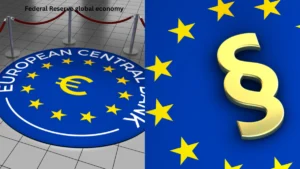
The Fed Is Not Alone: Other Central Banks That Shape the World
The Fed gets outsized attention because of the dollar, but it isn’t the only major player.
| Institution | Region/Role | Why It Matters |
|---|---|---|
| European Central Bank (ECB) | Eurozone | Sets rates for the world’s second-most-used reserve currency |
| Bank of Japan (BOJ) | Japan | Policy shifts affect global carry trades and bond markets |
| People’s Bank of China (PBOC) | China | Manages the yuan and is central to de-dollarization efforts |
| IMF | Global | Provides emergency lending and policy guidance to struggling economies |
| World Bank | Global | Funds long-term development projects |
Sources: IMF, World Bank
Each of these institutions matters in its own right. But when the Fed and the ECB move in different directions, or when the BOJ shifts a policy that’s been stable for years, the ripple effects compound — and that’s often when currency markets get genuinely volatile.
Lessons From History: 2008, COVID-19, and the 2022–2024 Inflation Fight
History gives the clearest proof of Fed influence.
During the 2008 financial crisis, the Fed slashed rates and pumped emergency liquidity into the system, actions that helped stabilize not just American banks but the global financial system, which was deeply intertwined with U.S. mortgage debt.
During COVID-19, the Fed’s near-zero rates and massive bond-buying supported markets worldwide and kept borrowing cheap. The trade-off arrived later: inflation surged as economies reopened faster than supply chains could adjust.
Between 2022 and 2024, the Fed responded with one of the fastest rate-hiking cycles in decades. The dollar strengthened sharply, emerging market currencies weakened, and global borrowing costs rose in tandem — a textbook case of one institution’s domestic inflation fight becoming everyone else’s problem.
What made that cycle unusual was its synchronicity. Central banks across advanced economies, from the ECB to the Bank of England, hiked rates at nearly the same time to fight their own inflation surges. Economists have pointed out that this kind of simultaneous global tightening can amplify the total impact beyond what any single country’s rate hikes would cause alone — a lesson that’s shaping how policymakers think about coordination today, even without any formal agreement between central banks.
By late 2025, the Fed had begun cutting again as labor market data softened, only to hit pause once more in 2026 as tariff-driven and energy-driven inflation resurfaced. That back-and-forth is a reminder that Fed policy is rarely a straight line — it reacts continuously to new data, and the rest of the world reacts to the Fed in turn.
Frequently Asked Questions
Does the Federal Reserve actually control the global economy? Not directly. It has no authority outside the U.S. But because the dollar dominates trade, reserves, and debt markets, Fed decisions on interest rates ripple into currency values, stock markets, and borrowing costs worldwide.
Why do Fed interest rate changes affect other countries? Because so much global trade, debt, and reserves are denominated in dollars. A stronger or weaker dollar changes the real cost of that debt and trade for everyone who uses it, regardless of nationality.
What is the Fed’s current interest rate in 2026? As of mid-2026, the federal funds rate sits at 3.50%–3.75%, held steady since December 2025 under new Fed Chair Kevin Warsh, with markets watching for a possible hike later in the year.
Can BRICS countries replace the U.S. dollar? Not in the near term. Despite growing local-currency trade and gold accumulation, the dollar still dominates nearly 90% of global currency transactions, and no single alternative currency offers comparable liquidity or trust.
How does the Fed affect gold and crypto prices? Higher rates generally make gold and crypto less attractive compared to interest-bearing assets like bonds. Lower rates, or a weaker dollar, tend to support both, since investors look for inflation hedges and take on more risk when money is cheap.

Conclusion: What the Fed’s Power Means for You
The Federal Reserve doesn’t control oil production, wars, or government budgets. But it controls something that touches all of them indirectly: the price of the world’s most-used currency.
That’s why a policy statement from Washington can shift a mortgage payment in London, a debt repayment in Lagos, or a factory’s import costs in Faisalabad — all on the same day.
Understanding this isn’t just useful for economists. If you invest, borrow, run a business that touches international trade, or simply want to understand why your currency moved overnight, the Fed’s next meeting is worth watching. In an interconnected economy, its decisions rarely stay confined to American borders.