
1997 NC1 Asteroid: What Scientists Learned From Its 2026 Close Approach
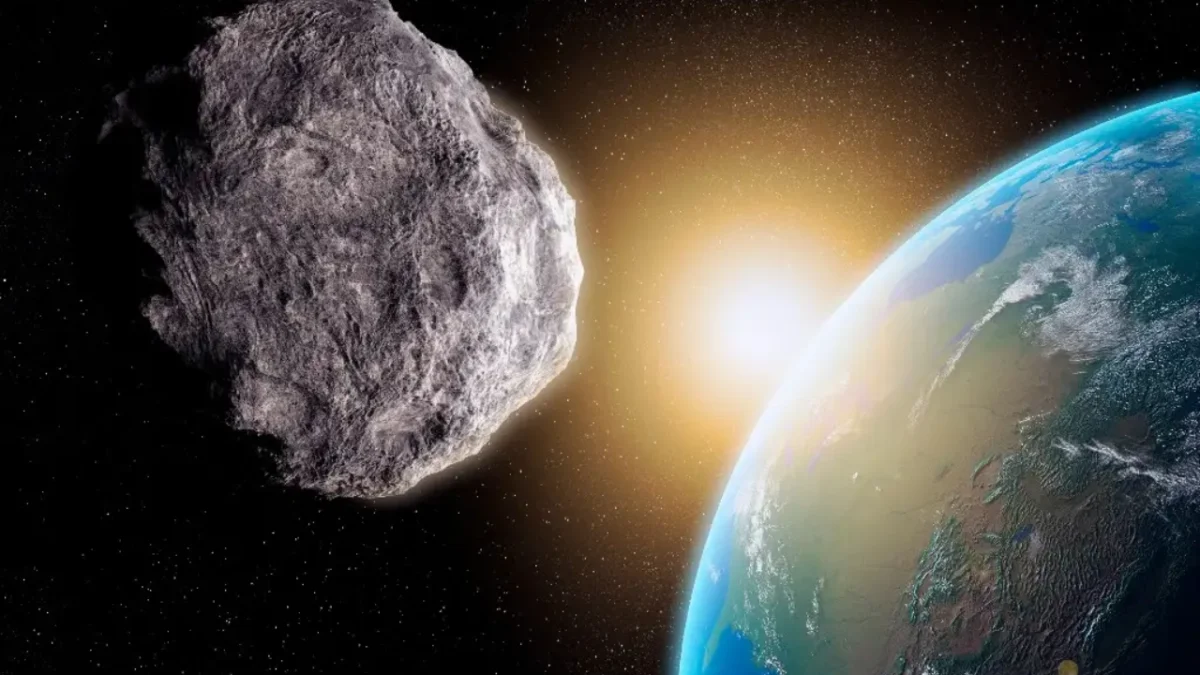
The 1997 NC1 asteroid became a widely discussed space story in June 2026, but the most important part of its visit was not a threat to Earth. The asteroid passed our planet at a distance of about 2.56 million kilometers, far beyond the Moon’s average distance from Earth. For astronomers, however, the approach created a useful chance to observe an object that had been known for almost three decades. New measurements could help researchers understand its size, shape, motion, and orbit more precisely. The encounter also showed why years of asteroid tracking can make a close approach scientifically interesting without turning it into an emergency.
The asteroid reached its closest point to Earth on June 27, 2026, at 11:14 UTC. The European Space Agency’s Near-Earth Object Coordination Centre calculated the distance at approximately 2,559,461 kilometers from Earth, or 6.66 lunar distances, with an estimated impact probability of zero for the encounter. ESA’s official 1997 NC1 close-approach fact sheet provides the detailed flyby measurements.
That distance is important because the phrase “close approach” can sound much more dangerous than it actually is. In astronomy, a close approach simply means that an object passes relatively near Earth compared with its normal distance from our planet. It does not automatically mean that the object is on a collision course. In the case of 1997 NC1, astronomers had enough orbital information to calculate the 2026 encounter well in advance.
The scientific value came from what researchers could learn while the asteroid was relatively close. Radar observations can reveal characteristics that are difficult to determine from ordinary optical observations alone. The 2026 encounter therefore gave researchers another opportunity to compare older measurements with newer data and improve their understanding of the asteroid. NASA’s Jet Propulsion Laboratory radar planning and observation record documents the Goldstone observations carried out during the encounter.
Why the 1997 NC1 Asteroid Attracted So Much Attention
1997 NC1 was discovered on July 5, 1997, at Haleakala by the NEAT program. Its orbit brings it into the near-Earth population, which is why astronomers have continued observing it since its discovery. ESA’s current database lists an orbital period of about 293.8 days, with a perihelion distance of roughly 0.685 astronomical units and an aphelion distance of about 1.045 astronomical units.
The asteroid was already known long before its 2026 approach, so this was not a case of scientists suddenly discovering an unknown object heading toward Earth. Instead, the approach was a scheduled astronomical event that researchers could prepare for. The long history of observations was especially useful because asteroid orbits become better understood when measurements are collected over many years. Each additional observation gives astronomers another position from which to test and refine the calculated orbit.
Another reason the encounter attracted attention was the opportunity for radar work. Radar can provide information about an asteroid’s physical characteristics that may remain uncertain when researchers rely mainly on reflected sunlight. Before the 2026 encounter, estimates of 1997 NC1’s size were not completely consistent, which made the new observations particularly useful. JPL specifically noted before the encounter that published measurements of the asteroid’s diameter, optical albedo, and spectral class were conflicting.
ESA’s June 2026 fact sheet gave a size range of 750 to 1,650 meters and explained that published estimates differed because they depended partly on assumptions about the object’s reflectivity. That uncertainty is a normal part of asteroid observation rather than evidence that scientists do not know how to track the object.
How Close Did 1997 NC1 Actually Come?
The closest approach occurred at 11:14:47 UTC on June 27, according to ESA’s close-approach fact sheet. The asteroid was approximately 2,559,461 kilometers from Earth’s surface, and its flyby speed was about 8.9 kilometers per second. ESA calculated an impact probability of zero for the encounter.
Putting the distance into a familiar context makes the encounter easier to understand. The asteroid passed at about 6.66 times the average Earth-Moon distance, so the term “close” describes the event from an astronomical perspective rather than from the perspective of everyday travel. Earth and 1997 NC1 remained separated by millions of kilometers throughout the encounter.
This distinction matters when reading asteroid headlines. A headline may say that an asteroid is “approaching Earth,” but that phrase can describe almost any object that is moving closer to our planet before reaching its closest point. The useful information is the calculated distance, the uncertainty around that calculation, and the estimated impact probability.
For 1997 NC1, those measurements showed a safe passage. The scientific question was therefore not whether Earth would be hit, but what astronomers could learn from the opportunity.
What Scientists Wanted to Learn About 1997 NC1
One of the biggest challenges in asteroid research is determining an object’s physical properties from observations made across enormous distances. A telescope can measure how much sunlight an asteroid reflects, but brightness alone does not always tell scientists its true size. A darker and larger object can appear similar to a brighter and smaller one, which is why different observations can produce different estimates.
The 1997 NC1 encounter provided a chance to reduce some of that uncertainty. Researchers could use radar observations alongside optical measurements to study the asteroid from another perspective. Instead of relying only on reflected sunlight, radar sends radio signals toward the object and analyzes the echoes that return to Earth.
That technique can reveal information about an asteroid’s dimensions, surface structure, rotation, and shape. It is especially valuable when an asteroid makes a relatively favorable close approach because the returning signal becomes easier to analyze. For 1997 NC1, the radar observations became one of the most important scientific results of the encounter.
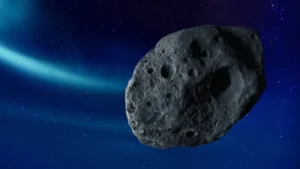
NASA’s Jet Propulsion Laboratory reported that radar observations showed 1997 NC1 to be a slowly rotating, bifurcated object less than one kilometer in diameter. The term “bifurcated” refers to its distinctive two-lobed appearance. JPL’s published June 30 update records that result directly.
What the Radar Observations Revealed
The two-lobed shape is significant because an asteroid’s physical form can preserve clues about its history. Small bodies in the Solar System have experienced collisions, gravitational interactions, and long periods of rotation. Their present shapes can therefore contain information about events that happened long before modern astronomy existed.
The radar observations did not simply make 1997 NC1 easier to picture. They gave scientists another way to study how the object is constructed and how it behaves while rotating. Continued analysis can help determine whether its shape is connected to its formation history, later collisions, rotational evolution, or another process.
The size question also illustrates why scientific estimates should not always be treated as permanent numbers. ESA’s pre-flyby fact sheet reported a broad range because published estimates depended on assumptions about albedo, or reflectivity. NASA’s radar observations then provided evidence that the object was less than one kilometer across. ESA’s current database now lists a diameter of 440 meters, showing that the estimated physical properties can continue to be refined as datasets and models are updated.
Those results do not mean that one organization was simply “right” and another was “wrong”; they reflect the fact that different observational techniques can constrain an asteroid’s properties in different ways.
As more observations are processed, researchers can continue refining the physical model of 1997 NC1. That is one of the reasons a close approach remains useful even after the asteroid has moved away from Earth.
Why Its Potentially Hazardous Asteroid Classification Can Be Misleading
The term Potentially Hazardous Asteroid, or PHA, often causes confusion because the word “hazardous” sounds like an immediate warning. In scientific use, however, the classification identifies asteroids that meet specific criteria related to their size and orbital geometry. It does not mean that an impact is predicted for a particular date.
1997 NC1 was already known as a potentially hazardous object before the 2026 encounter. JPL’s observation record notes that the Minor Planet Center had designated 1997 NC1 as a “Potentially Hazardous Asteroid.” That classification did not change the actual outcome of the flyby. ESA’s official close-approach fact sheet gave the June 2026 encounter an impact probability of zero, while its orbital data showed that the asteroid would remain millions of kilometers from Earth.
This is why the classification should be read together with current orbital information. Scientists do not determine asteroid risk from a label alone. They use observations, orbital calculations, uncertainty estimates, and repeated measurements to determine where an object is expected to travel.
For readers following asteroid news, that distinction can prevent a common misunderstanding. Being monitored is not the same thing as being on a collision course.
How Astronomers Know Where an Asteroid Will Be
Asteroid tracking is built on repeated observations. Astronomers measure an object’s position against distant stars, record those measurements, and use them to calculate the orbit that best fits the available data. When new observations arrive, the orbital solution can be updated and tested again.
The longer an asteroid has been observed, the more information researchers have about its movement. This is one reason the 1997 discovery date matters. Nearly three decades of observations provided a much stronger foundation for predicting the 2026 encounter than a newly discovered object with only a handful of observations would have had.
The calculations also account for the gravitational effects of major bodies in the Solar System. Small forces can matter over long periods, so researchers continue updating orbital models as better observations become available. The objective is not simply to know where an asteroid is today, but to estimate where it will be in the future and how certain that prediction is.
ESA’s current Near-Earth Object Coordination Centre explains that its work includes observing and computing asteroid orbits and assessing their impact risk. The current 1997 NC1 database shows that the object has an observational arc stretching from its 1997 discovery through observations made in 2026.
That work is part of the broader planetary-defense effort. If you want to explore more space and astronomy topics on NexaVice, the site’s Science category provides related coverage.
Why the 2026 Flyby Was Useful for Planetary Defense
Planetary defense begins with detection and tracking. Before scientists can consider what to do about a potentially dangerous asteroid, they need to know that the object exists and understand its orbit well enough to evaluate future encounters.
The 1997 NC1 case shows how that process works in a relatively calm situation. The asteroid was discovered decades before its 2026 flyby, observed repeatedly, and tracked as its approach became more relevant. By the time it reached its closest point, astronomers had a detailed orbital picture of the encounter.
Radar added another layer of information because it provided physical observations rather than only positional measurements. Knowing an asteroid’s approximate size and shape can be useful when scientists study the broader population of near-Earth objects and consider how different types of asteroids behave.
NASA’s Jet Propulsion Laboratory maintains radar observations and research involving near-Earth asteroids, while ESA’s NEO Coordination Centre maintains orbital and risk information for near-Earth objects. The JPL radar record for 1997 NC1 documents the observations and the resulting physical interpretation. These complementary efforts illustrate why planetary defense depends on both observation and analysis.
What Makes an Asteroid Flyby Scientifically Interesting?
A close approach gives scientists something they cannot always obtain from ordinary observations: a better opportunity to study the object while it is relatively near Earth. Depending on the asteroid and observing conditions, researchers may use optical telescopes, radar, spectroscopy, and other instruments to gather different types of information.
The value is not limited to one asteroid. A better understanding of one object can help researchers compare it with other near-Earth asteroids. Scientists can study whether unusual shapes, rotation rates, sizes, or surface characteristics are common or rare across the population.
That broader comparison is important because near-Earth asteroids are not a single uniform group. They vary considerably in their orbits, compositions, sizes, shapes, and histories. Each well-observed object adds another piece to the larger picture.
The 1997 NC1 encounter therefore had value beyond the headlines surrounding the flyby. It provided a real observational case that could be added to the growing scientific record of near-Earth objects.
The same broader observation effort has produced important results across other areas of space science. For example, readers interested in how spacecraft operations affect objects in orbit can also explore NexaVice’s coverage of SpaceX deorbited 260 Starlink satellites. The two subjects involve very different types of objects, but both show how tracking and observation help scientists understand activity in the space environment.
What Happens to the Data After the Asteroid Passes?
The end of the close approach is not the end of the research. Astronomers can continue examining the observations, comparing them with earlier measurements, and looking for details that were not immediately obvious during the encounter.
Radar data can be particularly valuable because a single observation session may contain information about an object’s shape and rotation that requires additional analysis. Researchers can combine those measurements with optical observations and previous orbital data to improve the overall model. JPL’s radar gallery records several observations of 1997 NC1 made during June 2026, including Goldstone echo measurements from June 24 and June 25.
This process is deliberately incremental. Scientists do not need to answer every question during the few hours surrounding closest approach. Some properties become clearer only after observations are combined and analyzed over time.
That is also why asteroid articles should avoid treating every early estimate as a final answer. The 1997 NC1 story itself demonstrates how measurements can be refined when new evidence becomes available.
What Could Scientists Learn From Its Two-Lobed Shape?
A bifurcated asteroid can raise questions about how the object developed its present structure. Scientists study asteroid shapes because they can provide clues about collisions, internal strength, rotation, and the ways small bodies evolve over long periods.
The shape of 1997 NC1 does not by itself prove a single formation history. Researchers need additional evidence before deciding which physical process best explains an unusual structure. Radar observations can help provide that evidence, especially when they are combined with measurements of rotation and surface properties.
This is another reason the 2026 observations matter. They did not simply confirm that the asteroid exists or that it passed Earth safely. They added physical information that can be used in future studies of the object and in comparisons with other asteroids.
The scientific value of a close approach often comes from exactly this kind of gradual progress. One observation answers part of a question, while later observations help researchers determine what the remaining evidence means.
Will 1997 NC1 Come Near Earth Again?
The asteroid will continue to be tracked after its 2026 encounter because its orbit carries it through the near-Earth region. ESA’s current database lists another Earth close approach on June 23, 2030, at a nominal distance of about 19.75 million kilometers from Earth’s center. The listed 2030 distance is far greater than the distance during the 2026 encounter.
Future observations can still improve the precision of these predictions. That does not mean scientists expect a problem. It means that continued measurements are part of normal asteroid monitoring.
The 2026 encounter also provides a useful reference point for future orbital calculations. When astronomers compare new observations with older models, they can check how accurately the previous orbit predicted the object’s position and make adjustments where necessary.
That long-term approach is one of the strongest features of modern asteroid monitoring. Scientists do not rely on a single calculation and then stop watching an object. They continue refining the picture as new evidence arrives.
What the 1997 NC1 Asteroid Can Teach Us About Space
The 1997 NC1 story is ultimately about how scientists turn an apparently simple flyby into useful information. The asteroid approached Earth, passed at a safe distance, and continued on its orbit, but the observations made during that period added new details about its physical nature.
The encounter also demonstrates why uncertainty is not necessarily a problem in science. Before the flyby, different observations supported different size estimates. After radar observations became available, researchers gained additional evidence about the asteroid’s shape and size. Future work can refine those estimates further rather than treating the first number as permanent.
That process is especially important in astronomy because researchers are studying objects that are often hundreds of millions of kilometers away. Even advanced instruments cannot provide every answer at once. Scientists build knowledge by combining observations from different times, instruments, and techniques.
For readers interested in more coverage of astronomy, discoveries, and space science, NexaVice’s Science category is the natural place to continue exploring related topics.
The broader NexaVice science coverage also includes archaeological research, where researchers use evidence and modern methods to understand ancient civilizations. Readers interested in that side of scientific discovery can explore Egyptian archaeology and the related Ancient Egyptian Sorcerer Tomb Discovery. These topics are different from asteroid science, but both demonstrate how researchers use evidence to reconstruct information that cannot be observed directly.
Why Asteroid Tracking Matters Beyond 1997 NC1
Every known near-Earth asteroid adds to the broader understanding of the population of objects that share Earth’s region of the Solar System. Some will pass at great distances, while others will come much closer. Some are easy to characterize, while others remain uncertain for years.
The important point is that scientists can improve their knowledge through repeated observation. Better observations lead to better orbital solutions, and better orbital solutions make it easier to distinguish ordinary close approaches from situations that require additional attention.
The 1997 NC1 encounter also shows the value of international scientific infrastructure. ESA’s NEO Coordination Centre maintains data on near-Earth objects and their close approaches, while NASA and JPL contribute observational and radar capabilities. These systems do not operate as a single instrument, but their data contributes to the larger effort to understand Earth’s astronomical environment.
For readers who want to follow the primary data behind the asteroid’s trajectory, ESA’s current 1997 NC1 database provides updated orbital and physical information, while JPL’s 1997 NC1 radar record documents the 2026 observations.
Frequently Asked Questions
Was the 1997 NC1 asteroid dangerous?
No impact threat was associated with its June 2026 close approach. ESA calculated that the asteroid would pass about 2.56 million kilometers from Earth and gave the encounter an estimated impact probability of zero.
How close did 1997 NC1 come to Earth?
The asteroid passed approximately 2,559,461 kilometers from Earth’s surface, which ESA gives as about 6.66 lunar distances. Its closest approach occurred on June 27, 2026, at 11:14:47 UTC.
How big is the 1997 NC1 asteroid?
Its exact size has been uncertain because different observational methods and assumptions produced different estimates. ESA’s close-approach fact sheet gave a range of 750 to 1,650 meters, while NASA’s radar observations reported an object less than one kilometer in diameter. ESA’s current database now lists a diameter of 440 meters.
What did radar reveal about 1997 NC1?
NASA’s JPL radar observations indicated that the asteroid is slowly rotating and has a bifurcated, or two-lobed, appearance. The observations provided additional information about its physical structure that could not be obtained as easily from ordinary optical observations.
Why is 1997 NC1 called a Potentially Hazardous Asteroid?
The designation is a technical classification based on characteristics such as an asteroid’s size and orbit. It does not mean that the asteroid is expected to hit Earth. The 2026 encounter itself had an estimated impact probability of zero according to ESA.
When will 1997 NC1 approach Earth again?
ESA’s current database lists another Earth close approach on June 23, 2030, at a nominal distance of approximately 19.75 million kilometers from Earth’s center. Future observations will continue to refine the asteroid’s predicted trajectory.
Conclusion
The 1997 NC1 asteroid was never a story about an asteroid suddenly heading toward Earth with an unknown outcome. It was a long-tracked near-Earth object whose June 2026 approach had been calculated in advance and whose passage occurred at a distance of roughly 2.56 million kilometers.
What made the encounter worth studying was the opportunity to collect better physical information. NASA’s radar observations revealed a slowly rotating, bifurcated object less than one kilometer across, while ESA’s data showed why estimates of its size had remained uncertain before the encounter.
The encounter also provides a useful example of how asteroid science actually works. Observations are collected over years, orbital calculations are updated as new measurements arrive, and physical estimates are refined when better evidence becomes available. None of that requires an asteroid to be on an impact trajectory.
1997 NC1 has now continued along its orbit, but the observations collected during its 2026 passage remain valuable. They add to the scientific record of near-Earth asteroids and give researchers another object through which they can study the shapes, movements, and histories of small bodies in our Solar System.


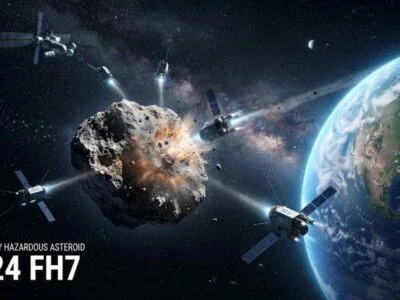
[…] of why continued observation matters is the history of individual near-Earth asteroids such as 1997 NC1. Studying specific objects helps explain how astronomers follow an asteroid’s orbit over time […]