
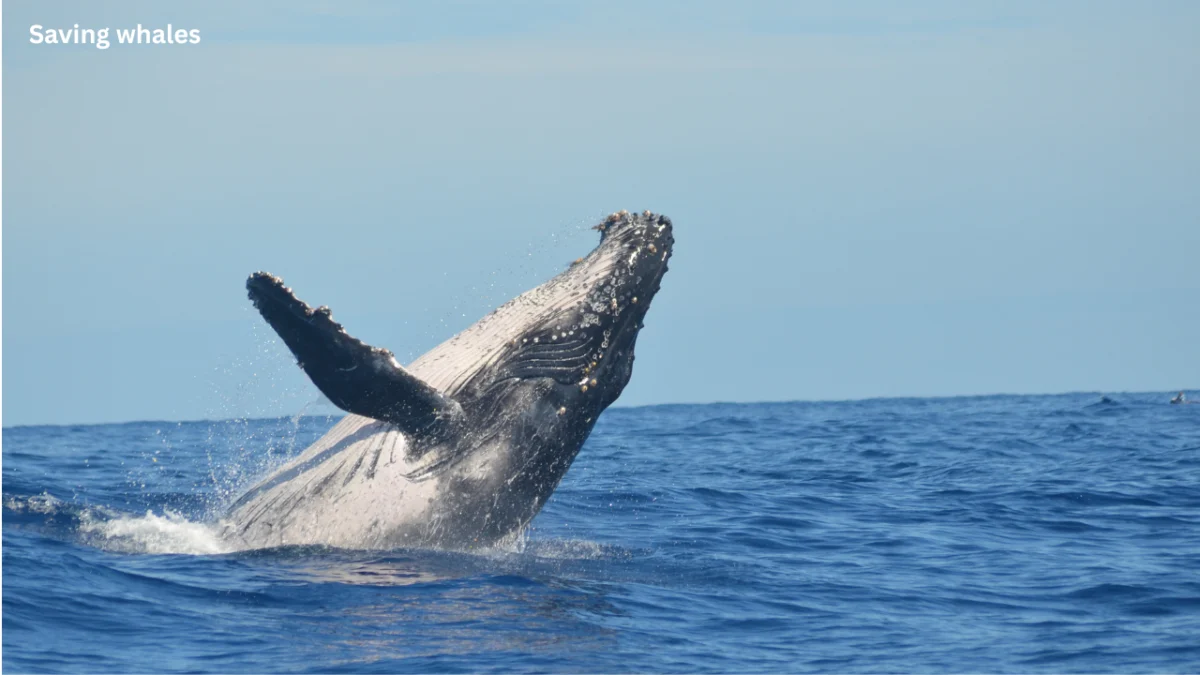
Saving Whales in San Francisco: Can Conservation Efforts Protect Gray Whales?
Introduction
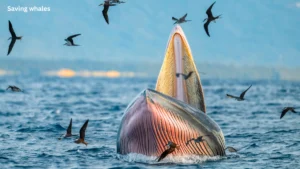
Saving whales in San Francisco has become one of the biggest environmental stories of the year. Scientists, conservation groups, and government agencies are working together to protect whales that enter the busy waters of San Francisco Bay. In recent years, more whales have been injured or killed after being hit by large ships. At the same time, changes in the ocean are making it harder for many whales to find enough food.
This is not only a local wildlife issue. It also highlights how climate change, growing shipping traffic, and human activities are changing marine ecosystems around the world. Researchers believe that protecting whales now will require better technology, stronger conservation policies, and closer cooperation between scientists, shipping companies, and local communities.
Gray whales are among the species receiving the most attention. Every year, they travel thousands of miles along the Pacific coast during one of the longest migrations on Earth. Their journey takes them through some of the busiest shipping routes in North America, including the waters around San Francisco.
As whale sightings continue to increase, experts are asking an important question: Can modern conservation efforts reduce whale deaths while keeping one of the world’s busiest ports operating safely?
Why Are More Whales Appearing Near San Francisco?
Seeing whales close to San Francisco is not unusual. Many species pass through California’s coastal waters during their annual migration. However, scientists have noticed that whales are spending more time near the bay and along the nearby coastline than in previous years.
Several factors may be contributing to this change.
One of the biggest reasons is the changing condition of the Pacific Ocean. Rising ocean temperatures affect where fish and tiny marine animals live. Since whales depend on these food sources, they often change their migration routes to search for better feeding areas.
Gray whales mainly feed on small crustaceans found near the ocean floor. When food becomes scarce in their traditional feeding grounds, they may travel farther south or remain in coastal waters longer than expected.
Marine researchers are also studying how changing ocean currents and unusual weather patterns influence whale movements. Events such as marine heatwaves can affect the entire food chain, forcing whales to adjust their behavior.
Some experts believe that improved monitoring has also played a role. More observation programs, drones, research vessels, and public reporting systems mean that whale sightings are recorded more often than ever before.
While more sightings are exciting for wildlife lovers, they also increase the risk of dangerous encounters with ships.
Understanding the Gray Whale Migration
The gray whale is known for one of the longest migrations of any mammal on Earth.
Each year, gray whales travel between the cold waters of the Arctic, where they feed during summer, and the warmer lagoons of Mexico, where females give birth during winter. Their complete journey can cover nearly 10,000 to 12,000 miles.
This migration follows the Pacific coastline, bringing many whales close to California.
San Francisco Bay sits along this important migration route. Although whales do not normally stay inside the bay for long periods, they often pass near the entrance while continuing their journey north or south.
Young whales, mothers with calves, and weakened animals can sometimes move closer to shore. These situations increase the chance of contact with fishing equipment, recreational boats, ferries, and large commercial vessels.
Scientists continue to monitor these migration patterns because even small changes may reveal important information about ocean health.
Why Are Gray Whales Facing New Challenges?
Gray whales have survived for millions of years, but today’s environment presents challenges that previous generations did not face.
Changing Ocean Conditions
Warmer oceans are changing marine ecosystems across the Pacific.
Tiny animals that whales rely on for food are becoming less predictable. Some move farther north, while others become less abundant due to changing water temperatures.
When food becomes harder to find, whales must travel farther and use more energy.
Longer Searches for Food
A whale that cannot find enough food becomes weaker over time.
Weak whales may struggle to complete their migration or avoid fast-moving ships. Mothers also need extra energy to care for their calves during the long journey.
Scientists have observed that poor feeding seasons can affect whale health months later during migration.
Human Activity Along the Coast
California’s coastline supports busy ports, commercial shipping, fishing, tourism, and recreational boating.
As marine traffic increases, whales face more obstacles during migration.
Although many ships follow safety rules, the number of vessels using these waters means that accidental encounters can still happen.
Finding ways for both whales and ships to safely share the ocean has become an important goal for conservation experts.
How Ship Strikes Become a Serious Threat
One of the biggest dangers facing whales near San Francisco is collision with large ships.
A fully grown cargo ship can travel at high speed and may weigh tens of thousands of tons. Even if the crew never sees a whale, a collision can cause severe injuries or death.
Unlike smaller boats, large commercial vessels need a long distance to slow down or change direction. If a whale suddenly surfaces in front of the ship, avoiding an accident may not be possible.
Researchers have identified several factors that increase collision risk:
- Busy international shipping lanes.
- Large container ships entering and leaving ports.
- Poor visibility caused by fog.
- Whales surfacing unexpectedly.
- Night-time vessel traffic.
Some whale injuries are immediately visible, while others are discovered only after stranded animals wash ashore.
Scientists carefully examine stranded whales to determine whether ship strikes, illness, entanglement, or natural causes contributed to their deaths. These investigations help improve future conservation strategies.
Why San Francisco Bay Is a High-Risk Area
San Francisco Bay is home to one of the busiest ports on the U.S. West Coast.
Every day, container ships, oil tankers, cargo vessels, ferries, fishing boats, and recreational boats travel through the same waters used by migrating whales.
The entrance to the bay creates a natural bottleneck where marine traffic becomes concentrated.
This means whales moving through the area often cross active shipping lanes.
During migration season, scientists increase monitoring efforts to better understand where whales are traveling and when collision risks are highest.
Some conservation groups also work with shipping companies by providing real-time information whenever whales are spotted near major shipping routes.
The goal is simple: give ship operators enough warning to reduce speed or increase awareness without disrupting port operations.
Why Saving Whales Matters Beyond California
Protecting whales is about much more than saving a single species.
Whales play an important role in keeping ocean ecosystems healthy. Their movements help recycle nutrients through the water, supporting the growth of tiny marine plants that form the base of the ocean food chain.
Healthy whale populations also support coastal tourism. Every year, thousands of visitors travel to California to watch migrating whales, creating income for local businesses and coastal communities.
Whales also serve as indicators of ocean health. Changes in their behavior often provide scientists with early signs that marine ecosystems are changing.
For this reason, protecting whales benefits wildlife, coastal economies, scientific research, and future generations alike.
The challenge facing San Francisco today reflects a larger global question: how can growing human activity coexist with healthy marine ecosystems? The answer will require science, technology, responsible policies, and continued public support.
How Technology Is Changing Whale Conservation
For many years, scientists depended on research boats, helicopters, and people standing on the shoreline to watch for whales. While these methods are still useful, they cannot monitor the ocean every minute of the day.
Today, new technology is giving conservation teams a better chance to protect whales before accidents happen. Instead of reacting after a whale is injured, experts are trying to prevent collisions in real time.
This shift from response to prevention is becoming one of the most important changes in marine conservation.
What Is Whale Spotter Technology?
One of the newest tools being used near California is known as Whale Spotter technology.
It combines advanced cameras, computer vision, artificial intelligence, weather data, and human verification to monitor coastal waters. The system scans large areas of the ocean and looks for signs that a whale may be nearby.
When a possible whale is detected, the information is reviewed before alerts are shared with researchers and, in some cases, vessel operators. This helps ships become more aware of whale activity in busy waterways.
The goal is not to replace human experts. Instead, technology helps them monitor much larger areas than would be possible through manual observation alone.
How Does AI Detect Whales?
Artificial intelligence does not “understand” whales the way people do. It works by analyzing patterns.
Thousands of images and videos are used to train computer systems to recognize the shape, movement, and behavior of whales.
When cameras observe the ocean, the software compares what it sees with those learned patterns.
The process usually follows several steps.
Step 1: Continuous Monitoring
High-powered cameras monitor coastal waters throughout the day. Some systems can also operate in low-light conditions, allowing observation during early morning, evening, or foggy weather.
Step 2: Detecting Movement
The software looks for movement that is different from waves, boats, birds, or floating objects.
Whales create unique movement patterns when they surface to breathe.
Step 3: Pattern Recognition
The AI compares the object’s size, shape, speed, and behavior with thousands of verified whale observations.
If the characteristics match, the system marks the detection for further review.
Step 4: Human Verification
Marine experts often review important detections before alerts are distributed.
This reduces false alarms caused by rough waves, floating debris, or unusual weather conditions.
Step 5: Sharing Alerts
When whale activity is confirmed, the information may be shared with researchers, conservation teams, and participating vessel operators.
Early warnings can help ships travel more carefully in areas where whales have recently been observed.
Why Early Detection Matters
A whale collision can happen within seconds.
Large ships cannot stop immediately after seeing a whale. By the time the animal appears directly in front of the vessel, there may be little room to avoid impact.
Early detection gives crews more time to respond.
Even a small reduction in vessel speed can lower the risk of serious injury if a collision occurs. Slower speeds also provide crews with more time to watch for additional whales nearby.
This is why scientists believe detection systems are becoming an important part of modern conservation efforts.
The Role of NOAA in Whale Protection
The National Oceanic and Atmospheric Administration (NOAA) plays a leading role in protecting whales in U.S. waters.
Its responsibilities include:
- Monitoring whale populations.
- Studying migration routes.
- Investigating whale strandings.
- Supporting scientific research.
- Working with shipping companies.
- Developing conservation guidance.
- Collecting long-term marine data.
NOAA scientists also study why whales become stranded or die. Understanding these causes helps improve future protection strategies.
The agency works with universities, wildlife organizations, and local governments to strengthen conservation efforts across the Pacific coast.
How Climate Change Is Affecting Whales
Climate change is influencing almost every part of the marine environment.
Although whales are highly adaptable animals, rapid environmental changes can affect their feeding, migration, and overall health.
Changing Water Temperatures
As ocean temperatures rise, many marine species move toward cooler waters.
This changes where whales can find food during different seasons.
If food becomes less available, whales must travel farther, using more energy during migration.
Changes in the Food Chain
The ocean food web begins with microscopic organisms.
Small fish and crustaceans depend on these organisms, while whales depend on those smaller animals.
When one part of the food chain changes, the effects can spread throughout the entire ecosystem.
Scientists continue to study how warming oceans may influence food availability for gray whales over the coming decades.
More Unpredictable Migration Patterns
Migration is normally guided by environmental conditions.
As those conditions change, whales may adjust their routes, travel schedules, or feeding locations.
These unexpected changes can increase the chances of whales entering busy shipping areas where collision risks are higher.
Other Threats Facing Whales
Ship strikes receive significant attention, but they are only one challenge.
Fishing Gear Entanglement
Whales can become trapped in ropes, nets, or abandoned fishing equipment.
Entanglement may cause injuries, limit movement, or make it difficult for whales to feed and breathe.
Many conservation groups are working with the fishing industry to reduce these risks through improved equipment and safer practices.
Ocean Noise
The ocean has become much noisier than it was decades ago.
Commercial ships, industrial activities, and underwater equipment produce constant sound.
Many whale species rely on sound to communicate, navigate, and locate other whales.
Excessive underwater noise may interfere with these natural behaviors, especially during migration.
Marine Pollution
Plastic waste and chemical pollution continue to affect marine ecosystems.
While whales do not usually eat large plastic objects intentionally, pollution can still damage the habitats they depend on.
Keeping oceans cleaner benefits not only whales but also countless other marine species.
How Scientists Track Whale Movements
Modern whale research uses several methods to understand migration and behavior.
Researchers may use:
- Photo identification.
- Drones.
- Satellite tracking.
- Acoustic monitoring.
- Shore-based observation stations.
- Research vessels.
Each method provides different information.
For example, photographs of whale tails help identify individual animals because each tail has unique markings.
Acoustic sensors record whale calls, allowing scientists to detect whales even when they cannot be seen.
Satellite technology helps researchers study long-distance migration patterns across the Pacific Ocean.
By combining these tools, scientists build a clearer picture of how whales use different habitats throughout the year.
Why Collaboration Is Essential
No single organization can protect whales alone.
Successful conservation depends on cooperation between scientists, shipping companies, port authorities, government agencies, environmental organizations, fishermen, and local communities.
When these groups share information, respond quickly to whale sightings, and support evidence-based conservation measures, the chances of reducing whale deaths improve significantly.
The challenge of saving whales in San Francisco is therefore not just about protecting wildlife. It is also about finding practical solutions that allow economic activity and marine conservation to exist together.
Protecting whales will require long-term commitment, continued scientific research, responsible technology, and public awareness. Every improvement made today can help create safer migration routes for future generations of whales.
How California Is Working to Protect Whales
California has introduced several measures to reduce the number of whale deaths along its coastline. These efforts involve scientists, government agencies, shipping companies, nonprofit organizations, and local communities.
The goal is simple: make busy shipping routes safer without disrupting trade and transportation.
While no single solution can eliminate every risk, combining different strategies has already improved whale monitoring and public awareness.
Reducing Ship Speed in High-Risk Areas
One of the most effective ways to protect whales is by slowing down large ships.
Research has shown that slower-moving vessels are less likely to cause fatal injuries if a collision happens. Lower speeds also give ship crews more time to notice whales near the surface.
During migration seasons, conservation groups encourage ships to reduce speed in areas where whales are frequently seen.
Some shipping companies voluntarily follow these recommendations because they recognize the importance of protecting marine wildlife while maintaining safe operations.
Although slowing down may add a small amount of travel time, experts believe the environmental benefits are significant.
Improving Communication With Ship Operators
Technology has made it easier to share whale sightings quickly.
When researchers confirm whale activity near shipping lanes, that information can be communicated to participating vessel operators.
Captains can then increase their awareness, monitor the surrounding waters more carefully, and adjust their navigation when it is safe to do so.
Fast communication helps reduce risks without requiring major changes to shipping schedules.
Research Is Helping Scientists Make Better Decisions
Every whale sighting adds valuable information.
Researchers collect data throughout the year to understand:
- Where whales are traveling.
- When migration begins and ends.
- Which locations have the highest collision risk.
- How ocean conditions influence whale movements.
- Which conservation strategies produce the best results.
This growing database helps experts improve future conservation plans.
Instead of relying on assumptions, scientists can make decisions based on years of real observations.
Can Shipping and Whale Conservation Work Together?
Many people think shipping and wildlife protection are competing interests.
In reality, both sides benefit from practical solutions.
Ports support thousands of jobs and move goods around the world. At the same time, healthy oceans support fisheries, tourism, scientific research, and marine biodiversity.
Finding a balance is possible when industries and conservation groups work toward shared goals.
Several companies now participate in voluntary conservation programs because protecting marine ecosystems also supports long-term environmental sustainability.
What Can Local Communities Do?
Whale conservation is not limited to scientists.
Local communities also play an important role.
People can support conservation by:
- Reporting whale sightings through approved local programs.
- Following boating safety guidelines.
- Keeping a safe distance from marine wildlife.
- Reducing plastic pollution.
- Supporting responsible whale-watching operators.
- Learning about local marine ecosystems.
Small actions taken by thousands of people can create meaningful environmental benefits over time.
Why Responsible Whale Watching Matters
Whale watching attracts visitors from around the world.
It also supports hotels, restaurants, tour companies, and other local businesses.
However, responsible tourism is essential.
Boats should never chase whales or block their natural movement.
Keeping a respectful distance allows whales to behave naturally while giving visitors a safer and more enjoyable experience.
Many tour operators now follow wildlife viewing guidelines designed to reduce stress on marine animals.
Responsible tourism helps protect both wildlife and coastal economies.
The Economic Value of Healthy Whale Populations
Whales contribute to more than environmental health.
They also support local and national economies.
Healthy whale populations help generate income through:
- Eco-tourism.
- Whale-watching tours.
- Coastal hospitality businesses.
- Marine education.
- Scientific research.
- Conservation funding.
When whale populations decline, these industries may also be affected.
Protecting marine wildlife is therefore both an environmental responsibility and an economic investment.
What Could Whale Conservation Look Like by 2030?
Marine conservation is changing quickly.
Scientists believe the next few years will bring new tools that improve whale protection even further.
Some of the technologies being developed include:
Smarter Artificial Intelligence
Future AI systems may identify whale species more accurately, reduce false detections, and provide faster alerts to ships.
Satellite Monitoring
New satellite systems could help researchers observe whale movements across much larger areas of the Pacific Ocean.
This would improve migration forecasting and conservation planning.
Underwater Acoustic Networks
Scientists are expanding the use of underwater listening devices.
These systems detect whale calls and help researchers locate animals even when visibility is poor.
Drone-Based Surveys
Modern drones can collect detailed images while causing less disturbance than traditional aircraft.
They also allow researchers to monitor whales in remote coastal areas more efficiently.
Better Data Sharin
One of the biggest improvements may come from stronger cooperation.
When research organizations, ports, universities, and conservation groups share information more quickly, they can respond to changing whale activity with greater accuracy.
Why This Story Matters Beyond San Francisco
The challenge of saving whales in San Francisco reflects a much larger global issue.
Around the world, oceans are becoming busier as international trade continues to grow.
At the same time, marine ecosystems are changing because of rising temperatures, pollution, and shifting food supplies.
The solutions being tested in California may help other coastal regions facing similar challenges.
If conservation programs prove successful here, they could influence whale protection strategies in many parts of the world.
That makes San Francisco an important place for both marine science and environmental innovation.
Frequently Asked Questions
Why are whales coming closer to San Francisco?
Scientists believe changing ocean conditions, food availability, and natural migration patterns are bringing more whales near the California coast.
Which whale species is most commonly seen near San Francisco?
Gray whales are among the most frequently observed species during migration, although humpback whales and blue whales may also be seen at certain times of the year.
What is the biggest danger facing whales in San Francisco?
One of the greatest risks is collision with large commercial ships operating in busy shipping lanes.
Can artificial intelligence really help protect whales?
AI can support conservation by detecting whale activity, helping researchers monitor large ocean areas, and providing early information that may reduce collision risks.
Does climate change affect whale migration?
Yes. Changes in ocean temperature and food availability can influence where whales travel and how long they stay in certain regions.
Why is whale conservation important?
Whales help maintain healthy marine ecosystems, support biodiversity, and contribute to coastal economies through tourism and scientific research.
Can the public help protect whales?
Yes. People can follow responsible boating practices, reduce ocean pollution, support conservation organizations, and respect wildlife viewing guidelines.
Is whale conservation only a California issue?
No. Many countries face similar challenges as shipping traffic increases and marine ecosystems continue to change.
Conclusion
Saving whales in San Francisco is about more than protecting a single species. It is about finding practical ways for people and wildlife to share the ocean safely.
Scientists are improving whale monitoring through advanced research, better technology, and stronger cooperation with shipping industries. Conservation organizations are encouraging safer navigation practices, while researchers continue to study how climate change is affecting whale migration and marine ecosystems.
Although significant challenges remain, progress is being made. Every successful conservation effort, every improvement in monitoring, and every responsible decision on the water helps reduce risks for whales during one of nature’s longest migrations.
The future of whale conservation will depend on science, innovation, responsible policies, and public support. By working together, communities can help ensure that future generations continue to see healthy whale populations along the Pacific coast and beyond.
- NOAA Fisheries )
- NOAA Marine Mammal Protection
- NOAA West Coast Region
- National Marine Sanctuaries (NOAA)


[…] Readers interested in marine wildlife protection can also see NexaVice’s Saving Whales in San Francisco article. […]