Understanding Flag Football Basics
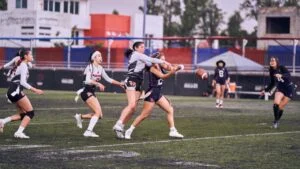
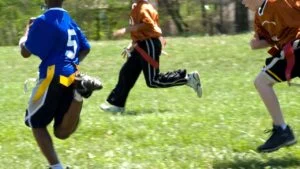
Flag football offers an exciting and fast-paced alternative to traditional American football. The game retains the strategy, teamwork, and athletic effort of tackle football, but it eliminates heavy body contact. Players wear belts with flexible flags attached to their hips. To stop a runner, defenders must pull a flag off the ball carrier’s belt instead of tackling them to the ground. This primary difference makes the sport safer and far more accessible for people of all ages.
The main objective of the game is very straightforward. Two teams compete to advance an oval ball down the field into the opponent’s end zone to score points. The team with the most points at the end of the allotted time wins the match. Because there is minimal physical contact, speed, agility, and smart positioning become the most important elements on the field. Coaches often emphasize quick decision-making and precise ball distribution over brute physical strength.
In recent years, the sport has experienced massive global growth across schools, adult leagues, and community centers. Many people prefer this format because it significantly reduces the risk of concussions and severe physical injuries. Furthermore, it requires minimal gear, which lowers the barrier to entry for beginners. Anyone with a pair of athletic shoes, shorts, and a flag belt can jump right into a practice session or a competitive match.
Understanding the core philosophy of non-contact play helps players adapt quickly. Although collisions can sometimes happen by accident, intentional tackling, pushing, holding, or diving is strictly forbidden. Referees enforce these safety guidelines very strictly throughout every match. This clean and energetic structure allows participants to focus entirely on building skills, improving cardiovascular fitness, and enjoying team competition.
Complete Guide to Essential Flag Football Rules
Mastering the foundational flag football rules is the first step toward enjoying the game, whether you play recreationally or competitively. The rulebook is designed to keep action fluid and safe while maintaining tactical complexity. Understanding how downs work, how the field is divided, and how time is managed will give any player a clear advantage during competition.
Field Dimensions and Layout
A standard flag football field is smaller than a traditional tackle football gridiron. The playing area typically measures fifty yards long by thirty yards wide. Additionally, there are two end zones at opposite ends of the field, usually measuring ten yards deep each. This compact layout ensures continuous energy and fast transitions between offense and defense.
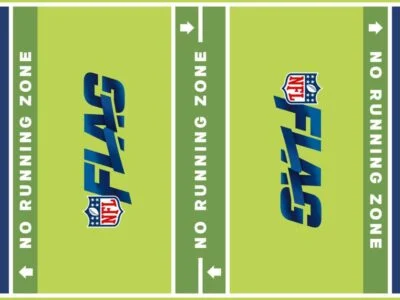
The field is divided into two equal halves by a marked line at the center, known as the midfield line. In many league formats, there are also designated no-run zones located five yards before the midfield line and five yards before each end zone. These specific zones are created to prevent dangerous short-yardage power runs near critical scoring boundaries.
Because the field is shorter, teams must rely on quick short passes and sudden lateral movements to make progress. The boundary lines marked on the perimeter determine whether a play remains active. If a ball carrier steps on or over the sideline, the play is immediately declared dead by the referee at that exact spot.
Team Size and Roster Composition
Most official flag football games use a five-on-five or seven-on-seven format. The five-on-five layout is the most popular style used in international tournaments and major recreational organizations. Each team has five active players on the field at a time, including a quarterback, receivers, and defensive backs.
Rosters usually carry anywhere from eight to twelve players to allow for frequent substitutions. Since the tempo of the game is fast and continuous, substituting players keeps the energy levels high. Substitutions can occur between plays as long as the incoming player is on the field before the ball is snapped.
Coaches must balance their lineup with agile runners, accurate passers, and fast defensive flag pullers. Height and weight matter far less in this environment than raw footwork and hand-eye coordination. As a result, teams often feature diverse rosters with players of varying athletic backgrounds.
Game Duration and Time Management
An official flag football game consists of two twenty-minute halves. The game clock runs continuously during the first nineteen minutes of each half. This continuous running clock ensures that matches stay on schedule and maintain an active rhythm.
During the final minute of the second half, the clock operates under specific stop-clock guidelines. The clock stops for incomplete passes, players stepping out of bounds, scoring plays, and penalties. This structural shift creates high drama and intense tactical play calling during the final moments of a close game.
Each team is typically awarded two or three short timeouts per half. Coaches use these timeouts to stop the clock, rest exhausted players, or plan critical offensive plays. Managing these timeouts effectively near the end of the game often determines the outcome of tight matchups.
If the score remains tied at the end of regulation time, an overtime period is played. Overtime rules usually grant each team one possession from a short distance to score. The team that manages to convert their opportunity while defending successfully claims the final victory.
Equipment and Uniform Requirements
The required equipment for flag football is simple, lightweight, and inexpensive. Every player must wear a specialized flag belt equipped with two or three flags made of durable material. The flags must hang clearly over the outer sides of the player’s hips without being tucked inside the waistband.
Players are required to wear mouthguards to protect against accidental collisions. Standard athletic clothing such as shorts or sweatpants and breathable jerseys are mandatory. Shirts and jerseys must be securely tucked into the pants so they do not obstruct defender access to the flag belt.
Cleats are highly recommended to provide grip and traction on turf or grass surfaces. However, metal spikes are strictly prohibited in all formats to avoid accidental injuries during close plays. Shorts with open side pockets are also banned because fingers can easily get caught in them when defenders attempt to pull a flag.
Referees inspect all gear before kickoff to verify that every belt unclips easily upon being pulled. Modifying belts or using sticky substances on flags is considered unsportsmanlike conduct and results in immediate disqualification. Keeping equipment standard and fair preserves the integrity of the game.
Offensive Flow and Ball Movement
Moving the football across the field requires precise timing and execution. The offensive team begins their drive at their own five-yard line after a kickoff or touchback. They have four downs, or attempts, to cross the midfield line and earn a new set of downs.
The Line of Scrimmage and Snapping
Every offensive play begins at an imaginary line called the line of scrimmage. This line extends across the width of the field at the exact point where the ball was declared dead on the previous play. Neither team can cross this line until the ball is officially snapped.
The snap is the action of transferring the football from the center player to the quarterback. The center must snap the ball between their legs or pass it sideways to initiate play. Once the ball leaves the center’s hands, the action becomes live, and the game clock continues.
If an offensive or defensive player crosses the line of scrimmage before the snap occurs, an offside penalty is called. Clean snaps are critical because a fumbled snap is declared a dead ball right where it hits the ground. This results in a loss of down and valuable field position for the offense.
Passing Mechanics and Quarterback Rules
Passing is the most dynamic element of flag football offense. The quarterback receives the snap and looks to distribute the ball to open receivers running specific routes. In most standard formats, the quarterback has a restricted amount of time to release the pass.
A pass clock, usually set at seven seconds, begins counting as soon as the ball is snapped. If the quarterback does not throw or hand off the ball within seven seconds, the play is blown dead, resulting in a loss of down. This rule prevents quarterbacks from holding the ball indefinitely in the backfield.
Quarterbacks are generally not allowed to run across the line of scrimmage with the ball unless they first hand it off to another player who then hands or passes it back. All forward passes must be thrown from behind the line of scrimmage. Once the ball crosses that imaginary boundary line, no further forward passes are permitted on that play.
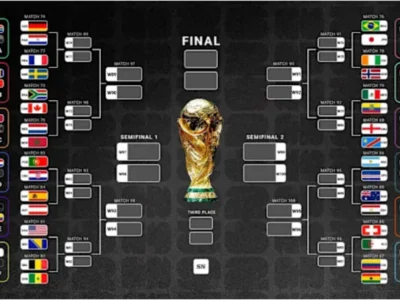
Completing forward passes requires tight precision because defensive players actively jump pass routes to intercept the ball. Large sporting events, such as major international football tournaments, display a similar intensity where quick passing breaks down stubborn defensive units. Fans tracking global sports tournaments often follow the
FIFA World Cup 2026 Round of 16 Bracket to see high-stakes tactical plays unfold on the biggest stage.
Running Plays and Handoffs
Running plays offer a direct way to gain yardage and keep the defense off balance. The quarterback can hand off or pitch the ball to a running back lined up behind or beside them. Once the handoff is complete, the runner can attempt to find open space down the field.
Direct snaps to running backs are generally illegal; the ball must go to the quarterback first. Multiple handoffs behind the line of scrimmage are allowed in many leagues, enabling complex trick plays like reverse runs and double passes. However, once the ball crosses the line of scrimmage, no further handoffs can take place.
Running plays are strictly prohibited when the offense enters the designated no-run zones near midfield and the end zone. This forces the offense to rely entirely on passing skills to gain the final few yards needed for a first down or a touchdown. This rule prevents teams from simply pushing through crowded defensive lines using physical mass.
Ball carriers are not allowed to guard their flags while running. Flailing arms, blocking flags with the football, or dipping shoulders in a way that conceals the belt is penalized as flag guarding. Runners must rely solely on speed, jukes, and rapid changes of direction to evade defenders.
Earning First Downs
The ultimate goal of every offensive drive is to keep moving forward by earning first downs. An offense receives four opportunities, called downs, to cross the midfield line from their starting point. If they successfully cross midfield within four downs, they earn an automatic new set of downs.
Once a team crosses midfield, they get four more downs to cross the goal line and score a touchdown. If the offense fails to cross midfield or reach the end zone on their fourth down, possession turns over to the opposing team at that spot.
Strategic decision-making becomes vital on fourth down plays. A team must decide whether to attempt a risky long pass to reach the line or execute a punt-like play to pin the opponent deep in their own territory. Choosing the right play depends on the current score, remaining time, and confidence in the offensive squad.
Defensive Strategies and Flag Pulling Mechanics
Defending in flag football requires exceptional patience, quick instincts, and precise balance. Without the option to tackle, defenders must master the art of grabbing moving flags while avoiding illegal physical contact with the runner.
The Art of Flag Pulling
Flag pulling is the primary defensive skill in this sport. To execute a successful flag pull, a defender must target the base of the flag belt attached to the runner’s hip. Grabbing the very top of the flag near the clip makes it much easier to detach cleanly.
Once a defender successfully removes a flag from the ball carrier, they must immediately raise the flag high in the air. This visual signal alerts the referee to blow the whistle and end the play. The spot where the flag was pulled marks the exact location for the next line of scrimmage.
If a player’s flag belt falls off accidentally during play before they receive the ball, the rules adapt. The player can still catch a pass, but they are considered down immediately at the spot of the catch upon touching the ball. Alternatively, some leagues require defenders to touch the flagless player with one hand to stop the play.
Defenders cannot grab a runner’s clothing, belt loops, or shorts while trying to pull the flag. Holding or pulling a player down by their jersey is penalized as a defensive holding infraction. Clean flag pulling requires targeting the flag itself without altering the runner’s natural path.
Rushing the Quarterback
Pressuring the quarterback forces quick decisions and leads to offensive mistakes. However, to maintain safety and give the offense time to execute plays, defenders who rush the passer must start behind a designated line. This line is typically marked seven yards behind the line of scrimmage.
The referee or field coordinator marks this seven-yard rush line before every snap. Only players who align behind this mark when the ball is snapped are eligible to rush the quarterback immediately. Any defender starting inside the seven-yard mark must wait until a handoff or pass occurs before crossing the line of scrimmage.
Rushers must take a direct line toward the quarterback while avoiding contact with offensive blockers. Screen blocking is allowed, but physical obstruction or tackling the passer is strictly prohibited. A successful rush can result in a sack if the defender pulls the quarterback’s flag behind the line of scrimmage.
High-stakes competition and intense rivalries often produce dramatic defensive plays and quick counter-attacks. Modern athletic rivalries showcase this constant battle for territory and pressure, much like the intense games seen when tracking professional sports events like
Padres vs Dodgers, where small mistakes lead to immediate changes in momentum.
Coverage Schemes: Man vs Zone
Defensive coordinators rely on two main coverage styles to shut down opponent passing attacks: man-to-man coverage and zone coverage. Each system has unique strengths and requires precise coordination among all defensive players on the field.
In man-to-man coverage, each defensive player is assigned to cover a specific offensive receiver. The defender follows that receiver wherever they run across the field, striving to stay close enough to knock down passes or pull flags instantly. This scheme demands high speed and agility from individual defenders.
In zone coverage, defenders are responsible for covering specific areas of the field rather than individual players. Players watch the quarterback’s eyes and react to the ball as it enters their assigned zone area. Zone defenses are particularly effective at preventing long explosive passing plays downfield.
Many teams mix both strategies during a single game to confuse the opposing quarterback. Communicating clearly before the snap helps defenders switch assignments smoothly without leaving receivers wide open. A strong defense balances aggressive flag pulling with disciplined coverage down the field.
Scoring System and Points Distribution
Scoring points in flag football requires a blend of offensive precision, smart field positioning, and opportunistic defensive plays. Unlike traditional contact football where kickers play a major role, flag football completely eliminates extra-point kicks, field goals, and punts. Every point scored comes directly from offensive execution in the end zone or exceptional defensive pressure.
Touchdowns and Extra Point Conversions
Crossing the opponent’s goal line with control of the football results in a touchdown. A touchdown is worth six points, serving as the primary goal for every offensive possession. The ball carrier must have at least one flag clearly inside or across the vertical plane of the goal line before a defender pulls the belt.
After scoring a touchdown, the offensive team receives a single attempt to score extra points through a conversion try. The team can choose between two distinct conversion options based on their risk tolerance and tactical position in the game.
The first option is a one-point conversion attempt taken from the five-yard line. Due to the proximity to the goal line, this try must be completed using a passing play, as no-run zone rules apply. The second option is a two-point conversion attempt snapped from the ten-yard line, where the offense can choose either a running play or a passing play.
If the defense intercepts a pass during an extra-point attempt, they can return the ball all the way to the opposing end zone. A successful defensive return on a conversion attempt awards the defending team two points, completely flipping the momentum of the match.
Safeties and Defensive Scoring
Safeties provide a rare but highly impactful way for a defensive unit to score points directly. A safety occurs when a defender pulls the ball carrier’s flag inside the ball carrier’s own end zone. It also occurs if an offensive player steps out of bounds inside their own end zone or fumbles the ball out of bounds behind their goal line.
Awarding a safety gives two points to the defensive team. Furthermore, the defense receives immediate possession of the football, as the team that surrendered the safety must punt or throw a kickoff from their own five-yard line. This dual reward makes high defensive pressure inside the opponent’s red zone extremely valuable.
Defensive interceptions returned for touchdowns are another dynamic way to score points. Known commonly as a pick-six, the defensive player catches an offensive pass in flight and runs it all the way across the opponent’s goal line for six points.
Understanding these scoring dynamics helps coaches plan appropriate strategies for tight games. Teams trailing late in the contest often opt for aggressive two-point conversions to bridge point gaps quickly without wasting valuable clock time.
Common Penalties and Rule Violations
Maintaining fair play and safety depends entirely on strict adherence to structural rule enforcement. Because flag football removes heavy pads and helmets, referees penalize physical contact and illegal flag interference very firmly to protect players from injuries.
Flag Guarding and Stiff Arming
Flag guarding is one of the most frequent offensive infractions called on the field. It occurs whenever a ball carrier actively uses their hands, arms, elbows, or the football itself to block a defender from pulling their flag.
Runners often instinctively drop an arm or dip a shoulder to protect their flag belt when a defender approaches. Even accidental contact that deflects a defender’s hand away from the flag belt constitutes flag guarding. Referees immediately blow the play dead at the spot of the infraction, subtract five yards from that point, and dock a down from the offense.
Stiff arming is another form of flag guarding where the runner extends a arm to push away an approaching defender. Extending an arm to create space or shove a defender’s head or torso is strictly illegal. Players must rely entirely on hips, footwork, and speed adjustments to dodge incoming flag pulls.
Diving or jumping to avoid a flag pull is similarly classified as illegal physical movement. Ball carriers must remain on their feet at all times; diving forward to gain extra yardage or leap over a defender results in an immediate dead-ball spot penalty.
Physical Contact and Holding Penalties
Although flag football is designed as a non-contact sport, physical contact occurs naturally when players run fast routes and pursue ball carriers. However, intentional physical obstruction, pushing, blocking, or tackling is heavily penalized.
Offensive players are not allowed to lead with their shoulders or charge directly into a established defensive player standing in their running path. If an offensive player runs through a defender who has established position, an offensive charging penalty is assessed. The runner must actively change direction to navigate around stationary defenders.
Defensive holding is equally penalized to ensure runners can move freely down the field. Defenders cannot grab a runner’s shorts, jersey, or body to slow them down while attempting to pull a flag. Grabbing a player’s clothes instead of the flag results in a ten-yard penalty added to the end of the play, alongside an automatic first down for the offense.
Illegal tackling or intentionally knocking a ball carrier to the ground is considered a major safety violation. Severe or repeated physical fouls can result in unsportsmanlike conduct penalties, immediate player ejection, or team forfeitures depending on the league’s disciplinary guidelines.
Offside and Line of Scrimmage Violations
Order at the line of scrimmage is maintained through clear alignment guidelines for both teams. Every player must be completely motionless behind their respective side of the line of scrimmage for at least one full second before the snap occurs.
If a defensive player crosses the line of scrimmage before the center snaps the football, an offside penalty is signaled. The offense is awarded five yards, and the down is replayed. If an offensive player flinches, moves forward prematurely, or crosses the line before the snap, a false start penalty immediately stops the play.
Offensive teams are allowed to have one player in horizontal or backward motion across the backfield prior to the snap. However, if two or more players are moving simultaneously at the time of the snap, an illegal motion penalty is called. Clean pre-snap communication between the quarterback and receivers prevents these unnecessary yardage losses.
Pass interference penalties represent another critical category of line violations. Defensive pass interference occurs when a defender physically contacts, shoves, or pulls a receiver to prevent them from catching a pass. This foul results in an automatic first down awarded to the offense at the spot of the infraction.
Game Strategies and Tactical Positioning
Winning consistent flag football matches requires more than just individual speed and athleticism. Teams must construct disciplined offensive playbooks and flexible defensive systems that exploit opponents’ weaknesses while minimizing mistakes.
Offensive Route Running and Formations
Offensive success hinges on route running precision and timing. Because field space is smaller than full-sized fields, wide receivers must execute sharp, decisive cuts rather than broad sweeping turns.
Common offensive routes include quick slants, out routes, hitches, and deep post patterns. Slant routes involve a receiver taking three quick steps forward before cutting sharply at a forty-five degree angle toward the center of the field. This route allows the quarterback to throw a fast pass before defensive rushers can reach the backfield.
Setting up distinct formations helps confuse defensive coverage schemes. Aligning three receivers on one side of the field creates a stack formation that forces defenders to make split-second alignment decisions. The quarterback can quickly read which receiver gets free space based on how defenders stack up before the snap.
Using motion prior to the snap helps quarterbacks identify whether the defense is using man-to-man or zone coverage. If a defender follows the moving receiver across the field, the defense is playing man coverage. If the defenders remain stationary in their areas, the quarterback knows the defense is operating in a zone structure.
Defensive Alignments and Communication
Organizing a strong defense requires constant vocal communication before and during every play. Players must quickly call out receiver motions, identify potential rushers, and confirm coverage zones to avoid leaving open gaps on the field.
A common defensive structure is the two-three zone alignment. In this formation, two defensive backs cover deep zones toward the end zone to protect against long passes. Meanwhile, three short-zone defenders manage the space near the line of scrimmage to pull flags quickly on short passes and running plays.
The designated rusher plays a crucial role in disrupting the offensive rhythm. The rusher must time their sprint from seven yards back to cross the line of scrimmage precisely as the ball is snapped. A fast, relentless rush forces the quarterback to throw early passes into heavy coverage.
Defenders covering receivers deep downfield must always keep their eyes on the quarterback while staying close to their assigned targets. Swatting down passes or tipping incoming throws into the air often creates turnover opportunities for nearby teammates.
Transition Play and Clock Management
Managing time during the closing minutes of a half separates experienced teams from amateur squads. Knowing when to hurry up or slow down the pace of play keeps control of the game firmly in your hands.
When leading near the end of a game, an offense should run plays that stay inside the boundary lines. Keeping the ball in bounds ensures that the continuous game clock keeps running, melting away valuable seconds that the opponent needs to mount a comeback.
Conversely, a team trailing late in the match must utilize sideline routes effectively. Receivers catching passes near the sidelines should immediately step out of bounds after making a catch to stop the game clock during the final minute of play.
Coaches must save their timeouts for critical late-game situations rather than wasting them early in the half. Calling a strategic timeout allows a team to set up a well-rehearsed play during high-pressure fourth-down conversions or final scoring attempts.
Advanced Playbook, Officiating, and Equipment Standards
Executing a complete game plan involves understanding non-contact blocking techniques, proper officiating signals, and specific league variations. As flag football continues to grow worldwide, standardized rules ensure fair play across youth, adult, and international competitions. International governing bodies like the
International Federation of American Football (IFAF) maintain global competition standards to keep play consistent and safe.
Screen Blocking and Non-Contact Shielding
Traditional tackle football relies on aggressive physical blocking to clear lanes for ball carriers. In contrast, flag football replaces physical contact blocking with passive screen blocking. Understanding how to set legal screens allows offensive teams to create running space without committing personal fouls.
Fundamentals of Legal Screen Blocking
A legal screen block operates under principles similar to setting a pick in basketball. An offensive player must set their position firmly without making physical contact with the approaching defender. The blocker must stand completely stationary with their feet planted on the ground before the defender makes their move.
Blockers are required to keep their arms tucked tightly against their chest or held firmly behind their back. Extending arms, pushing with hands, or leaning sideways into a defender’s path is strictly illegal. If a blocker moves into a defender who is already running in a established lane, an offensive obstruction penalty is called immediately.
Proper spacing is essential when setting screens near the line of scrimmage or out on receiver routes. Blockers must allow defenders at least one full step of space to react and change direction. Setting a screen too close to a moving defender makes collision unavoidable, resulting in a personal foul against the offense.
Ball carriers must also read their blockers carefully to maximize field yardage. Instead of running directly behind a blocker, the runner should use subtle changes of pace to lure defenders toward the stationary screen. This technique forces the defender to take a longer path around the blocker, giving the runner time to accelerate downfield.
Moving Screens and Downfield Obstruction
Once a play moves past the line of scrimmage, offensive players running alongside the ball carrier must maintain strict self-control. Running downfield directly in front of the ball carrier to block defenders dynamically is considered an illegal moving screen in most five-on-five formats.
In five-on-five play, all offensive players not receiving the ball must avoid impeding defensive flag pullers. Players cannot form a wall or wedge in front of the runner to prevent defenders from reaching the flag belt. If two offensive players run side by side while shielding the ball carrier, referees will blow the whistle and assess a five-yard penalty from the spot of the foul.
Some adult seven-on-seven leagues permit limited moving screens behind the line of scrimmage, provided the blocker does not use open hands or physical force. However, even in contact-allowed divisions, holding, tripping, or pushing defenders away from the runner remains entirely prohibited.
Coaches teach receivers to clear out defensive coverage by running deep routes away from the primary ball carrier. Dragging defenders away from the main running lane creates natural open grass without risking obstruction calls. Smart route design eliminates the need for risky screen blocks near the ball carrier.
Officiating, Signals, and Field Management
Referees play an active role in maintaining game flow, enforcing player safety, and keeping track of field positioning. Recognizing standard referee signals helps players, coaches, and spectators understand call decisions without confusion during fast-paced play. Youth and recreational leagues often follow safety frameworks provided by organizations like
USA Football to ensure officials maintain consistent enforcement on the field.
Key Referee Signals and Calls
Referees use clear physical signals to communicate penalty calls and play outcomes across the field. When a touchdown is scored, the official extends both arms straight up into the air above their head. For a safety, the official raises both hands and clasps their palms together overhead.
Penalty signals follow standardized patterns to indicate which team committed the violation. To signal flag guarding, the referee sweeps one arm downwards across their waist to demonstrate an illegal arm swipe. For defensive holding, the official holds one wrist out front and grabs it with the opposite hand.
When an incomplete pass occurs, the referee waves both arms back and forth horizontally across their chest. If a player steps out of bounds, the official blows the whistle and points directly to the spot on the sideline where the player’s foot crossed the boundary line.
False start and illegal motion fouls are indicated by the official spinning their hands over one another in front of their chest. Understanding these signals immediately allows players to reset quickly for the next down without losing focus or arguing with field officials.
Spotting the Ball and Dead-Ball Conditions
The exact spot where a play ends determines the new line of scrimmage for the following down. A play becomes dead immediately when a defender pulls a flag, a runner steps out of bounds, or the ball touches the ground.
The ball is spotted at the location of the football at the precise moment the flag is pulled, not where the player’s body ends up. If a runner extends their arm with the ball forward before their flag is pulled, the forward progress of the ball is marked as the new spot.
Fumbles are declared dead immediately upon touching the turf. There are no fumble recoveries by the defense in standard flag football rules. The team maintaining possession retains the ball at the spot where it dropped, losing the down. If a player fumbles the ball backward, the ball is spotted where it hits the ground.
If a player’s flag belt unclips and falls to the ground on its own during a route, the player remains eligible to catch passes. However, once the player catches the ball, the play is blown dead instantly at the spot of the catch. Referees ensure game fairness by monitoring equipment state continuously.

League Formations and Tournament Standards
Flag football features different formats depending on age groups, skill levels, and governing bodies. While core concepts stay identical, subtle adjustments exist between five-on-five, seven-on-seven, and international tournament settings. Many official youth and league structures align directly with established standards set by
NFL FLAG to maintain player development pipelines.
5v5 vs 7v7 Rule Differences
The five-on-five format is the most popular style globally, emphasized by major organizations and international sports federations. It relies heavily on speed, continuous motion, and open space, featuring no field linemen and strict no-run zones.
In contrast, seven-on-seven formats are frequently played on larger fields, often measuring eighty yards long by forty yards wide. This style incorporates offensive and defensive linemen who can engage in light, open-hand contact blocking along the line of scrimmage.
Seven-on-seven games allow direct rushing from the line of scrimmage without waiting behind a seven-yard rush line. Quarterbacks in seven-on-seven also have more time options since pass clocks are often extended or removed in favor of standard pass rush pressure.
Coaches must adjust their training programs depending on which format their team enters. Five-on-five demands intense aerobic fitness and rapid flag pulling mechanics, whereas seven-on-seven requires physical trench play and complex multi-receiver passing route concepts.
International Tournament Guidelines
International flag football competitions operate under unified rules established by governing authorities. Official Olympic movement inclusion and international showcases follow structural guidelines overseen by the
International Olympic Committee as the sport expands onto global stages.
International guidelines strictly enforce non-contact rules, issuing immediate unsportsmanlike conduct penalties for high tackles, taunting, or aggressive physical contact. Field dimensions, timing systems, and ball sizes are standardized so teams worldwide compete on identical terms.
Roster limits at international events typically cap teams at twelve active players. Game officials undergo rigorous certification to ensure consistent penalty calls across international matches. This standardized framework has accelerated global participation across North America, Europe, Asia, and Latin America.
Uniform standards under international guidelines mandate matching team jerseys with clearly printed numbers on front and back. Flag belts must contrast sharply with the team’s shorts color so defensive players and officials can spot flag positions effortlessly during fast movements.
Frequently Asked Questions (FAQs)
What is the main difference between flag football and tackle football?
The primary difference is how a play ends. In flag football, defenders must pull a flexible flag off the ball carrier’s belt to stop the play instead of tackling them to the ground. This eliminates heavy physical contact and padded gear.
Can you rush the quarterback in flag football?
Yes, defenders can rush the quarterback. However, in standard five-on-five play, rushers must start at least seven yards behind the line of scrimmage before the ball is snapped to give the quarterback time to execute a play safely.
Is physical contact allowed in flag football?
No, physical contact is strictly prohibited. Players cannot push, hold, tackle, or intentionally block with their bodies. Any illegal physical contact results in immediate penalties called by the referee.
What happens if a player’s flag falls off by accident?
If a player’s flag belt falls off accidentally before receiving the ball, they remain eligible to catch a pass. Once they touch or catch the ball, the play is immediately blown dead at that spot.
Are kickoffs and punts included in flag football?
Most standard flag football formats do not feature traditional kickoffs or punts. Offenses usually start their drives at their own five-yard line after scores, touchbacks, or turnovers.
What is flag guarding in flag football?
Flag guarding is an offensive violation where a ball carrier uses their hands, arms, elbows, or the football to block a defender from pulling their flag. It carries a yardage penalty and loss of down.
How many players are on the field in a standard flag football game?
The most popular format played globally is five-on-five, meaning each team has five active players on the field. Some adult leagues also feature seven-on-seven play.
What is a no-run zone in flag football?
No-run zones are areas located five yards before the midfield line and five yards before each end zone. When an offense enters these zones, they must execute a passing play to prevent dangerous short-yardage power runs.
How long does a standard flag football game last?
An official game typically consists of two twenty-minute halves. The clock runs continuously for the first nineteen minutes of each half and shifts to stop-clock rules during the final minute.
Conclusion
Mastering the rules of flag football provides the foundation for enjoying one of the fastest-growing sports in the world. From understanding basic field layouts and team setups to executing precise route patterns and disciplined flag pulling, every rule is structured to deliver safe, energetic, and strategic competition. Whether participating in local recreational leagues or high-level tournament play, following these guidelines ensures a fair, rewarding, and athletic experience for players of all skill levels.




[…] People who love running routes and catching passes often check out detailed resources like a flag football rules guide for a different style of gridiron action. Similarly, fast-paced recreational leagues […]