
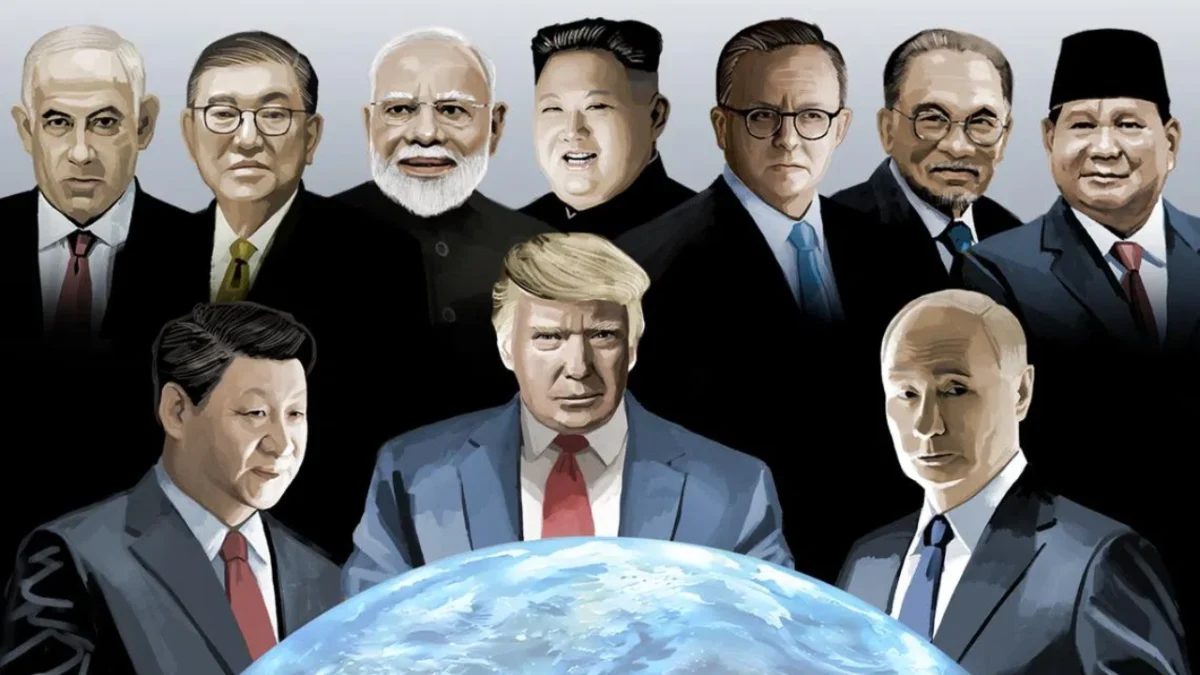
Current World Leaders: Presidents, Prime Ministers & More
Current World Leaders: Presidents and Prime Ministers
The current world leaders shape decisions that can affect millions of people, from economic policies and international trade to security, diplomacy, and global conflicts. A change in national leadership can influence relationships between countries, financial markets, immigration policies, and even the direction of international organizations. That is why knowing who leads major countries today is more than a matter of political interest. It helps readers understand the forces shaping the world around them.
Leadership, however, does not look the same in every country. Some nations are led by presidents, while others have prime ministers. Some have both positions, with authority divided between a head of state and a head of government. Monarchs also remain important in several countries, although their constitutional powers vary widely.
This guide explains how global political leadership works and provides a structured overview of today’s major national leaders. Because political offices can change after elections, resignations, appointments, or other constitutional events, information about current leaders should always be checked against reliable official sources and updated when leadership changes occur.
What Are Current World Leaders?
The term “world leaders” generally refers to people who hold the highest political positions in their countries and have significant responsibility for national decision-making. In everyday conversation, the phrase can describe presidents, prime ministers, monarchs, chancellors, and other senior political figures.
There is no single worldwide system for choosing or defining a leader. Each country follows its own constitution, laws, political traditions, and system of government.
In a presidential system, the president often serves as both the head of state and the head of government. The exact powers of the office depend on the country’s constitution. In a parliamentary system, the prime minister usually leads the government, while a president or monarch may serve primarily as head of state.
Some political systems combine elements of both models. These differences matter because two people holding the same title can have very different responsibilities in different countries.
Head of State vs. Head of Government
One of the most important distinctions in international politics is the difference between a head of state and a head of government.
The head of state represents the country at the highest constitutional or ceremonial level. Depending on the country, this person may be a president or monarch.
The head of government is normally responsible for directing the executive branch and managing the country’s day-to-day political administration. In many parliamentary democracies, this role belongs to the prime minister.
In some countries, one person performs both functions. In others, the responsibilities are divided between two different offices.
Understanding this distinction helps prevent a common mistake: assuming that every president is the country’s primary government leader or that every prime minister has the same powers.
How World Leaders Are Chosen
The process for selecting a national leader depends on the country’s political system.
In many democracies, presidents are elected directly by citizens or indirectly through an electoral mechanism. Prime ministers in parliamentary systems are generally drawn from the political party or coalition that can command a majority in the legislature.
Leadership can also change through succession rules, party decisions, parliamentary votes, resignations, or constitutional procedures.
Monarchies operate differently. In hereditary systems, the head of state usually inherits the position according to established succession rules. Constitutional monarchies can give elected governments most executive authority, while the monarch’s role may be largely ceremonial.
These differences are important when comparing political leaders across countries. A title alone does not tell the full story of how much constitutional authority a leader actually possesses.
Presidents Around the World
Presidents are among the most recognizable political leaders in international affairs. Their responsibilities, however, differ substantially from one country to another.
In some nations, the president has broad executive authority and plays the central role in forming government policy. In others, the president shares executive responsibilities with a prime minister or has a more limited constitutional role.
Presidents may represent their countries in international meetings, approve legislation, appoint senior officials, oversee national security, and conduct foreign policy. The exact responsibilities depend on the constitution and political institutions of each country.
This is why comparing presidents simply by title can be misleading. A president in one political system may have powers that are assigned to a prime minister in another.
Prime Ministers Around the World
Prime ministers are the principal political leaders in many parliamentary systems.
They typically lead the government, coordinate cabinet ministers, introduce major policy programs, and work with the national legislature to pass laws. Their authority often depends on maintaining political support within parliament.
A prime minister can therefore be powerful while still operating under significant constitutional and parliamentary limits.
Prime ministers can also leave office without a general election taking place. A governing party may replace its leader, a coalition may collapse, or a parliamentary vote may remove the government.
This makes the political position more dynamic than a simple list of names might suggest.
Countries With Both Presidents and Prime Ministers
Several countries have both a president and a prime minister.
The relationship between these two offices varies. In some systems, the president has stronger executive powers while the prime minister manages the government. In others, the president’s role is largely ceremonial and the prime minister is the dominant political figure.
The balance can also depend on political circumstances. Constitutional powers may remain unchanged while the practical influence of each office shifts depending on parliamentary majorities, coalition arrangements, and political alliances.
For readers following global politics, this distinction is essential. Knowing the names of two senior officials is not enough; understanding which institution has authority over a particular decision provides much better political context.
Why Global Leadership Matters
The decisions of national leaders rarely remain completely inside national borders.
Economic policies can influence international markets. Trade decisions can affect businesses and consumers in other countries. Diplomatic disputes can change alliances, while military decisions can create consequences far beyond a country’s territory.
Leaders also participate in international institutions and meetings where governments negotiate issues such as security, climate policy, economic cooperation, migration, and humanitarian crises.
For this reason, following global leadership can help readers understand why international events happen and how one government’s decision may affect another country.
The Role of Leadership in Foreign Policy
Foreign policy is one of the most visible areas where world leaders influence international affairs.
National governments decide how they interact with allies, competitors, neighboring states, and international organizations. Leaders can negotiate agreements, support diplomatic initiatives, impose sanctions, strengthen alliances, or change the direction of bilateral relations.
However, foreign policy is rarely controlled by one person alone.
Foreign ministries, defense departments, intelligence agencies, legislatures, courts, diplomats, and other institutions can all play important roles. In democratic systems, constitutional checks and political opposition can further limit executive decisions.
A reliable analysis of any world leader therefore needs to consider the institutions surrounding that leader, not just the individual’s public statements.
How Leadership Changes Can Affect the World
A leadership transition can create uncertainty at home and abroad.
Markets may react to changes in economic policy. Foreign governments may reassess diplomatic relationships. Businesses may wait for clarity before making major investments. Citizens may also experience changes in taxation, regulation, immigration, public spending, or social policy.
The impact depends on the country and the importance of the policy involved.
A change in leadership at a major economic or military power can attract international attention because decisions made by that government may have wider consequences.
At the same time, not every leadership change produces a dramatic global shift. Strong institutions, existing treaties, established bureaucracies, and long-term national interests can provide continuity even when political leadership changes.
Why a Current Leaders List Must Be Updated
Unlike historical political information, a list of current leaders has a short shelf life.
Elections can produce new governments. Prime ministers can resign. Presidents can leave office. Parliamentary coalitions can change. Unexpected political events can also create transitions between scheduled elections.
That means a responsible current-leaders guide should not rely on an old list or an undated source.
NexaVice will treat this page as a living reference rather than a one-time article. When an important leadership change occurs, the relevant information should be reviewed and updated so readers are not presented with outdated political information.
The goal is not simply to publish names. It is to provide useful political context while clearly distinguishing current information from historical facts.
Understanding Global Leaders Beyond Their Titles
A leader’s title provides only the starting point.
To understand a national leader properly, readers should also consider the country’s political system, constitutional structure, legislative power, political party, election process, and relationship with other institutions.
Two leaders may both be called presidents while having completely different responsibilities. Likewise, two prime ministers may operate under very different parliamentary systems.
That context is what turns a basic list of political figures into meaningful political information.
In the next sections, we will look more closely at current world leaders by region, beginning with major political powers and then expanding to Europe, Asia, the Middle East, Africa, North America, Latin America, and Oceania.
Current World Leaders of Major Global Powers
Understanding current world leaders requires more than looking at a single list of names. Some countries have a much larger influence on global affairs because of their economic size, military capabilities, population, diplomatic reach, technological strength, or position in international institutions.
The United States, China, Russia, India, Japan, Germany, France, and the United Kingdom are among the countries whose leadership decisions frequently receive international attention. Their governments influence subjects ranging from trade and investment to security, diplomacy, technology, energy, and international cooperation.
However, influence does not mean that every decision made by a leader automatically changes world politics. National institutions, legislatures, courts, political parties, economic conditions, and international agreements all shape what a government can actually do.
United States
The United States is led by President Donald J. Trump, who returned to the White House after the 2024 presidential election and began his second, nonconsecutive presidency in January 2025. The White House identifies him as the 45th and 47th president of the United States.
The American presidency has an unusually visible role in international affairs. U.S. Decisions can influence global security partnerships, trade policy, financial markets, technology policy, energy strategy, and diplomatic relationships.
The United States is also a permanent member of the United Nations Security Council and has major economic and military capabilities. This gives the country’s leadership a significant role in international negotiations and global crises.
At the same time, the U.S. President does not operate without institutional limits. Congress, federal courts, state governments, agencies, elections, and other constitutional mechanisms all influence how presidential policies are implemented.
China
China is led by Xi Jinping, who serves as China’s president and also holds the country’s most powerful Communist Party leadership position.
China’s political system differs from presidential and parliamentary democracies. The Communist Party of China plays the central role in the country’s political structure, making the relationship between party leadership and state institutions particularly important when examining Chinese politics.
China’s growing economic and technological influence has made its leadership increasingly important to global affairs. Its decisions affect international trade, manufacturing, investment, technology, energy, and diplomatic relations.
Relations between China and the United States are especially significant. Official Chinese government reporting has continued to describe high-level discussions between Xi Jinping and U.S. President Donald Trump during 2026, highlighting the importance of their relationship to wider international stability.
Russia
Russia’s president is Vladimir Putin.
The Russian presidency holds substantial authority within the country’s political system. Russia’s leadership is particularly important to international security because of its military capabilities, nuclear arsenal, permanent seat on the UN Security Council, energy resources, and relationships with countries across Europe, Asia, and the Middle East.
Russia’s foreign policy has also made its leadership central to discussions about European security and the war in Ukraine.
For readers following global politics, Russia cannot be examined separately from its relationships with other major powers. Its diplomatic and security policies interact with European governments, the United States, China, and other states.
India
India is led by Prime Minister Narendra Modi.
India’s official government website identifies Modi as prime minister and continues to publish his government activities and cabinet information. In June 2026, India’s cabinet also marked Modi’s record as the longest-serving elected prime minister of the country in consecutive service.
India’s growing economy, large population, technology sector, military capabilities, and diplomatic relationships make its leadership increasingly important in global affairs.
India also matters for several international groupings. Its relationships with the United States, Russia, China, Europe, the Gulf states, and other Asian countries give New Delhi a distinctive position in international diplomacy.
India’s leadership therefore matters not only to South Asia but also to broader discussions about trade, technology, energy, security, and the changing balance of global power.
Current World Leaders in Europe
Europe contains many political systems. Some countries use parliamentary governments, others have semi-presidential arrangements, and several retain constitutional monarchies.
This makes European leadership particularly interesting because the person representing a country internationally is not always the person who exercises the greatest day-to-day executive authority.
United Kingdom
The United Kingdom is a parliamentary constitutional monarchy.
The monarch serves as head of state, while the prime minister leads the government. The British political system therefore provides a clear example of the difference between ceremonial and executive leadership.
The prime minister depends on parliamentary support to govern. Political parties, the House of Commons, the cabinet, and constitutional conventions all play important roles in the operation of government.
Because the UK is a major financial center, nuclear power, permanent member of the UN Security Council, and important NATO member, changes in British leadership can attract significant international attention.
Germany
Germany operates as a federal parliamentary republic.
The chancellor is the central figure in the federal government, while the president serves as head of state with a different constitutional role.
Germany’s position in the European Union and its economic importance make its federal leadership significant beyond its borders. Decisions taken in Berlin can affect European economic policy, energy discussions, security cooperation, and the future direction of the EU.
France
France uses a semi-presidential system in which the president and prime minister have distinct constitutional responsibilities.
The French president has an especially important role in foreign policy and national security, while the prime minister leads the government under the constitutional framework.
France’s status as a nuclear-armed state, permanent UN Security Council member, major European economy, and influential EU country gives its national leadership a broad international role.
Current World Leaders in Asia
Asia contains some of the world’s largest populations, fastest-growing economies, major military powers, and strategically important regions.
Leadership across the continent varies considerably.
Some countries operate parliamentary democracies. Others use presidential systems, constitutional monarchies, or political structures that do not fit neatly into Western democratic categories.
Japan
Japan is a constitutional monarchy with a parliamentary government.
The emperor serves as the symbolic head of state, while the prime minister leads the government.
Japan’s political leadership is important to global affairs because of the country’s large economy, advanced technology sector, close security relationship with the United States, and central position in East Asian diplomacy.
Japan’s relationships with China, South Korea, the United States, and other Indo-Pacific countries make its leadership particularly relevant to regional security.
South Korea
South Korea operates as a presidential republic.
The president holds major executive responsibilities and matters for national security and foreign policy.
The country’s leadership is closely watched because of tensions on the Korean Peninsula and South Korea’s relationships with the United States, Japan, and China.
Technology and global trade also make South Korean economic policy relevant beyond East Asia.
Pakistan
Pakistan is a federal parliamentary republic in which the prime minister serves as the head of government and the president serves as head of state.
Pakistan’s geographic position gives its leadership importance in South Asian and regional affairs. Its relationships with India, China, Afghanistan, the Gulf states, and the United States all influence its foreign-policy environment.
The country also matters for discussions surrounding regional security, economic development, energy, and connectivity.
Current World Leaders in the Middle East
The Middle East remains one of the world’s most closely watched political regions.
Leadership decisions in the region can affect energy markets, regional security, international diplomacy, trade routes, and conflicts that involve multiple countries.
Political systems vary widely. The region includes republics, constitutional monarchies, absolute monarchies, and other forms of government.
Israel
Israel operates as a parliamentary democracy.
The prime minister is the country’s head of government and plays a central role in executive decision-making, national security, and foreign policy.
Israel’s leadership receives substantial international attention because of the country’s security relationships, regional conflicts, diplomatic ties, and relationship with the United States.
Saudi Arabia
Saudi Arabia is a monarchy in which the king holds the position of head of state and government.
The country’s leadership has an important influence on global energy markets because Saudi Arabia is one of the world’s major oil producers.
Its diplomatic relationships also extend across the Middle East, Asia, Europe, and the United States, giving its leadership importance well beyond the country’s borders.
Current World Leaders in Africa
Africa includes more than fifty countries with very different political systems, economies, populations, and regional interests.
No single African leader represents the continent as a whole.
Instead, countries such as Nigeria, South Africa, Egypt, Ethiopia, Kenya, Algeria, and others have their own governments and foreign-policy priorities.
Nigeria
Nigeria is Africa’s most populous country and one of the continent’s most important economies.
Its political leadership has an important role in West African diplomacy, energy policy, security, trade, and regional cooperation.
Nigeria is also influential through the Economic Community of West African States and other regional institutions.
South Africa
South Africa has a constitutional parliamentary system in which the president serves as both head of state and head of government.
As one of Africa’s largest economies and a major diplomatic actor, South Africa often matters for debates concerning developing economies, international trade, African development, and global governance.
Its participation in groups such as the G20 and BRICS also gives its national leadership a broader international platform.
Current World Leaders in Latin America
Latin America contains predominantly presidential political systems, although the constitutional powers of presidents vary from country to country.
Brazil, Mexico, Argentina, Colombia, and Chile are among the region’s most closely watched political powers.
Brazil
Brazil is led by President Luiz Inácio Lula da Silva.
Brazil’s leadership is important because the country is Latin America’s largest economy and has significant influence in regional diplomacy, environmental policy, agriculture, energy, and international economic discussions.
Brazil’s vast territory and Amazon rainforest also make its environmental policies globally relevant.
In 2026, Lula’s political position remains closely connected to Brazil’s upcoming presidential election and debates about national sovereignty, economic policy, and foreign relations.
Mexico
Mexico is a major North American economy and one of Latin America’s most influential political powers.
Its leadership has to balance domestic priorities with important relationships involving the United States, Canada, Central America, and international trade.
Mexico’s position within the North American economy makes changes in its political direction important for businesses, workers, migration policy, and regional diplomacy.
Current World Leaders in Oceania
Australia and New Zealand are the region’s most prominent political and economic powers.
Australia operates as a parliamentary constitutional monarchy, while New Zealand follows a similar parliamentary model.
Their governments play important roles in the Indo-Pacific, particularly through relationships with the United States, China, Pacific Island nations, and regional security organizations.
Australia’s geographic position also makes its leadership increasingly important in discussions about Indo-Pacific security and China’s growing influence in the region.
Why Regional Leadership Matters
Looking at leaders by region makes global politics easier to understand.
A decision made in Washington may affect European security. A policy change in Beijing can influence Asian supply chains. Political developments in the Middle East can affect energy markets. Leadership changes in major developing economies can influence trade and investment.
This interconnectedness means that today’s political leaders should not be viewed as isolated national figures.
Their decisions are part of a wider international system involving governments, businesses, alliances, international organizations, financial institutions, and millions of citizens.
For that reason, a useful guide to current world leaders should provide both the names of political leaders and the wider context needed to understand why their positions matter.
Keeping Current World Leaders Information Accurate
Political leadership can change quickly, which makes accuracy one of the most important parts of maintaining this type of resource.
NexaVice should verify leadership information against official government sources whenever possible and check major political transitions before updating the page.
A reliable editorial process should distinguish between a president, prime minister, monarch, party leader, and other influential political figures. It should also avoid presenting an influential politician as a country’s formal leader when that person does not actually hold the constitutional office.
This approach makes the page more useful for readers and gives the article a stronger foundation for long-term trust.
The next section will move beyond identifying leaders and examine how much influence they actually have, how global power is measured, how international organizations shape leadership, and how readers can verify political information before trusting it.
How Much Influence Do World Leaders Have?
Not all world leaders have the same level of influence.
A country’s population, economy, military strength, natural resources, technology sector, diplomatic network, and position in international institutions can all affect how much influence its government has outside its borders.
However, political influence is not simply a measurement of military or economic power. A smaller country can sometimes have a major diplomatic role because of its geographic location, alliances, natural resources, or ability to mediate between competing governments.
This is why there is no official worldwide ranking that can objectively determine which leader is the “most powerful.” Influence changes depending on the issue being discussed.
A leader may have substantial influence over energy policy but limited influence over global finance. Another may have strong diplomatic influence but fewer military resources.
Economic Influence
Economic strength is one of the most important sources of international influence.
Large economies can affect global demand, trade, investment, currencies, supply chains, and financial markets. Government decisions involving tariffs, taxes, industrial policy, energy, and investment can therefore have effects beyond national borders.
Economic influence can also come from control over strategically important resources.
Oil and gas producers, for example, can have an important role in global energy markets. Countries that dominate manufacturing, technology, or critical minerals can also gain influence over international supply chains.
Military Influence
Military capabilities can significantly affect a country’s geopolitical position.
Countries with large defense budgets, advanced weapons systems, nuclear capabilities, or extensive military alliances often have greater ability to influence international security discussions.
However, military power does not automatically guarantee political success.
International law, alliances, economic pressure, domestic politics, geography, and diplomatic relationships can all limit what a government can achieve.
Diplomatic Influence
Diplomacy is another major source of global influence.
A country with strong relationships across different regions may be able to negotiate agreements, build coalitions, mediate disputes, and influence international decisions.
Some countries also gain diplomatic influence by hosting international meetings or acting as intermediaries between governments that have difficult relationships.
This is why diplomatic influence should be considered separately from military strength.
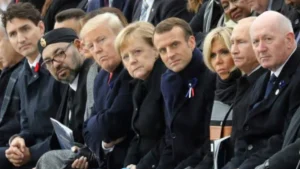
World Leaders and International Organizations
National leaders do not operate independently from the international system.
Organizations such as the United Nations, NATO, the European Union, the G7, the G20, and BRICS provide platforms where governments coordinate policies and negotiate common interests.
These organizations have different memberships, structures, and purposes.
Understanding them helps readers understand why particular leaders appear together during major international events.
United Nations
The United Nations provides one of the world’s most important diplomatic forums.
The UN Security Council has five permanent members: China, France, Russia, the United Kingdom, and the United States. These countries hold permanent seats and have veto power over substantive Security Council resolutions.
This structure gives the leaders and governments of these countries a particularly important role in international security discussions.
However, the United Nations is an organization of member states rather than a world government. Its decisions and mechanisms operate within the framework established by its founding Charter.
G7 Leaders
The Group of Seven brings together several major advanced economies.
The group provides a forum for discussing economic issues, international security, energy, technology, development, and other areas of common interest.
G7 meetings attract global attention because the participating governments represent significant shares of the world economy.
The group does not function like a single government. Each leader remains responsible for their own country’s policies.
G20 Leaders
The G20 brings together major economies from different regions of the world.
Its membership includes both developed and emerging economies, making it a broader forum than the G7.
The group discusses subjects such as international economic stability, financial cooperation, development, trade, energy, and other global challenges.
Because of the size and diversity of its membership, G20 meetings can provide a useful picture of how major economies approach shared problems.
BRICS Leaders
BRICS has become another important forum for cooperation among major emerging economies.
Its membership and structure have evolved over time, so current information should always be checked against official BRICS material rather than relying on older lists published elsewhere.
The group focuses on areas including economic cooperation, development, trade, finance, and coordination among member countries.
Its growth has also contributed to wider discussions about whether global institutions adequately represent emerging economies.
NATO Leaders
NATO is a military and political alliance rather than a collection of national governments.
Its member states retain their own political systems and national leaders while working together on collective defense.
The alliance’s decisions involve member governments and NATO institutions. Therefore, a country’s national leader can be highly important to NATO policy without personally being the “leader of NATO.”
This distinction matters when writing about international organizations because institutional leadership and national leadership are not always the same thing.
Who Is the Most Powerful World Leader?
The question “Who is the most powerful world leader?” is popular, but it does not have a single objective answer.
The answer changes according to the measurement being used.
If economic influence is the focus, leaders of the world’s largest economies may receive the most attention.
If military power is being considered, the answer may be different.
If diplomatic influence is the measure, a leader with strong relationships across several regions may rank differently.
A more responsible approach is therefore to describe areas of influence instead of declaring one person the most powerful leader without explaining the criteria.
This approach also reduces political bias and gives readers a clearer understanding of how global power actually works.
How World Leaders Influence the Global Economy
Political leadership can affect the global economy through decisions involving trade, taxes, government spending, regulation, energy, technology, and international investment.
A government that changes tariffs can affect exporters and importers in multiple countries.
A major change in energy policy can influence commodity markets.
Changes in interest-rate policy are generally handled by independent central banks rather than political leaders, but governments still influence economic conditions through fiscal policy, regulation, taxation, and public spending.
This distinction is important because political leaders should not be credited or blamed for every movement in financial markets.
Markets respond to many factors at the same time, including central-bank policy, business conditions, geopolitical events, consumer demand, and investor expectations.
How World Leaders Influence International Security
National leaders also make decisions involving defense and national security.
They may approve military operations, negotiate security agreements, strengthen alliances, or change defense priorities.
But major security decisions usually involve many institutions.
Military commanders, defense ministries, intelligence agencies, legislatures, diplomats, and legal authorities can all play important roles.
In democratic countries, constitutional checks may further limit executive authority.
This means that understanding a conflict requires more than focusing on one leader’s public statements. The wider political and institutional environment also matters.
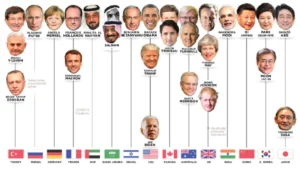
What Happens When a World Leader Leaves Office?
Leadership transitions can happen in several ways.
A leader may lose an election, reach a constitutional term limit, resign, die in office, lose parliamentary support, or be replaced according to a country’s succession rules.
The transition process depends on the political system.
In presidential systems, a successor may be determined through an election or constitutional succession.
In parliamentary systems, a governing party may select a new leader who then becomes prime minister if they can command legislative support.
In monarchies, succession may follow established hereditary rules.
These differences explain why political transitions can look very different from one country to another.
Why Current Leader Information Becomes Outdated
A major weakness of many online political lists is that they remain unchanged after a leadership transition.
An article may correctly identify a leader when it is first published but become inaccurate months or years later.
For a topic based on the word “current,” freshness is therefore part of accuracy.
NexaVice should review this pillar regularly and update sections whenever an important leadership change occurs.
The editorial team should also distinguish between the date an article was originally published and the date its political information was last verified.
That small distinction can make a major difference in reader trust.
How to Verify a Current World Leader
Readers should not rely on a single social media post, search snippet, or outdated political list when verifying who currently holds an office.
The strongest starting point is normally the official website of the relevant government.
For example, readers can check presidential offices, prime ministerial offices, national parliaments, foreign ministries, and other official government sources.
International organizations can also provide useful confirmation when discussing national representation at international meetings.
For important political claims, reputable news organizations can provide additional context, especially when a leadership transition has just occurred.
A good research process compares sources rather than accepting the first result found online.
Why Official Sources Matter
Political information can become controversial very quickly.
Official government sources can establish who formally holds an office, but they may naturally present events from the perspective of that government.
For this reason, E-E-A-T focused political reporting should combine official sources for primary facts with independent, reputable sources for context and analysis.
This creates a stronger information chain:
Official source → factual verification → independent reporting → editorial explanation
That approach is especially useful when covering elections, resignations, disputed political events, constitutional changes, or international conflicts.
Current World Leaders: A Living Reference
A useful world-leaders guide should not be treated as a frozen list.
Leadership changes are part of politics, and a high-quality resource must reflect those changes.
NexaVice can turn this page into a long-term reference by reviewing major leadership developments and updating the relevant sections rather than repeatedly creating nearly identical articles.
This also creates opportunities for supporting articles.
For example, a major election can produce a dedicated article about the new leader, while the broader current world leaders pillar can be updated and linked to that coverage.
That creates a natural connection between evergreen content and breaking political news.
Frequently Asked Questions
Who are the current world leaders?
Current world leaders are the people who currently hold senior national political offices, including presidents, prime ministers, monarchs, and other heads of state or government. The exact role depends on each country’s political system.
Who is the most powerful world leader?
There is no universally accepted answer. Political influence depends on factors such as economic strength, military capabilities, diplomatic reach, international alliances, and the specific issue being considered.
What is the difference between a president and a prime minister?
A president may serve as head of state, head of government, or both, depending on the country. A prime minister normally leads the government in a parliamentary system. Their actual powers depend on national constitutional rules.
Can a country have both a president and a prime minister?
Yes. Several countries have both positions. Their responsibilities vary according to the country’s constitution. In some systems the president has greater executive authority, while in others the prime minister is the main political decision-maker.
How often do world leaders change?
There is no fixed global schedule. Leaders can change after elections, resignations, parliamentary leadership changes, succession events, term limits, or other constitutional processes.
Why are some world leaders more influential than others?
Influence can come from economic size, military capabilities, population, technology, natural resources, diplomatic relationships, international alliances, and membership in major international institutions.
How can I check whether a world leader is still in office?
The best starting point is the official website of the relevant government or national institution. For recent transitions, readers should also compare information with reputable independent news organizations.
Why does a current world leaders list need regular updates?
Political leadership changes over time. An accurate list must therefore be reviewed whenever elections, resignations, appointments, succession events, or other major political transitions occur.
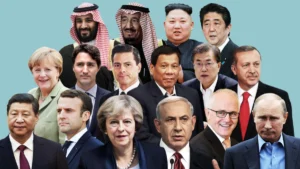
Conclusion
The world’s political landscape is constantly changing, but the importance of national leadership remains.
The people who lead major countries make decisions that can influence diplomacy, trade, security, energy, technology, and international cooperation. Yet understanding global leadership requires more than memorizing names.
A president, prime minister, monarch, or other national leader operates within a political system. Constitutional rules, legislatures, courts, political parties, institutions, voters, and international relationships all shape what that leader can accomplish.
That is why a useful guide to current world leaders should combine accurate leadership information with political context.
For readers, the most important lesson is simple: always check whether political information is current, understand the office a leader actually holds, and look beyond headlines when evaluating international events.
NexaVice will continue to update this resource as significant leadership changes occur, helping readers follow global politics through reliable information rather than outdated lists or isolated claims.
Here is what you need to know about current world leaders. United Nations Member States, Use this in the United Nations section to verify countries and UN membership. United Nations Member States. NATO Member Countries, Use this in the NATO Leaders section when discussing NATO membership. NATO currently lists 32 member countries. NATO Member Countries. What Is NATO?, Use this when explaining NATO’s political and military role. What Is NATO?. President Donald J. Trump, Use this in the United States section as the official White House source for the U.S.
Presidency. President Donald J. Trump. Prime Minister of India, Use this in the India section to verify Narendra Modi’s current position and official activities. Prime Minister of India. BRICS Official Information, Use this in the BRICS Leaders section for current membership and organizational information. About the BRICS. NATO Organization, Use this when explaining NATO’s organizational structure and decision-making process. NATO Organization.
Related reading: Understanding Todd Blanche and His Legal Career

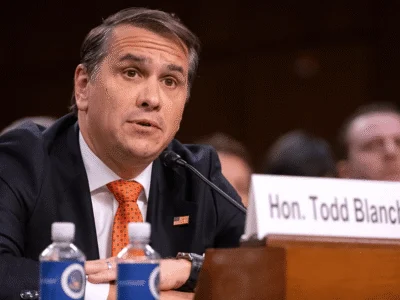

[…] sometimes compare the scale of such legal battles to the complex diplomatic negotiations tracked by current world leaders during international […]
[…] innovation. For a broader view of international political actors, you might review profiles of current world leaders who frequently attend these high-profile […]