Solo Travel Safety Tips: The Complete Guide to Traveling Alone with Confidence
Traveling alone can be one of the most rewarding experiences of your life. Solo travel safety tips help you enjoy the freedom of exploring new places while reducing unnecessary risks. Whether you are planning your first solo trip or already have travel experience, good preparation makes every journey safer and more enjoyable.
Solo travel gives you the chance to discover new cultures, meet different people, and make decisions at your own pace. At the same time, traveling alone means you are responsible for your own safety. A few smart habits before and during your trip can make a big difference.
This guide shares practical advice that is easy to follow. Instead of creating fear, it focuses on helping you travel with confidence, stay aware of your surroundings, and make informed decisions wherever your journey takes you.
Why Solo travel safety tips Is More Popular Than Ever
Solo travel has become more popular over the past few years. People are choosing independent trips for personal growth, adventure, and flexibility. Many travelers enjoy creating their own schedules without having to compromise with others.
Remote work has also changed the way people travel. Digital nomads, freelancers, and students often combine work with travel, making solo trips more common than ever before.
Social media has inspired many people to visit places they never considered before. While beautiful photos can motivate travelers, they do not always show the planning and preparation needed for a safe trip.
The growing popularity of solo travel also means more hotels, hostels, tour companies, and travel apps now provide services designed specifically for independent travelers.
Is Solo Travel Safe?
One of the most common questions people ask is whether solo travel is safe. The answer depends on your preparation, destination, and daily decisions.
No destination is completely risk-free. However, most travel problems can be reduced by staying alert, planning ahead, and avoiding unnecessary risks.
Safe travel is not about being afraid. It is about making smart choices. Knowing local customs, understanding transportation options, and protecting your personal information can help prevent many common problems.
Confidence also plays an important role. Travelers who stay calm, remain aware of their surroundings, and trust their instincts are often better prepared to handle unexpected situations.
Why Travel Safety Should Always Be Your First Priority
Many people spend weeks planning attractions and activities. They compare hotels, restaurants, and sightseeing spots. However, safety planning should always come before entertainment.
A few minutes of preparation can prevent major problems during your trip. Knowing emergency numbers, saving copies of important documents, and understanding local laws can save valuable time if something unexpected happens.
Good planning also reduces stress. When you already know how to respond in different situations, you can enjoy your trip with greater peace of mind.
Travel safety is not about limiting your adventure. It gives you the confidence to experience more while protecting yourself.
Benefits of Traveling Alone
Solo travel offers experiences that are difficult to find when traveling with a group.
You make every decision yourself. You choose where to go, when to leave, and how long to stay. This flexibility allows you to explore destinations at your own pace.
Traveling alone also helps build confidence. Solving small challenges during a trip improves problem-solving skills and encourages independence.
Many solo travelers say they become more aware of their surroundings. They interact with local people more often and gain a deeper understanding of different cultures.
Solo travel can also improve communication skills. Meeting new people becomes easier because you naturally become more open to conversations and new experiences.
Common Risks Solo Travelers Should Know
Every trip comes with some level of risk. Understanding these risks helps you prepare instead of panic.
Tourist scams are common in busy destinations. Fake taxi drivers, overpriced services, and distraction thefts often target visitors who appear unfamiliar with the area.
Losing important documents can also create serious problems. A missing passport or identification card may delay your trip and require assistance from your country’s embassy.
Poor transportation decisions can increase your risk. Traveling late at night in unfamiliar areas or accepting rides from unverified drivers should be avoided whenever possible.
Sharing too much personal information with strangers can also create unnecessary risks. Friendly conversations are part of travel, but protecting your privacy is equally important.
The good news is that most of these situations are preventable with careful planning and good judgment.
Build the Right Mindset Before You Travel
Safety starts long before you board your flight.
A confident traveler does not assume everything will go perfectly. Instead, they prepare for possible challenges while staying positive about the journey.
Learn to observe your surroundings without becoming anxious. Notice exits, transportation options, and busy public areas wherever you go.
Trust your instincts. If a situation feels uncomfortable or something does not seem right, leave the area without worrying about being polite.
Avoid making decisions under pressure. Scammers often create urgency to make travelers act without thinking.
Staying calm and thinking clearly is one of the most valuable travel skills you can develop.
Choose a Destination That Matches Your Experience
Your first solo trip should match your confidence and experience level.
If you are new to independent travel, choose destinations with reliable transportation, good tourist infrastructure, and a reputation for welcoming visitors.
Cities with clear public transportation systems, English-speaking services, and strong tourism support are often easier for first-time solo travelers.
Research local customs before you arrive. Understanding basic cultural expectations helps you avoid misunderstandings and show respect to local communities.
Weather also deserves attention. Traveling during hurricane seasons, extreme heat, or heavy rainy periods may create additional challenges, especially if you are traveling alone.
Selecting the right destination is one of the most effective ways to improve your overall travel safety.
Research Your Destination Carefully
Good research is one of the strongest travel safety tools you have.
Learn about neighborhoods before booking your accommodation. Some areas are better suited for tourists, while others may not be ideal after dark.
Understand local transportation options. Knowing how buses, trains, taxis, or ride-sharing services work can help you avoid confusion after arriving.
Check local laws and customs. Something considered normal in your home country may not be acceptable somewhere else.
Stay updated with official travel advisories before departure. Government travel websites often provide important information about weather events, public demonstrations, health notices, and local security conditions.
The more you understand your destination before leaving home, the more confident you will feel during your trip.
Create a Flexible Travel Plan
Planning every minute of your vacation is not necessary. However, having a basic travel plan improves both convenience and safety.
Know where you will stay during your first few nights. Save your accommodation address both digitally and on paper.
Plan your arrival carefully. Reaching a new city during daylight hours often makes navigation easier, especially if it is your first visit.
Leave room for unexpected opportunities. Flexibility allows you to enjoy spontaneous experiences without losing control of your schedule.
A balanced travel plan combines preparation with freedom, helping you stay organized while still enjoying the adventure.
Prepare Your Travel Documents Before You Leave
Your travel documents are the most important items you will carry. Losing them can quickly turn a relaxing trip into a stressful experience.
Start by checking that your passport is valid for your destination. Some countries require several months of validity beyond your travel dates. Waiting until the last minute to check can lead to unexpected problems.
Keep digital copies of your passport, visa, travel insurance, and flight details in secure cloud storage. Save another copy on your phone so you can access it without an internet connection if needed.
It is also a good idea to print one paper copy of your important documents. Paper backups can be useful if your phone battery dies or your device is lost.
Protect Your Passport During Your Trip
Your passport should always stay in a safe place. Avoid carrying it everywhere unless local laws require you to.
Many hotels provide secure safes for valuable items. If you use one, double-check that you have collected everything before checking out.
Never leave your passport unattended in cafés, airport waiting areas, or public transportation. Even a short distraction can create an opportunity for theft.
When someone asks for identification, make sure they are authorized to request it. If possible, show a copy instead of handing over your original passport unless it is legally required.
Buy Travel Insurance Before Departure
Travel insurance is something many people overlook until they need it. A good policy can protect you from unexpected expenses and reduce stress during emergencies.
Medical treatment in another country can be expensive. Insurance may help cover hospital visits, emergency transportation, or trip interruptions depending on your policy.
Some plans also provide protection for lost luggage, delayed flights, or stolen belongings. Reading the policy carefully helps you understand what is included before your trip begins.
Think of travel insurance as part of your safety plan rather than an extra expense.
Pack Smart Without Carrying Too Much
Packing light makes traveling easier and safer. Heavy luggage can slow you down and attract unnecessary attention.
Choose clothing that matches the weather and local culture. Comfortable shoes are often more valuable than extra outfits because you may spend long hours walking.
Keep your everyday essentials together so you can reach them quickly. Searching through your entire bag every time you need something increases the chance of losing small items.
Leave extra space in your luggage for souvenirs or unexpected purchases instead of filling every corner before your trip starts.
Separate Your Valuables
Keeping everything in one place is risky. If one bag is lost or stolen, you could lose your money, cards, and identification at the same time.
Store your cash in different locations. Keep one payment card separate from your wallet so you still have access to money if your primary wallet disappears.
Place important items where they are not easy to reach. Bags with secure zippers or hidden pockets offer better protection in crowded areas.
Simple habits like these can prevent small problems from becoming major emergencies.
Protect Your Money While Traveling
Money safety is about awareness more than fear.
Avoid carrying large amounts of cash unless absolutely necessary. Use trusted payment methods whenever possible and keep only the cash you expect to need for the day.
When using an ATM, choose machines located inside banks, shopping centers, or other well-lit public places. If anything looks unusual, find another machine instead.
Count your money privately. Displaying large amounts of cash in public may attract unwanted attention.
Review your bank transactions regularly during your trip. Early detection of unusual activity gives you more time to respond.
Keep Your Phone Secure
Your phone holds much more than contact numbers. It contains photos, banking apps, travel bookings, and personal information.
Use a strong screen lock and enable biometric security if your device supports it. This makes unauthorized access much more difficult.
Turn on the phone’s location service so you can locate or erase your device if it is lost.
Carry a portable charger when exploring for long hours. A dead battery can make navigation and communication difficult when you need them most.
Keeping your phone charged is almost as important as keeping it protected.
Stay Safe When Using Public Wi-Fi
Free internet is convenient, but public networks are not always secure.
Avoid logging into online banking or entering sensitive passwords while connected to public Wi-Fi. If you need to access important accounts, use your mobile data or a trusted secure connection.
Turn off automatic Wi-Fi connections so your phone does not connect to unknown networks without your knowledge.
Logging out of important accounts after use adds another layer of protection.
A few digital safety habits can protect both your identity and your finances.
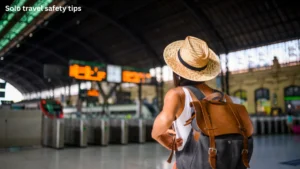
Be Careful With Social Media
Sharing your travel experiences is exciting, but posting everything in real time can reduce your privacy.
Avoid announcing your exact location while you are still there. Waiting until you leave a destination gives you greater control over your personal safety.
Do not post photos showing your hotel room number, boarding pass, passport, or other personal details.
Remember that not everyone who sees your content has good intentions. Sharing memories is enjoyable, but protecting your privacy should come first.
Save Important Emergency Contacts
Every traveler should prepare for unexpected situations before leaving home.
Save the local emergency number for your destination in your phone. Also keep contact information for your country’s embassy or consulate.
Write down phone numbers for your accommodation, airline, insurance provider, and a trusted family member or friend.
Having these contacts available offline is helpful if you lose internet access.
Preparation during calm moments makes emergencies easier to manage.
Share Your Travel Plans With Someone You Trust
Independent travel does not mean disappearing without communication.
Share your itinerary with a trusted family member or close friend before your trip begins. Let them know your accommodation details and expected travel dates.
If your plans change, send a quick update whenever possible. Regular communication provides peace of mind for both you and the people who care about you.
You do not need to report every movement. A simple message every few days is often enough during longer trips.
Learn Basic Local Phrases
You do not need to become fluent in another language to travel safely.
Learning a few simple phrases can make daily situations much easier. Greetings, directions, emergency requests, and polite expressions often help create positive interactions with local people.
Knowing how to ask for help or explain that you need medical assistance can also be valuable during unexpected situations.
Even a small effort to speak the local language usually earns respect and improves communication.
Prepare for Health and Medical Needs
Your health deserves as much attention as your itinerary.
Carry enough prescription medication for your entire trip, along with copies of your prescriptions if necessary. Keep medicines in their original packaging whenever possible.
Pack a small first-aid kit with items such as bandages, pain relievers, antiseptic wipes, and any personal medical supplies you may need.
Drink enough water, get adequate rest, and avoid pushing yourself too hard during the first days of your trip. Fatigue often leads to poor decisions.
Healthy travelers are usually better prepared to enjoy their experiences and respond calmly to unexpected challenges.
Stay Organized Throughout Your Journey
Good organization reduces unnecessary stress.
Keep your travel documents, transportation tickets, accommodation confirmations, and important contact details together in one easy-to-access location.
Review your plans each evening before the next day’s activities. Knowing where you are going and how you will get there helps prevent confusion.
Simple routines save time, reduce mistakes, and allow you to focus more on enjoying your destination.
Choose Safe Accommodation
Where you stay has a direct impact on your travel experience. A comfortable room is important, but a safe location matters even more.
Before booking, read recent guest reviews instead of looking only at the overall rating. Travelers often mention security, neighborhood conditions, and staff behavior in their reviews. These details can help you make a better decision.
It is usually worth paying a little more for accommodation in a well-connected and reputable area. Saving money on a room is not worth risking your safety.
Hotel Safety Tips
After checking into your hotel, take a few minutes to become familiar with the property.
Locate the emergency exits and keep your room key with you whenever you leave. Lock your door every time you enter your room, even if you are only staying inside for a short time.
Do not tell strangers your room number. If hotel staff say it out loud at reception, politely ask them to write it down instead.
Before opening your door, confirm who is outside. If someone claims to be hotel staff and you were not expecting anyone, contact the front desk first.
A few simple habits can make your stay much more secure.
Staying Safe in Hostels
Hostels are popular with solo travelers because they are affordable and social. They can also be safe if you stay aware.
Use the locker provided for your valuables and bring your own quality lock if needed. Avoid leaving your wallet, passport, or electronics on your bed while you are away.
Meeting other travelers is one of the best parts of staying in a hostel. Even so, avoid sharing too much personal information with people you have just met.
Friendly conversations are great. Blind trust is not.
Airbnb and Vacation Rental Safety
Vacation rentals can provide more privacy than hotels, but they require extra research.
Book only through trusted platforms with verified reviews. Read the listing carefully and confirm the exact location before making a payment.
After arriving, check that all doors and windows lock properly. Know how to contact the host if an emergency occurs.
If the property does not match the listing or makes you feel unsafe, contact the booking platform immediately.
Airport Safety Tips
Airports are generally secure, but they are also busy places where travelers become distracted.
Keep your bags within sight at all times. Never agree to carry luggage for someone you do not know, even if they seem friendly.
Double-check your boarding gate and flight information using official airport displays instead of relying on strangers.
Arriving early helps you avoid rushing, which often leads to mistakes.
Stay Alert on Public Transportation
Public transportation is one of the easiest ways to explore a destination. It is also where many travelers become easy targets because they are focused on maps or phones.
Keep your bag closed and close to your body, especially during crowded rides.
Pay attention to your surroundings rather than staring at your screen for long periods. If you feel uncomfortable, move closer to other passengers or near the driver when possible.
Knowing your stop in advance reduces confusion and helps you travel with confidence.
Use Taxis and Ride-Sharing Services Wisely
Choose licensed taxis or trusted ride-sharing apps whenever they are available.
Before getting into a vehicle, confirm the driver’s name and the license plate if you booked through an app.
Avoid sharing personal information with the driver that could reveal where you are staying for several days or that you are traveling completely alone.
If something feels wrong, cancel the ride and choose another option.
Your safety should always come before convenience.
Walking Alone With Confidence
Walking is one of the best ways to experience a new destination, but staying aware is essential.
Walk with confidence, even if you are using navigation. If you need to check directions, step into a café or another safe public place instead of stopping in the middle of the street.
Avoid displaying expensive cameras, jewelry, or electronics unnecessarily. Looking like an easy target can attract unwanted attention.
Trust your instincts. If a street feels isolated or uncomfortable, choose a different route.
Be Extra Careful After Dark
Many destinations remain safe at night, but risks often increase after sunset.
Stay in well-lit areas where other people are present. If possible, use trusted transportation instead of walking long distances late at night.
Avoid accepting invitations from people you have only recently met, especially if you are unsure where you are going.
Knowing when to leave a situation is an important part of staying safe.
Meet New People Safely
Meeting local people and other travelers is one of the greatest rewards of solo travel.
Choose public places for first meetings and let someone you trust know where you are going if you plan to spend time with new people.
Enjoy conversations, but avoid sharing details such as your hotel room number, financial information, or travel schedule.
Healthy boundaries allow you to enjoy new friendships while protecting your privacy.
Watch Out for Common Travel Scams
Scams exist in many tourist destinations, but awareness is your best defense.
Some people may offer unexpected help, unofficial tours, or deals that seem too good to be true. Others may try to distract you while someone else targets your belongings.
Take your time before making decisions involving money. Genuine service providers rarely pressure travelers to act immediately.
If you are unsure about a situation, politely walk away.
Solo Female Travel Safety Tips
Women travel alone successfully every day around the world. Careful planning can make solo travel even more enjoyable.
Research local customs before arriving. Understanding appropriate clothing and cultural expectations helps you blend into your surroundings.
Choose accommodation with strong reviews from female travelers whenever possible.
When exploring at night, stay in busy public areas and use trusted transportation if you are returning late.
Confidence, awareness, and preparation are often the best safety tools.
Solo Male Travel Safety Tips
Men also face travel risks, even though they are discussed less often.
Avoid unnecessary arguments, excessive drinking, or accepting risky challenges from strangers.
Do not assume every area is safe simply because you feel confident. Good judgment is more valuable than overconfidence.
Respect local customs and avoid situations that could lead to conflict.
Protect Your Digital Privacy
Travel safety includes protecting your online information.
Enable two-factor authentication on important accounts before your trip. Update your phone and apps so they have the latest security improvements.
Be cautious when scanning unknown QR codes or downloading unfamiliar applications while traveling.
Cybersecurity is just as important as physical security in today’s connected world.
Know What to Do During an Emergency
Even with careful planning, unexpected situations can happen.
If you lose your passport, contact your country’s embassy or consulate as soon as possible. Report stolen bank cards immediately so they can be blocked.
If you need medical assistance, contact local emergency services and your travel insurance provider without delay.
Stay calm, gather accurate information, and avoid making rushed decisions.
Most travel emergencies become easier to manage when you have already prepared for them.
Frequently Asked Questions
Is solo travel safe for beginners?
Yes. Solo travel can be safe for beginners who choose suitable destinations, plan ahead, stay aware of their surroundings, and follow basic travel safety practices.
What is the most important solo travel safety tip?
Preparation is the most important step. Research your destination, secure your documents, share your itinerary with someone you trust, and stay aware throughout your trip.
How can I protect my money while traveling alone?
Carry only the cash you need, separate your payment methods, use secure ATMs, and monitor your bank transactions regularly.
Should I buy travel insurance for solo travel?
Yes. Travel insurance can help cover medical emergencies, trip interruptions, lost baggage, and other unexpected expenses.
Is it safe to meet strangers while traveling?
Meeting new people is part of the travel experience, but first meetings should take place in public locations. Avoid sharing personal information until you know someone well.
How do I stay safe at night while traveling alone?
Stay in well-lit areas, use trusted transportation, avoid isolated places, and always trust your instincts if a situation feels unsafe.
What should I do if I lose my passport abroad?
Report the loss to local authorities if required and contact your country’s embassy or consulate immediately to begin the replacement process.
Can I use public Wi-Fi safely while traveling?
Yes, but avoid accessing sensitive accounts on public networks. Use secure connections whenever possible and enable extra security features on your devices.
Final Thoughts
Solo travel is about freedom, discovery, and personal growth. It allows you to experience the world on your own terms while building confidence with every journey.
Following these solo travel safety tips does not guarantee that every trip will be perfect, but it greatly improves your ability to avoid common problems and respond wisely when challenges appear.
Preparation, awareness, and good judgment are your most valuable travel companions. When you plan carefully and stay alert, you can focus less on worry and more on creating unforgettable memories.
Travel smart, respect local cultures, and trust yourself. The world has countless amazing places waiting to be explored, and with the right mindset, you can experience them safely and confidently.
- U.S. Department of State – Travel Advisories
https://travel.state.gov/content/travel/en/traveladvisories/traveladvisories.html - UK Government – Foreign Travel Advice
https://www.gov.uk/foreign-travel-advice - Australian Government – Smartraveller
https://www.smartraveller.gov.au/ - Centers for Disease Control and Prevention (CDC) – Travelers’ Health
https://wwwnc.cdc.gov/travel - World Health Organization (WHO) – International Travel and Health
https://www.who.int/health-topics/travel-and-health - International Air Transport Association (IATA) – Travel Centre
https://www.iatatravelcentre.com/ - International Civil Aviation Organization (ICAO)
https://www.icao.int/ - U.S. Transportation Security Administration (TSA)
https://www.tsa.gov/travel - INTERPOL – Travel Security Information
https://www.interpol.int/ - United Nations World Tourism Organization (UN Tourism)
https://www.unwto.org/ - U.S. Embassy Directory
https://www.usembassy.gov/ - International SOS – Travel Risk Information
https://www.internationalsos.com/ - Red Cross – Travel Safety Advice
https://www.redcross.org/ - FEMA – Emergency Preparedness
https://www.ready.gov/ - Global Rescue – Travel Safety Resources
https://www.globalrescue.com/ - Lonely Planet – Travel Safety Guides
https://www.lonelyplanet.com/ - National Geographic Travel
https://www.nationalgeographic.com/travel - Hostelworld Travel Blog
https://www.hostelworld.com/blog/ - World Nomads – Travel Safety Tips
https://www.worldnomads.com/travel-safety - Google Maps
https://maps.google.com/