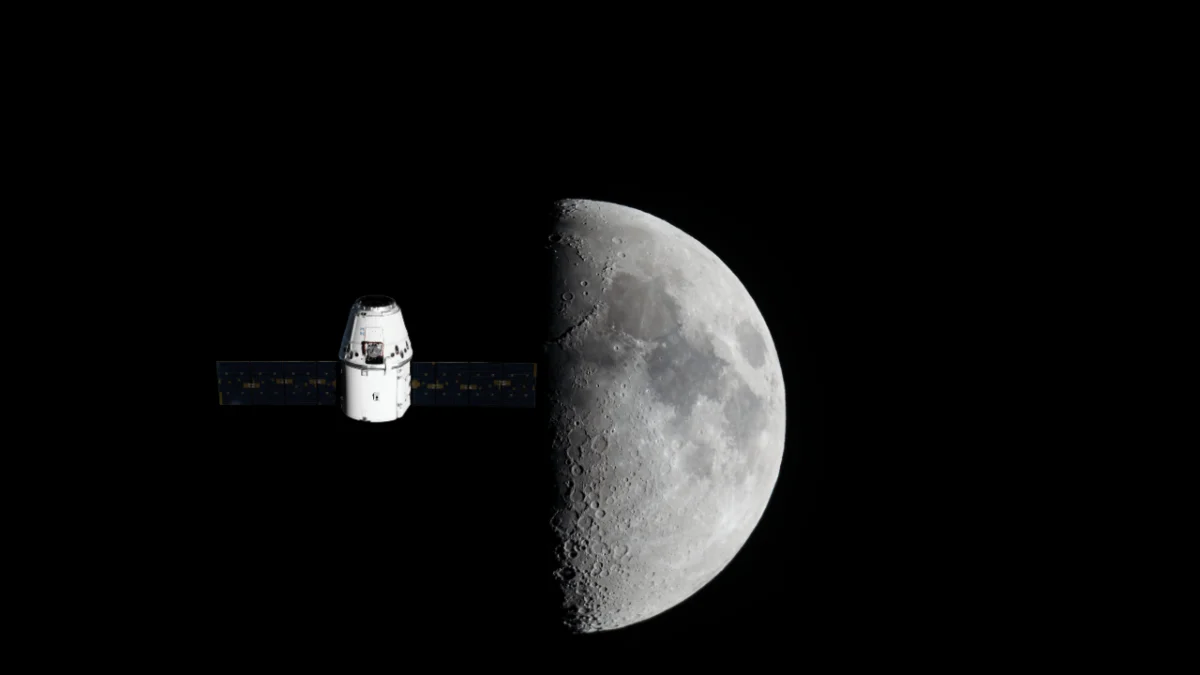
SpaceX Satellite Hits Moon: What Really Happened?
The idea of a SpaceX satellite hits moon event quickly spread across social media and news websites. Many people believed that one of SpaceX’s active Starlink satellites had crashed into the Moon. While the story attracted worldwide attention, the real explanation is more complicated. Scientists later confirmed that the object involved was not an operating Starlink satellite but a rocket stage connected to an earlier deep-space mission.
The incident became an important example of how difficult it can be to track space objects after they leave Earth. It also highlighted growing concerns about space debris, lunar exploration, and the need for better monitoring of objects traveling beyond Earth’s orbit. As more spacecraft are launched each year, even small tracking mistakes can create global confusion.
Understanding what actually happened helps separate facts from headlines. It also explains why experts continue improving methods for identifying abandoned rocket stages and other pieces of space hardware moving through the solar system.
Did a SpaceX Satellite Really Hit the Moon?
The short answer is no. Despite the popular headline, there is no confirmed evidence that an active SpaceX satellite crashed into the Moon.
The confusion began when astronomers tracked an unidentified object on a collision course with the lunar surface. Early calculations suggested the object could be the upper stage of a SpaceX Falcon 9 rocket launched during the Deep Space Climate Observatory (DSCOVR) mission in 2015. Because of this initial identification, many reports described the event as a “SpaceX satellite” hitting the Moon.
Later studies showed that the object was more likely a rocket stage from China’s Chang’e 5-T1 mission rather than SpaceX hardware. By the time scientists reached a stronger conclusion, the original headlines had already spread across the internet, leaving many readers with the wrong impression.
This case demonstrates how difficult it is to identify inactive spacecraft traveling millions of kilometers from Earth. Unlike satellites in low Earth orbit, deep-space objects are not always monitored continuously by a single international tracking system.
How the Moon Impact Story Started
The story began when astronomers noticed an old rocket body slowly drifting toward the Moon. Unlike active spacecraft, abandoned rocket stages continue traveling through space without engines or navigation systems. Their paths are controlled almost entirely by gravity.
Astronomers calculated that the object would eventually collide with the Moon. Since it had spent years traveling through deep space, determining its exact identity became increasingly difficult.
Independent observers compared historical launch records, orbital data, and telescope observations. Early evidence pointed toward a SpaceX Falcon 9 upper stage. However, additional research later challenged that conclusion and suggested another origin.
The event attracted worldwide attention because it marked one of the few known cases of human-made space hardware naturally impacting the lunar surface.
Why Scientists Initially Believed It Was SpaceX
Several factors contributed to the initial misunderstanding.
The object’s estimated trajectory closely matched the path expected from the Falcon 9 upper stage used during the DSCOVR mission. Public tracking databases also contained incomplete historical information, making identification more difficult.
As additional orbital calculations became available, researchers noticed inconsistencies between the predicted Falcon 9 trajectory and the object’s actual movement. These differences prompted further investigation.
Eventually, many experts concluded that the available evidence better matched a Chinese launch vehicle instead of SpaceX equipment. Although the exact identification received widespread scientific discussion, the original “SpaceX satellite hits moon” headline remained popular across news platforms and social media.
Why This Story Matters
Even though the original reports turned out to be misleading, the event raised important questions for the future of space exploration.
Every year, governments and private companies launch hundreds of satellites and rockets into space. As the number of missions increases, accurately tracking inactive hardware becomes more challenging. Better international cooperation, improved tracking technology, and transparent mission records will become increasingly important.
The incident also reminded the public that space exploration extends far beyond launches and landings. Objects sent into space decades ago can continue traveling for years before eventually colliding with planets, moons, or other celestial bodies.
What Happened When the Object Hit the Moon?
The object eventually struck the far side of the Moon, the hemisphere that permanently faces away from Earth. Because the impact occurred on the Moon’s far side, no one on Earth could watch it happen in real time.
Scientists predicted the collision well before it occurred by using orbital models and long-term tracking data. The impact itself was expected to create a fresh crater and eject lunar dust and rocks into the surrounding area. However, the Moon has no atmosphere, so there was no explosion or fireball like those seen when meteors enter Earth’s atmosphere.
Researchers viewed the collision as a rare scientific opportunity. Instead of treating it as a disaster, they hoped the new crater would help them better understand the Moon’s surface and how impacts shape planetary bodies over time.
How Scientists Confirmed the Impact
Although the collision could not be observed directly from Earth, scientists relied on spacecraft orbiting the Moon to study the impact site later.
High-resolution lunar orbiters photographed the area and searched for signs of a newly formed crater. Images collected after the impact confirmed that the object had indeed struck the lunar surface.
One surprising discovery was that the collision appeared to create two overlapping craters instead of one. This unusual result suggested the impacting rocket body may have had an uneven mass distribution or two large structures at opposite ends. The finding surprised researchers because most discarded rocket stages are expected to produce a single crater.
The double-crater discovery provided valuable data for scientists studying both impact physics and the internal structure of old launch vehicles.
Why the Identity of the Object Was Confusing
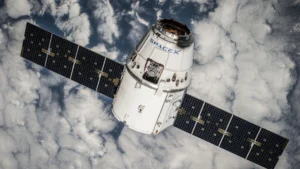
The SpaceX satellite hits moon story highlights one of the biggest challenges in modern spaceflight: tracking abandoned spacecraft in deep space.
Once a rocket stage completes its mission, it often becomes an uncontrolled object. Unlike active satellites, it no longer sends navigation signals or performs course corrections. Over several years, gravitational forces from Earth, the Moon, and the Sun slowly change its orbit.
Without a single global system that tracks every deep-space object, researchers often depend on historical launch records, telescope observations, and mathematical models. Small errors in those records can lead to incorrect identifications.
In this case, astronomers initially believed the object belonged to a SpaceX Falcon 9 mission. Later analyses indicated it was more likely associated with another country’s lunar mission. The updated conclusion demonstrated how scientific understanding improves as new evidence becomes available.
Did SpaceX Confirm Responsibility?
No. SpaceX did not confirm that one of its satellites or rocket stages struck the Moon.
As researchers gathered more evidence, the theory linking the object to SpaceX became less convincing. Independent experts found that the observed trajectory aligned more closely with another launch vehicle.
This distinction is important because many online headlines continued referring to a “SpaceX satellite,” even though the available evidence did not support that claim.
The incident serves as a reminder that early reports during developing scientific investigations can change as additional data becomes available.
What This Means for Future Space Missions
The Moon is becoming increasingly important for international space exploration. Governments and private companies are planning lunar landers, research stations, communication satellites, and eventually long-term human missions.
As more spacecraft travel beyond Earth orbit, proper tracking of inactive rocket stages will become even more critical. Knowing the location of abandoned hardware helps reduce uncertainty, improves mission planning, and protects future scientific operations.
Many experts are also calling for stronger international cooperation on space traffic management. Better recordkeeping and shared tracking information would make it easier to identify objects traveling through deep space and reduce confusion similar to the one surrounding this incident.
The Growing Challenge of Space Debris Beyond Earth
Most discussions about space debris focus on low Earth orbit, where thousands of satellites operate every day. However, deep-space debris is also becoming an important issue.
Rocket stages sent toward the Moon or other destinations can remain in space for years. Even when they are no longer active, gravity continues to influence their paths. Eventually, some may collide with the Moon or other celestial bodies.
Although these events are rare, they demonstrate why future exploration will require improved monitoring systems. As humanity launches more missions into deep space, accurate tracking will become essential for both safety and scientific research.
Could Moon Impacts Affect Future Lunar Missions?
The Moon has been struck by asteroids and meteoroids for billions of years, so a single human-made object is unlikely to cause significant long-term damage. However, every impact leaves behind new craters and scattered debris that scientists carefully study.
With multiple countries and private companies planning future lunar missions, understanding these impacts has become more important than ever. Engineers need accurate maps of the lunar surface, while researchers want to learn how impacts change the Moon over time.
The incident also reminds space agencies that responsible mission planning does not end after a spacecraft completes its primary objective. Proper disposal of rocket stages and improved tracking systems will play a larger role as lunar exploration continues to expand.
What We Learned From the Incident
The SpaceX satellite hits moon story became a valuable lesson for both scientists and the public.
First, it showed that early reports can sometimes be inaccurate. Initial orbital calculations suggested one explanation, but additional evidence later pointed in a different direction. This is a normal part of the scientific process, where conclusions improve as new data becomes available.
Second, the event highlighted the growing challenge of managing objects beyond Earth’s orbit. As more nations launch missions to the Moon, Mars, and deep space, international cooperation on tracking spacecraft will become increasingly important.
Finally, the incident demonstrated how quickly misinformation can spread online. Many headlines continued describing the object as a “SpaceX satellite” even after researchers questioned that identification. Reading information from trusted scientific organizations is essential when following complex space stories.
Why Accurate Space Tracking Matters
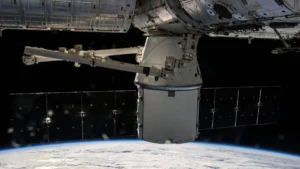
Modern space exploration depends on precise orbital tracking.
Scientists use advanced computer models, telescope observations, and mission records to calculate where spacecraft will travel. These calculations help protect active missions, improve scientific research, and reduce uncertainty about abandoned hardware.
Improved international data sharing could also help prevent future confusion. A more comprehensive tracking system would allow researchers to identify inactive spacecraft with greater confidence, especially those traveling far beyond Earth.
As commercial spaceflight continues to grow, accurate tracking will become one of the most important parts of sustainable space exploration.
Frequently Asked Questions
Did a SpaceX satellite actually hit the Moon?
No. Despite widespread headlines, there is no confirmed evidence that an active SpaceX satellite struck the Moon. Researchers later concluded the object was more likely an abandoned rocket stage from another mission.
Where did the impact occur?
The object impacted the far side of the Moon, making it impossible to observe directly from Earth.
Why was the object mistaken for SpaceX hardware?
Early orbital calculations suggested a possible connection to a Falcon 9 upper stage. Later analysis and updated trajectory data indicated another origin was more likely.
Did the collision damage the Moon?
No significant damage occurred. The Moon experiences natural impacts regularly, and this event simply created another crater that scientists can study.
Why is this incident important?
It highlights the need for better deep-space tracking, improved international cooperation, and responsible management of spacecraft after their missions end.
Conclusion
The SpaceX satellite hits moon story attracted global attention because it combined space exploration, mystery, and rapidly spreading online headlines. While many reports initially suggested that SpaceX hardware had crashed into the Moon, later scientific analysis painted a more accurate picture.
More importantly, the event demonstrated the challenges of identifying abandoned spacecraft in deep space. As humanity prepares for a new era of lunar exploration, accurate tracking systems and international collaboration will become increasingly essential.
If you’re interested in how SpaceX manages aging spacecraft closer to Earth, read our related guide on SpaceX Deorbited 260 Starlink Satellites, which explains why satellites are retired, how controlled deorbiting works, and why responsible satellite management is becoming more important every year.
- NASA – Lunar Reconnaissance Orbiter (LRO)
https://www.nasa.gov/mission_pages/LRO/main/ - NASA – Deep Space Climate Observatory (DSCOVR)
https://science.nasa.gov/mission/dscovr/ - NASA – Moon Exploration
https://science.nasa.gov/moon/ - NASA – Artemis Program
https://www.nasa.gov/artemis/ - European Space Agency (ESA) – Space Debris
https://www.esa.int/Safety_Security/Space_Debris - The Planetary Society
https://www.planetary.org/ - Minor Planet Center
https://minorplanetcenter.net/ - International Astronomical Union (IAU)
https://www.iau.org/ - Jet Propulsion Laboratory (JPL)
https://www.jpl.nasa.gov/ - NASA Solar System Exploration
https://solarsystem.nasa.gov/