
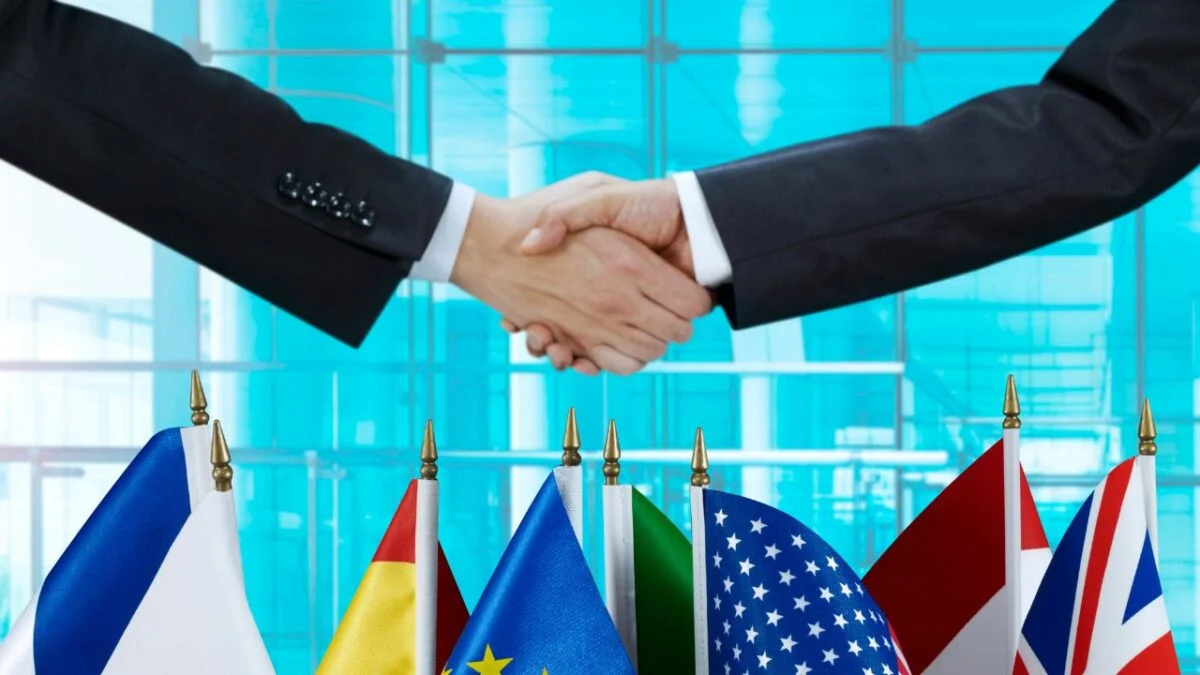
What Is International Relations? A Simple Guide to How Countries Connect
A trade agreement, a diplomatic meeting, or a sudden conflict can change the relationship between two countries. Behind these events is a system of communication, negotiation, competition, and cooperation known as international relations.
What Is International Relations? The term describes the relationships and interactions that take place between countries and other actors across national borders. It includes diplomacy, trade, security, alliances, international organizations, conflict, and cooperation.
These relationships may seem distant from everyday life, but they are not. Decisions made between governments can influence fuel prices, imported products, travel, jobs, food supplies, technology, and business activity.
What Is International Relations?
International relations examines how countries deal with one another and how their decisions affect the wider international system.
The subject covers both peaceful and difficult relationships. Governments may cooperate on trade, health, climate, or security while disagreeing over borders, military policy, resources, or political influence.
This creates an important question: How can countries protect their own interests while still working with other nations?
There is rarely one simple answer.
A government may need another country as a trading partner while also viewing it as a strategic competitor. Two countries may disagree on military issues but still cooperate on business or environmental problems.
That mixture of cooperation and competition is one of the main reasons international relations is so important.
Why Countries Need International Relations
Modern countries are connected through trade, transportation, finance, technology, energy, communication, and security.
Very few governments can meet all of their needs without dealing with the outside world.
A country might import oil, export agricultural products, buy computer components from overseas, or depend on foreign investment. It may also need cooperation with neighboring countries to manage borders, migration, water resources, or security concerns.
International relations provides ways to manage these connections.
Governments use diplomatic channels, agreements, treaties, international organizations, and economic partnerships to protect their interests and solve problems.
When those tools fail, disagreements can become more serious.
International Relations vs. Global Politics
International relations and global politics are closely related, but they are not identical.
International relations focuses mainly on interactions between countries and other international actors.
Global politics has a wider focus. It examines international power, influence, competition, institutions, major global issues, and the forces that shape relationships across borders.
A useful way to think about the difference is this:
International relations asks how actors interact.
Global politics also asks who has influence, why they have it, and how that power changes international outcomes.
For example, when two governments negotiate a trade agreement, the negotiation is part of international relations. If that agreement changes the balance of economic influence between the two countries, it also becomes an issue in global politics.
For the broader picture, readers can explore our pillar guide, What Is Global Politics?
Who Takes Part in International Relations?
Governments are central to international relations, but modern international affairs involve many other actors.
Countries and Governments
Governments make decisions about foreign policy, national security, trade, borders, treaties, and international agreements.
A government may establish diplomatic relations with another country, impose economic restrictions, sign a treaty, or join an international organization.
These choices can strengthen cooperation or increase tension.
International Organizations
International organizations give countries a place to communicate and work on shared problems.
The United Nations, founded in 1945, has 193 member states. It provides a forum for countries to discuss international issues and cooperate on areas including peace and security, development, humanitarian affairs, and human rights. (United Nations)
The UN does not eliminate disagreements between countries. Instead, it provides diplomatic and institutional channels through which governments can negotiate and coordinate.
Alliances
Countries may also form alliances because they share security or political interests.
An alliance can influence military planning, intelligence cooperation, diplomacy, and regional security.
It can also affect how governments assess risks. If a country has strong partners, an opponent may consider the possible response of those partners before taking action.
Non-State Actors
Not every influential international actor is a government.
Multinational companies, humanitarian organizations, international financial institutions, research groups, and other organizations can operate across borders and influence international affairs.
Their roles are different.
A global company can affect investment and supply chains. A humanitarian organization can provide assistance during a crisis. An international institution can help countries coordinate economic or development policies.
This wider network makes international relations more than government-to-government communication.
What Are the Main Areas of International Relations?
International relations covers a large number of subjects, but several areas are especially important.
Diplomacy
Diplomacy allows governments to communicate, negotiate, and manage disagreements without immediately turning to force.
Diplomats may work through embassies, official visits, international meetings, or private negotiations.
Diplomacy does not guarantee agreement. Countries can negotiate for years and still remain divided. However, keeping communication open can reduce misunderstandings and create opportunities for compromise.
The United Nations also describes diplomacy and mediation as important tools for preventing conflict and supporting peaceful solutions. (United Nations)
International Security
Security is another major area.
Governments consider military threats, border disputes, terrorism, cyberattacks, weapons, and regional instability when developing foreign policy.
One country’s security decision can influence others.
For example, if a government increases military spending or strengthens its defense partnerships, neighboring countries may reassess their own security plans.
This can create a security dilemma: one country may believe it is protecting itself, while another may see the same action as a potential threat.
International Trade
Trade connects national economies.
Businesses may depend on foreign suppliers, overseas customers, imported raw materials, international shipping, or access to foreign markets.
As a result, trade policy is an important part of international relations.
Governments can negotiate trade agreements to increase economic cooperation. They can also impose tariffs or restrictions when they believe foreign competition or trade practices threaten domestic interests.
Such decisions can affect companies and consumers in both countries.
Conflict and Peace
International relations also examines why countries enter disputes and how those disputes can be managed.
Conflicts may involve territory, resources, security, political influence, or competing national interests.
Peace efforts can include negotiations, mediation, ceasefire agreements, international organizations, and support from third-party governments.
The United Nations identifies conflict prevention, diplomacy, mediation, peacekeeping, and peacebuilding among its approaches to maintaining international peace and security. (United Nations)
Why Diplomacy Matters
Diplomacy becomes particularly important when governments disagree.
Suppose two countries have a dispute over trade or a border. Ending communication can make the problem harder to solve.
Diplomatic channels allow officials to explain their positions, test possible compromises, and negotiate terms.
Communication can continue even when relations are tense.
Countries do not have to agree on every issue before they can talk. In many cases, maintaining contact is most valuable when disagreements are serious.
This is why embassies, foreign ministries, international summits, and diplomatic negotiations remain important parts of international relations.
A Real-World Example: Conflict and Energy
The connection between international relations and everyday life becomes clearer when we look at energy markets.
Political tensions in the Middle East can create concerns about oil production, shipping routes, and the security of energy supplies. Countries that depend on imported energy may then face economic pressure if prices rise.
The effects can move through transportation and production costs before reaching consumers.
For a detailed explanation of this relationship, see How Middle East Conflict Affects Oil Prices.
This example shows why international relations is not simply an academic subject. A political decision, security crisis, or diplomatic dispute between countries can eventually influence markets and households in other parts of the world.
What Is Foreign Policy?
A country’s international actions usually begin with its foreign policy.
Foreign policy is the set of goals and decisions a government uses when dealing with other countries and international organizations. It can cover security, trade, economic interests, diplomacy, development, human rights, and regional relationships.
Foreign policy is not always fixed.
A government may change its approach after an election, a war, an economic crisis, or a major shift in the international environment.
For example, a country may strengthen ties with one group of nations because it wants greater security or better access to trade. Later, a change in leadership may lead to a different approach.
This is why understanding international relations also requires looking at what governments want to achieve.
National Interest and International Relations
Governments often describe their foreign-policy decisions in terms of national interest.
National interest can include protecting a country’s territory, maintaining national security, supporting economic growth, securing energy supplies, protecting citizens abroad, or strengthening international influence.
Different governments may define their interests differently.
One country may place economic development at the center of its foreign policy. Another may focus more heavily on military security. A smaller state may prioritize strong relationships with larger neighbors.
National interest also creates difficult choices.
A government may want to maintain trade with another country while disagreeing with its political decisions. It may want to cooperate on security while competing for influence in a particular region.
International relations is often about managing these competing priorities.
How Countries Build Diplomatic Relationships
Diplomatic relationships allow governments to communicate through official channels.
Countries can establish embassies, exchange ambassadors, hold bilateral meetings, and create regular communication between their foreign ministries.
These relationships can cover both simple and highly sensitive matters.
Governments may discuss trade, travel, education, defense, investment, migration, or the treatment of citizens living abroad.
Diplomatic ties do not mean two countries always agree.
A country can maintain diplomatic relations with another government while strongly criticizing some of its policies.
Keeping communication open can be useful because governments need ways to address disagreements without allowing every dispute to become a larger crisis.
What Are Treaties?
A treaty is a formal international agreement between countries or other parties that creates obligations under international law.
Treaties can cover many subjects, including peace, security, trade, borders, environmental protection, and human rights.
They are important because they give governments a formal framework for cooperation.
A treaty can also create rules that remain important even after individual political leaders leave office.
However, treaties do not remove political disagreements.
Governments still have different interests, and the effectiveness of an agreement depends partly on whether the parties respect their commitments.
Why International Organizations Matter
Countries often use international organizations because some problems are too large or complicated for one government to manage alone.
The United Nations is one of the best-known examples.
Other organizations focus on particular areas. The World Trade Organization deals with global trade rules, while institutions such as the International Monetary Fund and World Bank play major roles in international economic affairs.
These organizations provide forums, rules, technical assistance, or financial support depending on their purpose.
They also show an important feature of international relations: countries sometimes give up a degree of freedom in certain areas because cooperation can produce wider benefits.
The Role of Alliances
Security alliances are another major part of international relations.
Countries may join an alliance because they believe collective action can improve their security.
NATO is a major example. The alliance was created in 1949 and now has 32 members. Its members consult and cooperate on defense and security issues, while Article 5 provides a collective-defense commitment. (NATO)
Alliances can influence how governments plan for possible threats.
A country considering military action has to think not only about its direct opponent but also about the opponent’s partners.
This can sometimes discourage conflict. At other times, competing alliances can increase tensions because a local dispute may involve a wider group of countries.
Cooperation Does Not Mean Complete Agreement
International relations is often misunderstood as a choice between friendship and hostility.
Real relationships are usually more complicated.
Two governments can cooperate in one area while competing in another.
For example, they might trade with each other while disagreeing about security policy. They might cooperate on disaster response while competing for influence in a particular region.
This is normal in international affairs.
Countries usually make decisions based on several interests at once, and those interests can change over time.
How Economic Relationships Affect International Relations
Economic connections can strengthen relationships between countries, but they can also create pressure.
Trade can give businesses access to larger markets. Foreign investment can provide capital for factories, infrastructure, and technology. Energy partnerships can support industrial development.
But economic dependence can create risks.
If a country relies heavily on one foreign supplier for an important resource, a political dispute could threaten that supply.
Governments therefore often consider both economic opportunity and economic security when making foreign-policy decisions.
This has become especially important as countries reconsider supply chains for energy, technology, food, and critical materials.
Sanctions as a Foreign-Policy Tool
Economic sanctions are another way governments try to influence international behavior without immediately using military force.
Sanctions can restrict trade, financial transactions, investment, technology transfers, or access to certain markets.
Governments may impose them to respond to military actions, human-rights concerns, security threats, or other serious disputes.
Their effects can extend beyond the targeted government.
Businesses may lose access to markets. Financial institutions may have to change how they operate. Other countries may face pressure to decide whether they will follow the restrictions.
This makes sanctions an important example of how economics and foreign policy overlap.
International Relations and Regional Conflicts
A conflict between two countries can involve many other governments.
Neighboring states may be concerned about refugees, border security, trade disruptions, or military spillover.
More distant countries may become involved through diplomacy, humanitarian assistance, weapons, financial support, or sanctions.
The Middle East offers many examples of this wider connection.
Political and security tensions in the region can affect international energy markets because the area contains major oil and gas producers and important transportation routes.
Our related article, How Middle East Conflict Affects Oil Prices, explains how regional conflict can create wider economic effects.
This is an important lesson in international relations: a conflict may begin locally but produce international consequences.
What Is the Balance of Power?
The balance of power describes a situation in which countries or groups have enough strength to prevent another power from dominating the international system.
Power can come from military capabilities, economic strength, technology, population, natural resources, alliances, and diplomatic influence.
The balance can change over time.
A country with rapid economic growth may become more influential. Another country may lose influence after a prolonged conflict or economic decline.
Alliances can also change the balance because several countries can combine their capabilities.
The concept is important because governments often consider not only their own strength but also the strength of their rivals and partners.
Soft Power and Hard Power
Countries can influence others through different forms of power.
Hard power usually involves pressure, military capability, or economic incentives and penalties.
Soft power is based more on attraction and influence. Culture, education, diplomacy, values, international reputation, and institutions can all contribute to it.
A country’s global image can affect how other governments and populations respond to it.
For example, a country known for strong universities, cultural exports, technology, or diplomatic leadership may gain influence without using military force.
In modern international relations, governments often use several forms of power at the same time.
Why International Relations Is Always Changing
International relationships are not permanent.
Leadership changes, elections, wars, economic crises, technological developments, and new alliances can all reshape foreign policy.
A country that was once a close partner may become a competitor. A former rival may find common interests and begin cooperating.
Economic conditions can also change priorities.
This is why international relations cannot be understood by looking only at today’s alliances or disputes. Historical relationships matter, but current interests and new circumstances can change the direction of those relationships.
How International Relations Affects Everyday Life
International relations may sound like a subject reserved for diplomats and governments, but its effects can reach ordinary people.
The price of fuel, availability of imported goods, travel rules, job opportunities, food costs, and access to technology can all be influenced by decisions made between countries.
A political dispute can change trade rules. A conflict can disrupt shipping. A new agreement can open a market for businesses. A change in diplomatic relations can affect visas and travel.
These connections are easy to miss because the original decision may happen thousands of miles away.
International Trade and Your Daily Life
Modern products often depend on international supply chains.
A single product may use raw materials from one country, components from another, manufacturing facilities somewhere else, and international shipping before reaching a customer.
When governments change tariffs, export rules, sanctions, or trade agreements, businesses may have to adjust these supply chains.
For consumers, the result can be higher prices, fewer choices, longer delivery times, or sometimes lower costs when trade becomes easier.
This is one reason trade policy is an important part of international relations.
International Relations and Energy
Energy is one of the clearest examples of the connection between foreign policy and everyday life.
Oil and gas move through international markets and shipping routes. Political instability in an important producing region can create concerns about future supply.
When markets expect supply problems, prices can react even before an actual shortage occurs.
Higher energy prices can then increase transportation and production costs.
This can affect businesses, governments, and households.
The Middle East demonstrates this connection particularly well. Political conflict and security concerns around important energy routes can influence global oil markets. Our related guide, How Middle East Conflict Affects Oil Prices, explores this relationship in greater detail.
International Relations and Migration
Migration is another major international issue.
People cross borders for work, education, family, safety, and economic opportunity. Wars and political instability can also force people to leave their homes.
Governments must make decisions about visas, border controls, asylum, immigration, and the rights of people living abroad.
These decisions involve both international and domestic concerns.
A government may need to cooperate with neighboring countries while also responding to public opinion and economic conditions at home.
This makes migration a clear example of how foreign policy and domestic politics can overlap.
International Security in the Digital Age
Security is no longer limited to armies, ships, and aircraft.
Countries now have to consider cybersecurity, digital infrastructure, satellite systems, artificial intelligence, and information networks.
A cyberattack can target government databases, financial systems, businesses, or critical infrastructure without a traditional military force crossing a border.
This creates difficult questions for governments.
Who was responsible for an attack? How should a country respond? When does a cyberattack become a national-security threat?
These questions are becoming increasingly important in international relations.
Technology and Global Competition
Technology has also become an important part of international competition.
Semiconductors, artificial intelligence, telecommunications, satellites, advanced computing, and other technologies can provide both economic and strategic advantages.
Governments may therefore restrict the export of certain technologies or invest heavily in domestic research.
These policies can affect companies across borders.
A technology restriction introduced by one major economy can force businesses to change suppliers, production plans, or investment strategies.
This shows that international relations is increasingly connected to technological policy.
International Relations and Climate Change
Climate change is a global problem because its effects cross national borders.
Countries differ in their energy systems, economic conditions, resources, and ability to invest in cleaner technology. That makes international climate negotiations difficult.
Governments have to discuss questions such as:
Who should reduce emissions?
How quickly should changes happen?
Who should help finance climate adaptation?
How can countries protect economic growth while reducing environmental damage?
These questions involve both science and politics.
International cooperation is necessary because emissions produced in one country can contribute to a global environmental problem.
Food Security and International Relations
Food supplies can also be affected by international events.
Countries may depend on global markets for wheat, rice, fertilizer, cooking oil, and other agricultural products.
A war, export restriction, drought, shipping disruption, or political crisis can affect supply and prices.
Fertilizer is especially important because farmers need it to maintain agricultural production.
If fertilizer becomes more expensive or difficult to obtain, production costs can rise. Those costs can eventually affect food prices.
This is another example of how international relations can move through global supply chains and reach consumers.
Why International Law Matters
Countries need rules to manage many areas of international interaction.
International law covers subjects such as treaties, diplomatic relations, maritime issues, human rights, trade, and armed conflict.
It is different from domestic law because there is no single world government that controls every country.
Enforcement can depend on treaties, courts, international organizations, diplomatic pressure, sanctions, and the willingness of states to follow their commitments.
Even with these limits, international law provides a framework that helps countries understand their rights and responsibilities.
What Happens When Countries Disagree?
Disagreements are normal in international relations.
The important question is how governments respond to them.
They can use diplomacy and negotiation. They can seek mediation. They can use international institutions. They can impose economic restrictions. In more serious cases, disputes can escalate into military conflict.
The choice depends on the issue, the interests of the governments involved, the strength of their relationships, and the wider international environment.
Not every disagreement becomes a crisis.
Sometimes governments find a practical compromise because continued conflict would cost more than cooperation.
Why International Relations Is Important
Understanding international relations helps people make sense of events that appear unrelated at first.
A conflict can affect energy prices.
A trade dispute can affect the cost of imported products.
A new alliance can change regional security.
A diplomatic agreement can open new opportunities for businesses.
A technology restriction can change global supply chains.
These examples show that international relations connects political decisions with economic and social outcomes.
It also helps explain why countries sometimes cooperate despite major differences. Governments may disagree about political values but still share interests in trade, security, climate action, scientific research, or disaster response.
What Is the Future of International Relations?
International relations will continue to change as the world becomes more connected and more competitive.
Economic power is shifting between regions. Technology is creating new forms of influence and new security risks. Climate change is increasing pressure for international cooperation. At the same time, traditional issues such as military power, borders, energy, and alliances remain important.
The future will not be shaped by one factor alone.
Countries will continue to protect their own interests while looking for areas where cooperation makes sense.
New technology may change how governments communicate and compete. Economic changes may create new partnerships. Major conflicts may reshape alliances and security policies.
This means international relations will remain a moving system rather than a fixed set of relationships.
Frequently Asked Questions
What is international relations in simple words?
International relations is about how countries and other international actors communicate, cooperate, compete, and deal with conflicts across national borders.
Why is international relations important?
It helps explain international events and their effects on everyday life, including trade, energy prices, migration, security, technology, and food supplies.
What is the difference between international relations and foreign policy?
International relations is the broader study of interactions between countries and international actors. Foreign policy refers to the goals and actions a particular government uses when dealing with the outside world.
What are examples of international relations?
Examples include diplomatic negotiations, trade agreements, military alliances, peace talks, international treaties, sanctions, humanitarian cooperation, and climate negotiations.
What organizations are involved in international relations?
The United Nations, World Trade Organization, International Monetary Fund, World Bank, NATO, and many other regional and international organizations play roles in international affairs.
Can international relations affect fuel prices?
Yes. Conflicts, sanctions, trade restrictions, political instability, and disruptions to energy production or shipping can influence international energy markets and eventually affect fuel prices.
Conclusion
International relations is the network of relationships that connects countries and other actors across borders.
It includes diplomacy, trade, security, treaties, alliances, international organizations, economic pressure, conflict, and cooperation. These relationships are shaped by national interests, power, geography, resources, technology, and changing world events.
The most important point is that international relations does not stay inside government offices.
Its effects can reach businesses, markets, families, and individuals. A diplomatic decision can change trade. A conflict can influence energy prices. A new security partnership can change regional politics. A technology dispute can reshape supply chains.
Understanding these connections makes international news easier to follow and helps explain why events in one part of the world can matter to people somewhere else.

[…] diplomats frequently collaborate with global bodies, working closely within the framework of International Relations to build consensus on global security laws. To learn more about how foreign policy decisions are […]