European Union policy
European Union policy shapes the rules that affect daily life across member states. It covers everything from trade tariffs to environmental standards. This article tells you what the policy means, how it is created, and where it matters most. You will also see its strengths, its limits, and common misunderstandings. By the end you will know how to follow its impact on your work or studies.
The Union’s policy framework is built on treaties that every country signed. Those treaties give the institutions power to act in specific areas. Because the EU respects national sovereignty, many decisions require compromise. This balance creates a unique blend of shared and local rules. Understanding that mix helps you see why some issues are handled at the EU level while others stay national.
One major reason the EU makes policy is to avoid duplicate regulations. For example, a single safety rule for cars saves manufacturers from redesigning for each market. As a result, businesses can sell across borders more easily. Consumers benefit from consistent quality and price competition. The policy also aims to protect the environment, workers, and digital markets.
Critics sometimes say the EU is too distant from ordinary citizens. However, the institutions have built many ways for people to give input. Public consultations, citizen panels, and parliamentary debates all feed into the process. When you read a proposal, you can often find a summary written for non‑experts. That transparency is meant to keep the system accountable.
In this guide you will learn the basic definition, the step‑by‑step creation process, the main areas where policy is applied, and the realistic outcomes it can achieve. You will also discover frequent myths and get concise answers to common questions. Use this knowledge to evaluate news about the EU or to participate in discussions at work or school.
Explain European Union policy and its purpose
Define the concept in plain language
European Union policy is a set of rules and actions that the Union decides together. It is not a single law but a collection of measures covering many fields. For instance, climate targets, digital market rules, and competition guidelines all fall under this umbrella. Because the EU represents 27 countries, the policy must balance diverse interests. Consequently, each measure reflects a negotiated compromise that aims to benefit the whole community.
Identify the main institutions involved
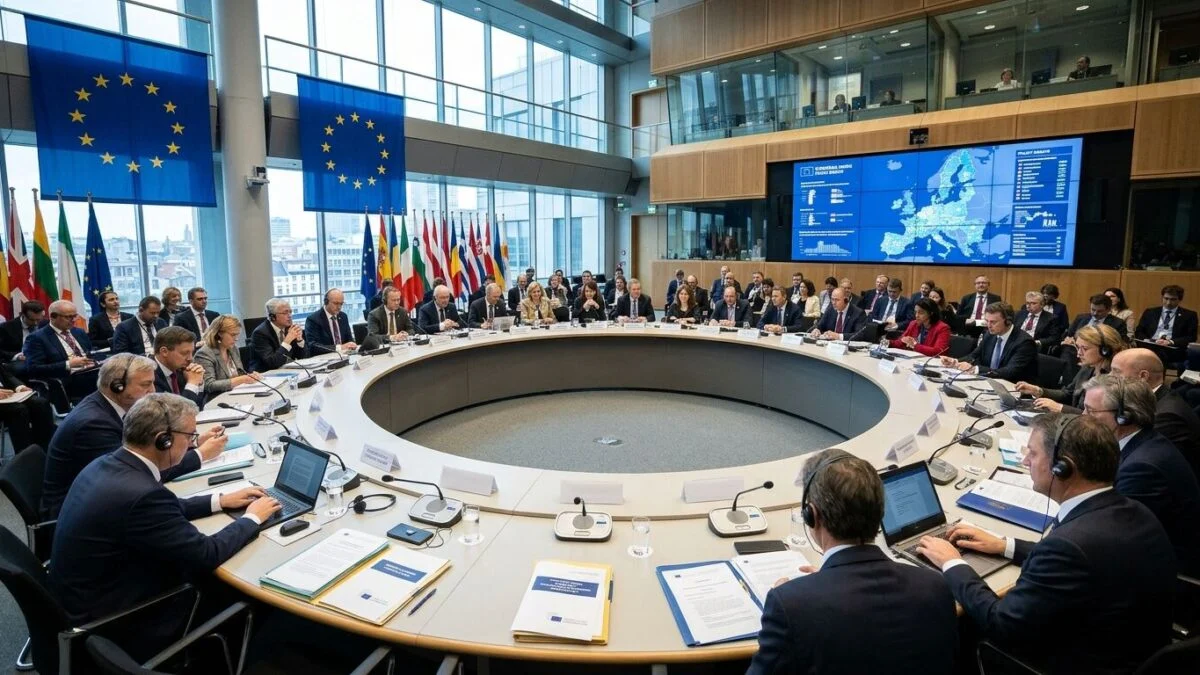
The European Commission proposes new policies, acting like the Union’s executive branch. The European Parliament, elected by citizens, reviews and amends those proposals. Meanwhile, the Council of the European Union, where national ministers sit, gives the final approval. This three‑stage system ensures that both citizens and governments have a voice. For more detail on how decisions are taken, see how EU policy is decided. (toolkit.northernbridge.ac.uk)
Describe how European Union policy is made
Outline the legislative process step by step
First, the Commission drafts a proposal after consulting experts and stakeholders. Then the proposal goes to both the Parliament and the Council for review. Each body can suggest changes, and the two must reach an agreement in what is called a “co‑legislative” procedure. If they cannot agree, the proposal may be abandoned or sent back for revision. Finally, once both sides accept the text, it becomes legally binding across all member states.
Show the role of the European Commission in detail
The Commission acts as the Union’s guardian of the treaties. It monitors existing rules and suggests updates when new challenges appear. For example, when renewable energy technology advanced, the Commission introduced new standards to support the transition. Because it does not represent any single country, the Commission can focus on the common good. Learn more about the Union’s priorities at EU priorities and actions.
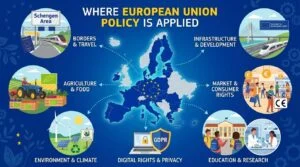
Illustrate where European Union policy is applied
Discuss climate and energy policy examples
One high‑profile area is the EU’s climate agenda, which sets emission reduction targets for all members. The policy includes a carbon pricing system that puts a cost on greenhouse gases. This mechanism is explained in detail on the site’s EU carbon tax page. By putting a price on carbon, the Union encourages businesses to invest in cleaner technology. The result is a measurable drop in emissions across many sectors.
Mention trade, competition, and foreign policy links
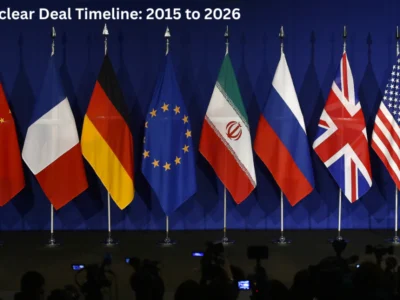
Trade policy ensures that goods move freely while protecting consumers from unfair practices. Competition rules stop large companies from abusing market power, which keeps prices reasonable. In foreign affairs, the EU often coordinates sanctions and diplomatic efforts. A recent example involved the Union’s stance on the Iran nuclear agreement; the timeline of that deal can be followed on the Iran nuclear deal timeline page. Understanding these applications shows how policy touches both economics and security.
Assess what European Union policy can achieve and its limits
Highlight successes and ongoing challenges
EU policy has succeeded in creating a single market that lets companies sell across borders without extra customs checks. It has also driven the adoption of renewable energy at a faster pace than many individual countries could manage alone. Nevertheless, the Union faces challenges such as differing national priorities and budget constraints. For instance, some members are hesitant to increase spending on new digital infrastructure. These tensions sometimes slow down the implementation of ambitious projects.
Clarify common misconceptions and false ideas
A frequent myth is that the EU can dictate every law inside a member state. In reality, the Union only has authority in areas where treaties have given it power. Health care, education, and many aspects of taxation remain largely national matters. Another misconception is that EU policy always reflects the wishes of all citizens. While public input is encouraged, the final decisions still involve political negotiation. For a broader view of the policy tools the Union uses, see policy measures of the European Union.

Frequently Asked Questions
What is the main purpose of European Union policy?
The main purpose is to create common rules that facilitate cooperation, trade, and shared goals among member states while protecting citizens’ rights.
How can a citizen influence EU policy?
Citizens can participate in public consultations, contact their MEPs, and join citizen panels that provide feedback on draft proposals.
Does EU policy cover education and health?
Education and health are largely national responsibilities, though the EU may support them through funding programs and coordination.
Why does the EU sometimes delay policy implementation?
Delays often stem from the need for consensus among 27 governments, each with its own priorities and budget constraints.
Conclusion
European Union policy is a collaborative set of rules that shapes many aspects of life across the continent. It works through a clear three‑stage process involving the Commission, Parliament, and Council, and it applies to areas such as climate, trade, and competition. While the system can achieve impressive results, it also faces limits imposed by national sovereignty and political negotiation. Remember this simple rule: whenever you see an EU measure, ask who proposed it, how it was approved, and what real‑world impact it aims to have. That habit will help you stay informed and engaged.