

SpaceX deorbits 260 Starlink satellites, begins new phase of network upgrade
SpaceX has proven once again by SpaceX deorbited 260 Starlink satellites that a modern satellite network is not just about launching, but also retiring them safely. In just six months, the American space company completely burned up 260 old Starlink satellites in the Earth’s atmosphere through controlled re-entry to reduce the risk of space debris in low Earth orbit. This move is not only part of the modernization of the Starlink network, but is also being considered an important example for future space missions.

Why did SpaceX deorbited 260 Starlink satellites
SpaceX intentionally and safely deorbited 260 Starlink satellites over the course of six months to modernize its satellite network, reduce space debris risks, and replace older satellites with a new generation of more powerful satellites, the company said in its semi-annual report to the US FCC.
The main reasons are as follows:
- Retirement of older satellites: Most of the deorbited satellites were Starlink v1.0 and v1.5 models, launched between 2019 and 2021 and nearing the end of their expected five-year service lives.
- Space debris prevention: SpaceX removed these satellites from orbit while their thrusters were still working, so that they could burn up completely during a controlled re-entry into Earth’s atmosphere and not become hazardous space debris in low Earth orbit.
- Starlink network modernization: The company is replacing older satellites with Starlink V2 Mini and upcoming next-generation satellites, which offer more bandwidth, better speed, advanced onboard processing, and more capacity.
- International regulatory compliance: The U.S. FCC requires major satellite operators to safely dispose of their retired satellites. SpaceX reported that its successful deorbit rate was over 99 percent, which is better than the set standard.
Why is this important?
With thousands of new satellites being launched around the world, safely deorbiting older satellites is critical to future space operations, reducing collision risks, and ensuring the long-term sustainability of low-Earth orbit. SpaceX’s move is part of that strategy.
What was revealed in the FCC report?
SpaceX’s semi-annual regulatory report submitted to the US Federal Communications Commission (FCC) revealed that the company successfully and under full control deorbited 260 Starlink satellites between December 1, 2025, and May 31, 2026, and reentered the Earth’s atmosphere, where they burned up completely.
According to the report, all the satellites gradually lowered their altitudes using their Hall-effect thrusters (which are powered by krypton or argon gas). The purpose of this controlled re-entry was to ensure that the retiring satellites did not remain in space as debris for a long time and to reduce the risk of collisions in low Earth orbit.
The report also noted that most of the retired satellites were from the Starlink v1.0 and Starlink v1.5 generations, which were launched between 2019 and 2021 and had either completed their expected operational life or were experiencing battery and telemetry issues. SpaceX safely deorbited them before they became completely inoperable to make the entire Starlink network more stable and reliable.
Additionally, SpaceX told the FCC that the company’s deorbit success rate has been over 99 percent, far exceeding the FCC’s 95 percent requirement for responsible satellite destruction. The company is now replacing older satellites with Starlink V2 Mini and deploying more advanced satellites in the future to increase network speed, capacity, and efficiency.
How does controlled reentry work?
Controlled re-entry is a planned process by which retired satellites are safely returned to Earth’s atmosphere so that they do not become space debris. SpaceX uses Hall-effect thrusters installed in its Starlink satellites, which are powered by krypton or argon gas. These thrusters gradually change the satellite’s speed and orbit, causing its altitude to gradually decrease.
When the satellite reaches a sufficiently low altitude, the friction of the Earth’s atmosphere (Atmospheric Drag) further reduces its speed. Eventually, the satellite enters the dense layers of the atmosphere, where much of it burns up due to intense heat and friction. The purpose of this process is to ensure that no large pieces reach Earth and that no dangerous space debris remains in orbit for long periods of time.
According to SpaceX, older Starlink v1.0 and v1.5 satellites are deorbited before they become completely inoperable, so that their thrusters remain operational and they can safely complete a controlled re-entry. This strategy plays a key role in reducing collision risks in Low Earth Orbit and making the space environment safer.
This procedure is not only consistent with international space safety principles but also with the US Federal Communications Commission’s (FCC) responsible satellite disposal policy, which requires major satellite operators to safely remove their retired spacecraft from orbit.
Why were Starlink v1.0 and v1.5 satellites retired?
The main purpose of retiring the Starlink v1.0 and v1.5 satellites was to modernize the Starlink network, improve space security and replace older technology with new generation more powerful satellites. These initial satellites were launched between 2019 and 2021 and had an expected operational life of about five years, after which they were planned to be safely de-orbited.
Many of these satellites had reached the end of their service life, while others were beginning to experience battery degradation, telemetry issues, or other technical malfunctions. That’s why SpaceX decided to deorbit them in a controlled manner before they became completely inoperable so that they wouldn’t become space debris and pose a threat to other satellites.
Moreover, SpaceX is now replacing the older v1.0 and v1.5 satellites with Starlink V2 Mini and in the future V3 satellites, which have many times more bandwidth, better on-board processing, faster internet speeds, and the ability to serve more users than before. The new generation of satellites will also better support advanced services like Direct-to-Cell in the future.
In short, the retirement of the Starlink v1.0 and v1.5 satellites is not a sign of a malfunction but part of SpaceX’s long-term strategy, which aims to make the network modern, more reliable, safe, and efficient, while also minimizing the risks of space debris and collisions in low Earth orbit.
Why is SpaceX’s 99 percent successful deorbit rate important?
SpaceX’s successful deorbit rate of over 99 percent indicates that the company is safely and responsibly removing its retiring Starlink satellites from orbit. This achievement is not only a technical achievement, but also plays a significant role in global efforts to preserve Low Earth Orbit for the long term.
According to the US Federal Communications Commission (FCC) rules, major satellite operators are required to successfully deorbit at least 95 percent of their mission-completing spacecraft. SpaceX reported in its latest report that its success rate was over 99 percent, significantly better than the set standard. This shows that the company is adopting an effective strategy to reduce space debris and comply with international obligations.
Another advantage of this high rate is that inoperative satellites do not remain in orbit for long periods of time, reducing the risk of collisions with active satellites, space stations, and future missions. If old satellites were left in orbit uncontrollably, they could pose a threat to thousands of other space objects and further complicate the space environment.
Additionally, SpaceX intentionally deorbits older Starlink v1.0 and v1.5 satellites while their Hall-effect thrusters are still active. This strategy allows the satellites to burn up completely upon entering the Earth’s atmosphere through controlled reentry, leaving no permanent space debris in orbit.
In short, the more than 99 percent successful deorbit rate is proof that SpaceX is not only modernizing its Starlink network, but also making space safety, regulatory compliance, and orbital sustainability its top priorities. That is why experts consider this achievement an important benchmark for future large satellite networks.
The growing problem of space debris
The number of satellites in low Earth orbit is increasing rapidly, and space debris is becoming a serious global problem. Defunct satellites, broken rocket parts, and small particles from various missions orbit at extremely high speeds in space. Even a small piece of this can hit an active satellite or spacecraft and cause serious damage.
To mitigate this risk, SpaceX safely deorbits its Starlink satellites before the end of their service life through controlled re-entry. The company recently reported that it had successfully deorbited 260 Starlink satellites over the past six months to prevent them from becoming permanent debris in space. This strategy reduces the risk of collisions in low-Earth orbit and helps maintain a safe environment for other satellites.
However, experts say that simply removing old satellites will not be enough. Various space agencies and private companies around the world plan to launch thousands of new satellites in the coming years. If effective planning is not done for the retirement of these satellites, the number of objects in orbit could increase to dangerous levels, which could lead to concerns such as Kessler Syndrome. According to this theory, if a series of collisions begins in orbit, more debris will be created, which could cause further collisions and seriously affect future space activities.
On the other hand, scientists are also examining the effects of aluminum oxide (Aluminum Oxide or Alumina) particles produced by the burning of large numbers of satellites in the Earth’s atmosphere on the upper atmosphere. Although no definitive scientific conclusions have been reached yet, research on this topic is ongoing to better understand the potential environmental impacts in the future.
In short, the space debris problem is not limited to one company or one country, but a major challenge for the entire global space industry. Responsible satellite design, timely deorbit, international cooperation, and effective regulation will play a key role in keeping low Earth orbit safe, sustainable, and usable for future space missions.
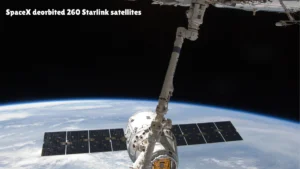
Potential Environmental Impacts of Alumina (Aluminum Oxide)
When retired satellites enter the Earth’s atmosphere during controlled re-entry, much of their mass is burned up into vapor and fine particles due to intense heat and friction. Since modern satellites use large amounts of aluminum, very fine particles of aluminum oxide (Aluminum Oxide or Alumina) can be produced in the upper atmosphere during the burn-up process.
Experts say it is currently unclear what the long-term effects of these increasing amounts of particles will be on Earth’s atmosphere. Some scientific studies have raised concerns that if thousands of satellites start burning up in the atmosphere every year in the future, alumina particles could accumulate in the stratosphere. This could potentially have effects on atmospheric chemistry, the ozone layer, and solar reflection, but these concerns are still being investigated and there is no definitive scientific consensus.
On the other hand, many scientists also emphasize that the current evidence is still limited and it is premature to say that satellite burns are causing widespread damage to the environment. According to them, more observations, modeling and long-term research on this topic are needed to accurately assess the true amount of these particles, their distribution and potential environmental impacts.
That’s why some environmental groups and researchers are calling for more comprehensive environmental assessments before large satellite networks are approved. They argue that as Starlink and other mega-constellations add thousands of new satellites, their overall environmental impact will need to be continuously assessed.
In short, the potential environmental effects of alumina are still an active topic of scientific research. Although initial studies have raised some concerns, it is not yet proven that aluminum oxide particles produced by satellite re-entry are causing significant damage to the atmosphere or the ozone layer. Therefore, the current evidence suggests a need for caution, but further research is essential for definitive conclusions.
What changes is Starlink V2 Mini bringing?
Starlink V2 Mini is a modern version of SpaceX’s second-generation Starlink satellites, which are being deployed to replace the older Starlink v1.0 and v1.5 satellites. Although it is relatively smaller than the full-size V2 satellites so that it can be launched by a Falcon 9 rocket, its performance is significantly improved over its predecessor.
More network capacity and faster internet
Starlink V2 Mini uses a more advanced antenna system and improved radio technology, allowing each satellite to transmit many times more data than the previous generation. This gives users a more stable connection, faster internet, and lower latency, especially in areas with a high number of users.
Improved Propulsion System
The V2 Mini satellites are equipped with advanced Hall-effect thrusters powered by argon. According to SpaceX, this system provides about 2.4 times more thrust and about 1.5 times better fuel efficiency than the first-generation krypton-based thrusters. This allows the satellites to move more efficiently in orbit, avoid collisions, and safely deorbit if necessary.
Improved Onboard Processing
The new satellites incorporate more advanced computing and signal processing capabilities, improving overall network performance, making data transmission more efficient, and also preparing the platform for new future services.
Preparing for future advanced services
Starlink V2 Mini is designed to better support more advanced network features and business and government communications services in the future. These satellites are considered the foundation of SpaceX’s next-generation Starlink network, while the network’s capacity is expected to be further increased with the deployment of full-size V2 and V3 satellites by Starship in the future.
In short, Starlink V2 Mini is not just a replacement for older satellites but a significant technological upgrade, providing higher speeds, better bandwidth, higher fuel efficiency, improved orbit control and a solid foundation for future advanced satellite internet services.
What role will Falcon 9 and Starship play in the future?
Falcon 9 and Starship are two key pillars of SpaceX’s future space strategy, playing a central role in expanding the Starlink network and deploying advanced satellites. Currently, Falcon 9 is regularly launching Starlink V2 Mini satellites into orbit, as the rocket is considered one of the world’s most successful launch systems thanks to its reliable performance, reusability, and low launch cost.
Starship, on the other hand, is being developed for SpaceX’s next generation of full-size Starlink satellites and larger space missions. Since Starship has many times the payload capacity of the Falcon 9, it will be possible to send a much larger number of advanced Starlink satellites into orbit in a single flight in the future. This will not only reduce launch costs, but also accelerate the expansion of the Starlink network globally.
SpaceX plans to use Falcon 9 and Starship to complement each other and perform a variety of missions. Falcon 9 will continue to expand the existing Starlink network, while Starship will play a key role in enabling a large number of new-generation satellites, advanced space missions, and deep space projects in the future. Through this strategy, SpaceX not only wants to further strengthen global broadband service, but also significantly increase its capabilities for the future space economy, long-distance missions such as the Moon and Mars.
How far can the Starlink network reach in the future?
Starlink has become one of the world’s largest satellite internet projects, and it is expected to expand even more rapidly in the coming years. SpaceX’s goal is not just to provide internet to remote areas, but to establish a global broadband network that can provide high-speed, low-latency internet service to almost every part of the world, including urban, rural, maritime, and aerial areas.
The company is continuously launching new generation Starlink V2 Mini and future more advanced satellites into orbit, which is expected to significantly increase the overall capacity, speed and efficiency of the network. At the same time, the expected operational capacity of Starship in the future could enable SpaceX to launch a larger number of satellites in a single launch, allowing for even faster expansion of global coverage.
According to industry experts, Starlink will not be limited to home internet in the future, but its role may also increase in enterprises, government departments, aviation, maritime transportation, emergency response services and other advanced communication fields. However, SpaceX has not yet made a detailed official announcement about some of these projects and services, so these possibilities should be viewed as future expectations.
While Starlink’s expansion could play a significant role in global connectivity, it will also face challenges such as space debris, orbital sustainability, and environmental impact. That’s why experts believe that responsible satellite management and implementation of international space regulations will be equally important as the network continues to grow.
Why is this news important?
SpaceX’s safe deorbiting of 260 Starlink satellites is not just a routine technical operation, but a significant step forward for the future of the commercial space industry. With thousands of new satellites being launched around the world, timely and responsible deorbiting of older satellites is becoming increasingly essential to reducing space debris and preserving low Earth orbit.
This development also reflects the fact that satellite operators are no longer just focusing on launching new satellites, but are also responsibly managing their entire satellite lifecycle. On the one hand, SpaceX is making its Starlink network faster, more robust, and more efficient with a new generation of satellites, while on the other hand, it is also adhering to international space safety principles by safely disposing of retired satellites.
If future satellite networks continue to expand at this pace, space debris hazards, orbital sustainability, and environmental impacts will become increasingly important global issues. That’s why SpaceX’s recent actions not only mark the modernization of the Starlink network, but also demonstrate that responsible satellite management in the space industry is more important than ever for the future success and protection of the space environment.
Frequently Asked Questions (FAQs)
1. Why did SpaceX deorbit 260 Starlink satellites?
SpaceX took this step to retire the older Starlink v1.0 and v1.5 satellites and replace them with the new generation Starlink V2 Mini satellites, reduce space debris, and improve the performance of its network.
2. What does Deorbit mean?
Deorbiting is a process in which a satellite is intentionally removed from its orbit so that it burns up upon entering the Earth’s atmosphere and does not become permanent debris in space.
3. Did these satellites fall to Earth?
No. According to SpaceX, these satellites entered the Earth’s atmosphere through controlled re-entry and mostly burned up completely, so they did not pose a threat to Earth.
4. What improvements have been made to the Starlink V2 Mini satellites?
Starlink V2 Mini satellites provide greater network capacity, faster internet, improved onboard processing, advanced Hall-effect thrusters, and more efficient performance, providing better service to customers.
5. Is deorbiting such a large number of satellites harmful to the environment?
Some scientists are studying the effects of aluminum oxide particles produced by the burning of satellites on the upper atmosphere, but no definitive scientific conclusions have been reached yet.
6. Why is SpaceX’s 99 percent deorbit success rate important?
This rate shows that the company is safely removing its retired satellites from orbit, which reduces space debris, reduces collision risks, and helps with the long-term sustainability of low-Earth orbit.
7. How far can the Starlink network expand in the future?
SpaceX aims to turn Starlink into the world’s largest satellite broadband network, providing high-speed, low-latency internet to more parts of the world, including remote areas. In the future, its services could expand to businesses, aviation, maritime transportation, and other advanced communications sectors.
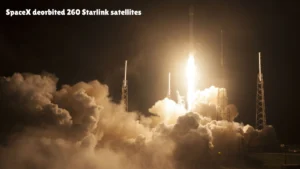
Conclusion
SpaceX’s safe deorbiting of 260 Starlink satellites demonstrates that the success of modern satellite networks is not just about launching new satellites, but also about responsibly retiring older space assets. With this move, the company not only maintained the pace of modernization of its Starlink network, but also took practical steps to reduce the risks of space debris in low Earth orbit.
On the other hand, with the expected launch of thousands of new satellites, issues such as space environment protection, orbital sustainability, and potential environmental impacts will become increasingly important in the future. This is why responsible satellite management, effective regulatory oversight, and continued scientific research are considered essential for a sustainable future for the commercial space industry.
Overall, SpaceX’s recent actions indicate that the space industry has entered a phase where network expansion and space security will go hand in hand and will be a fundamental condition for future success.
- FCC Satellite Communications
https://www.fcc.gov - SpaceX
https://www.spacex.com - NASA Orbital Debris Program
https://orbitaldebris.jsc.nasa.gov - European Space Agency Space Debris Office
https://www.esa.int/Safety_Security/Space_Debris - NOAA Space Weather
https://www.swpc.noaa.gov




[…] in how spacecraft operations affect objects in orbit can also explore NexaVice’s coverage of SpaceX deorbited 260 Starlink satellites. The two subjects involve very different types of objects, but both show how tracking and […]