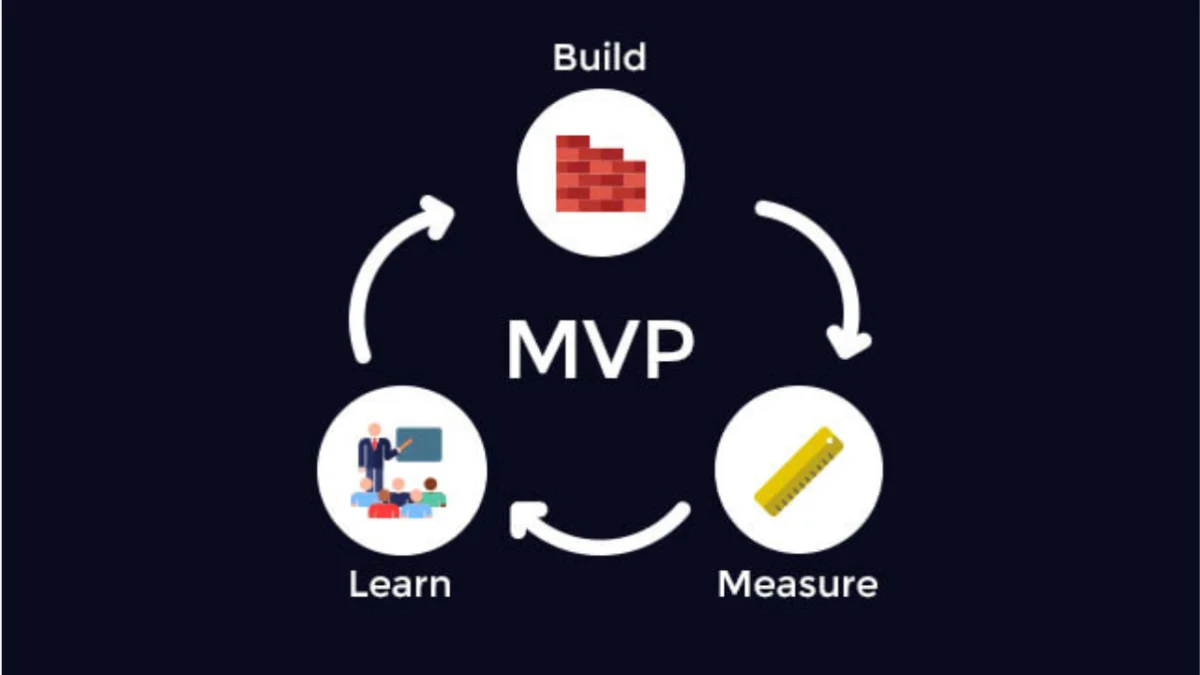
What Is a Startup MVP? A Practical Guide for Beginners
Starting a startup often begins with a big idea. A founder may imagine a complete product with many features, a large customer base, and a strong brand. But building everything at once can be expensive and risky. This is where an MVP becomes important. What is a startup MVP? In simple terms, it is an early version of a product that helps founders test their main idea with real users before investing heavily in the complete product.
An MVP stands for Minimum Viable Product. It contains the essential features needed to solve the main customer problem and collect useful feedback. It does not need to be perfect. Its purpose is to help a startup learn what customers actually want.
What Is a Startup MVP?
A startup MVP is the simplest useful version of a product that can be introduced to a target audience for real-world testing.
The word “minimum” means the product includes only the features that are necessary for the initial test. “Viable” means the product should provide enough value for users to actually try it. “Product” refers to the solution being offered, whether that is software, a physical product, a service, or another type of offering.
For example, imagine a founder wants to create a food delivery application. The final version might include restaurant discovery, live tracking, loyalty rewards, multiple payment methods, personalized recommendations, and many other features.
The founder does not necessarily need all of these features for the first test.
An MVP could simply allow customers to view a small selection of restaurants, place an order, and receive the delivery. If customers use the service and provide positive feedback, the startup can gradually add more features.
This approach allows the founder to test the central idea before spending significant resources on development.
Why Do Startups Build an MVP?
The biggest reason startups build MVPs is to learn from real customers.
Founders can make assumptions about what people want. Market research can provide useful information. Surveys can reveal opinions. But actual customer behavior often provides stronger evidence.
A person may say that they like a product idea but never pay for it. Another person may complain about an existing solution but continue using it because alternatives are inconvenient.
An MVP gives founders an opportunity to observe what customers actually do.
This can help answer important questions. Do users understand the product? Do they find it useful? Which feature matters most? Would they pay for it? What problems appear during real use?
The answers can influence the startup’s next development decisions.
How Does an MVP Reduce Startup Risk?
Building a complete product can require considerable time, money, and effort.
If the product fails to attract customers after launch, much of that investment may be difficult to recover.
An MVP can reduce this risk by allowing the startup to test its assumptions earlier.
Suppose a founder spends one year building a complicated platform before showing it to customers. After launch, users discover that the main feature does not solve their problem.
The company may then need to redesign the product.
With an MVP approach, the founder could have tested the central feature much earlier. If customers rejected the idea, the startup could change direction before investing heavily.
This does not eliminate risk. It simply helps the company make important decisions with better information.
MVP Does Not Mean a Bad Product
One common misunderstanding is that an MVP should be poorly designed or unfinished.
That is not the goal.
An MVP should be simple but useful.
There is a difference between removing unnecessary features and delivering a product that does not work properly.
If a startup launches an unreliable product, customers may lose trust before the company has a chance to improve it.
The initial product should therefore solve a real problem at a basic but acceptable level.
The goal is not to impress customers with hundreds of features. The goal is to provide enough value to learn from their experience.
MVP vs Full Product
An MVP and a final product serve different purposes.
A full product is usually designed to provide a more complete customer experience. It may include advanced features, integrations, automation, detailed customization, and stronger infrastructure.
An MVP focuses on the core problem.
Consider a startup developing a project management platform.
The final platform might include task management, calendars, reporting, team chat, file storage, automation, integrations, and advanced analytics.
The MVP might begin with only task creation, assignment, deadlines, and basic team access.
If customers find those functions valuable, the startup can gradually expand the platform based on actual needs.
This approach prevents founders from spending resources on features that customers may never use.
What Should an MVP Include?
There is no universal list of features that every MVP needs.
The right MVP depends on the product and the problem being solved.
However, an effective MVP usually includes the core functionality required to deliver its main value.
The founder should ask a simple question:
What is the smallest version of this product that can solve the customer’s main problem?
That question can help remove unnecessary complexity.
For a mobile application, the MVP may contain only one important workflow. For a physical product, it could be an early functional prototype. For a service business, the MVP might initially involve manual processes instead of expensive automation.
The form of the MVP can therefore vary significantly.
How Do You Create a Startup MVP?
Creating an MVP starts with understanding the customer problem.
A founder should first identify the people experiencing the problem and understand how they currently deal with it.
Next, the founder should define the core value proposition.
What will the product help customers accomplish?
Once that is clear, unnecessary features can be separated from essential ones.
The next step is creating the simplest practical version of the solution.
The startup can then put that version in front of a small group of relevant users and collect feedback.
This process is more useful when founders remain open to criticism. Feedback is not always positive, but negative feedback can reveal important weaknesses.
The startup can use these findings to improve the product and decide what to build next.
How Does Customer Feedback Improve an MVP?
Customer feedback can reveal problems that founders cannot see from inside the company.
Users may struggle with navigation. They may misunderstand the product’s purpose. They may want a feature that founders considered unimportant. They may also ignore a feature that took weeks to build.
These observations can guide future development.
However, founders should not automatically add every requested feature.
If ten customers request ten different features, adding all of them can make the product complicated.
Instead, founders should look for patterns.
If many customers experience the same problem, it may deserve greater attention.
The goal is to identify which changes create the most value for the largest number of relevant users.
What Are the Different Types of MVPs?
Not every MVP needs to be a fully developed software product. A startup can test an idea in different ways depending on the problem, audience, and available resources.
A landing page MVP is one simple approach. The founder creates a webpage explaining the product and its main benefits. Visitors can sign up, request early access, or show interest. This can help measure demand before the actual product is fully built.
Another approach is a concierge MVP. In this model, the startup provides the service manually instead of building complete automation. The customer receives the intended result, but people behind the scenes handle many of the processes.
For example, a startup might want to build an automated personal finance platform. Instead of developing complex software immediately, the founders could initially provide financial recommendations manually to a small group of customers. Their experience can reveal which parts of the service are genuinely valuable.
A Wizard of Oz MVP looks like a working product to the customer, but some of its operations are performed manually behind the scenes. This allows founders to test the customer experience before investing in complicated technology.
A prototype MVP can also be useful when the startup needs to test how a product looks or functions. It may not contain the complete technology required for mass production, but it can help potential customers understand the concept.
The important point is that an MVP should match the question the startup is trying to answer.
MVP vs Prototype: What Is the Difference?
MVPs and prototypes are related, but they are not exactly the same.
A prototype is usually created to explore or demonstrate how a product might work. It can help founders test design, functionality, or user experience.
An MVP goes one step further by putting a usable version of the solution in front of real customers.
Imagine a founder wants to create a new travel booking application. A prototype might show the screens, buttons, and booking process without actually allowing users to make reservations.
An MVP could allow a small group of users to search for available options and complete a real booking.
The prototype helps test the concept and experience. The MVP helps test whether the product can deliver real value in the market.
Sometimes a prototype comes before an MVP, but the exact process depends on the startup.
What Are the Benefits of an MVP?
One major benefit of an MVP is that it can save time.
Instead of spending months developing every planned feature, the startup can focus on the most important part of the product.
An MVP can also reduce development costs. Fewer features generally require fewer resources during the initial stage.
Another benefit is faster customer learning.
The startup can collect feedback from real users instead of relying entirely on assumptions.
An MVP can also help identify the strongest features of a product. Sometimes founders discover that customers care deeply about one feature while ignoring several others.
This information can influence the product roadmap.
An MVP can also help founders communicate their idea to potential investors or partners. A working product with real user feedback may provide stronger evidence than an idea presented only through a business plan.
How Can an MVP Help Find Product-Market Fit?
Product-market fit means that a product is meeting a strong and meaningful market need.
An MVP can help startups move toward this point by allowing them to test their assumptions.
Suppose a startup launches an MVP and receives hundreds of sign-ups. That may look encouraging.
But sign-ups alone do not prove product-market fit.
The startup should examine what happens afterward.
Do users actually use the product? Do they return? Are they willing to pay? Do they recommend it to others? Do they continue using it after the initial excitement disappears?
These behaviors provide more useful information.
If customers repeatedly use the product because it solves an important problem, the startup may be moving closer to product-market fit.
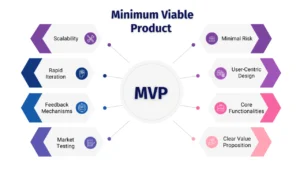
How Do You Know If an MVP Is Successful?
There is no single number that determines whether an MVP has succeeded.
Success depends on what the startup wanted to learn.
If the main question was whether customers would pay for the product, then paying customers may be an important signal.
If the goal was to test a specific feature, user engagement with that feature may matter more.
A startup might measure user retention, conversion rates, customer feedback, repeat purchases, revenue, referrals, or other relevant metrics.
The important thing is to define the learning goal before launching the MVP.
Without a clear goal, founders can collect large amounts of data without understanding what the results actually mean.
What Metrics Should Startups Track?
The right metrics depend on the type of product.
For a subscription service, retention and recurring revenue can be important.
For an online marketplace, founders may look at transactions, repeat purchases, and activity from both buyers and sellers.
For a mobile application, engagement and retention may provide useful information.
For an e-commerce startup, conversion rates, average order value, repeat purchases, and customer acquisition costs may matter.
The startup should avoid tracking every possible number.
Too much data can make decision-making harder.
A small set of meaningful metrics can provide a clearer picture of whether the MVP is moving in the right direction.
What Are Common MVP Mistakes?
One common mistake is trying to build too much.
Founders may become excited about their idea and add feature after feature.
The result can be an expensive product that takes too long to launch.
Another mistake is building an MVP without understanding the customer problem.
If the underlying problem is unclear, even a well-designed MVP may fail to create meaningful value.
Ignoring customer feedback is another major mistake.
Some founders treat the MVP as proof that their original idea is correct. They may reject criticism instead of using it to improve the product.
A better approach is to treat the MVP as an experiment.
The result may confirm the original idea, or it may show that changes are needed.
Should an MVP Be Cheap?
An MVP should be cost-conscious, but cheap does not necessarily mean low quality.
The objective is to avoid unnecessary spending while still delivering a useful experience.
A startup should spend enough to test the important assumption properly.
For example, if poor design makes customers unable to understand the product, the test may fail for the wrong reason.
The founder might conclude that nobody wants the product when the real problem was a confusing user experience.
The right question is not, “How cheaply can we build this?”
A better question is, “What is the most efficient way to test this idea properly?”
How Long Should It Take to Build an MVP?
There is no universal timeline.
Some MVPs can be created within days or weeks. Others may require several months because the product involves complex technology, regulation, hardware, or research.
The timeline should depend on what needs to be tested.
A startup should avoid spending a long period building features that do not contribute to the main learning objective.
If a simple version can answer the most important question, there may be little reason to delay the test.
What Happens After an MVP?
Launching an MVP is not the end of the process.
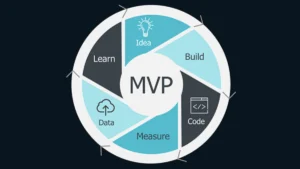
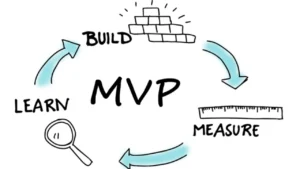
It is the beginning of a learning cycle.
The startup collects user feedback and behavioral data. The founders then decide whether to improve the product, change its direction, add features, remove features, or abandon the idea.
Sometimes the results show that the original concept is not strong enough.
That does not necessarily mean the process was a failure.
Learning early can prevent the startup from wasting significant resources later.
In some cases, founders may pivot.
A pivot means changing an important part of the business strategy while using what the team has learned from the original idea.
For example, a startup may discover that its technology is more valuable to businesses than individual consumers. The founders could change their target market and develop the product accordingly.
When Should a Startup Move Beyond the MVP?
A startup can begin moving beyond the MVP when it has enough evidence that customers value the product and the underlying business opportunity is worth pursuing.
At this stage, the company may invest in better technology, improved design, stronger security, automation, customer support, and additional features.
However, scaling should still be based on evidence.
If customers are leaving quickly or the business cannot make the economics work, adding more features may not solve the underlying problem.
The startup should understand why customers stay, why they leave, and what creates the strongest value before making major investments.
Why Is Simplicity Important in an MVP?
Simplicity makes it easier to learn.
When a product contains dozens of features, it can be difficult to determine which parts customers actually value.
A focused MVP creates a clearer connection between the problem and the proposed solution.
It also makes development easier to manage.
Founders can concentrate their limited resources on the most important customer need instead of spreading their attention across many different features.
Simplicity does not mean the product should feel incomplete.
It means every part of the initial product should have a clear purpose.
How to Build a Startup MVP Step by Step
Building an MVP becomes easier when the process starts with the problem rather than the product.
First, identify the specific problem you want to solve. The problem should matter to a clearly defined group of people. A broad idea such as “make business easier” is difficult to test. A specific problem, such as helping freelancers create invoices faster, gives the startup a clearer starting point.
Next, understand the target customer. Talk to potential users and learn how they currently solve the problem. Their existing behavior can reveal important information. It may also show that the problem is different from what the founder originally assumed.
After that, define the core value of the product. Ask what single outcome the MVP needs to deliver. This helps prevent unnecessary features from entering the first version.
The next step is to choose the simplest way to deliver that value. Sometimes software is necessary. Sometimes a manual service, prototype, landing page, or simple online tool can provide enough evidence.
Once the basic version is ready, release it to a relevant group of users. Avoid trying to reach everyone immediately. A smaller group can provide more useful feedback because the startup can communicate with users closely and understand their experience.
Finally, measure what happens. Look at usage, retention, conversions, payments, feedback, and other metrics connected to the original goal.
How Much Does It Cost to Build an MVP?
There is no fixed price for an MVP.
The cost depends on the product, technology, team, design requirements, industry, and level of complexity.
A simple landing page can cost relatively little. A basic software product may require more development. Hardware, medical technology, financial products, and other complex businesses can require substantially more resources.
The goal should not be to choose the cheapest possible option.
Instead, founders should spend enough to test the most important assumption properly.
A startup can also reduce costs by using existing tools and services instead of building everything from scratch. No-code platforms, third-party software, cloud services, and existing payment systems can sometimes help founders test an idea more efficiently.
How Should You Launch an MVP?
An MVP launch does not need to be a huge public event.
A controlled launch can be more useful for early-stage testing.
The startup can invite a small group of potential customers and observe how they use the product. Founders can communicate directly with these users and identify problems quickly.
This approach also reduces the pressure of trying to make everything perfect before launch.
As the product improves, the company can gradually expand its audience.
The important thing is to launch when the product is useful enough to test the core idea. Waiting indefinitely for perfection can prevent a startup from learning.
What Should Founders Ask MVP Users?
Good questions can produce better feedback.
Instead of asking only, “Did you like the product?” founders can ask users what problem they were trying to solve, what they expected the product to do, where they experienced difficulty, which part was most useful, and what they would change.
It can also be useful to ask whether the product replaced another solution.
Behavior is often more informative than compliments.
A customer saying that a product is “great” is positive, but a customer who repeatedly uses it, pays for it, and recommends it provides stronger evidence of real value.
Can an MVP Fail?
Yes, and that can still be useful.
An MVP may fail to attract enough users, generate revenue, or solve the intended problem.
However, the purpose of an MVP is learning.
If the test shows that customers do not want the product, the startup has discovered an important piece of information before investing heavily.
The problem occurs when founders ignore the results.
A failed MVP should lead to analysis.
Maybe the problem is not important enough. Maybe the target audience is wrong. Perhaps the pricing is unsuitable. The product may also be difficult to use.
Understanding the reason behind poor results is more valuable than simply labeling the MVP a failure.
What Is a Pivot After an MVP?
A pivot happens when a startup changes an important part of its strategy based on what it has learned.
The change could involve the target customer, product, pricing model, distribution method, or problem being addressed.
For example, a startup might initially create a product for individual consumers. After testing the MVP, the founders may discover that businesses are more interested in the same technology.
Instead of abandoning the technology, they could change their target market.
This is one reason MVPs are valuable. They can reveal opportunities that founders did not see at the beginning.
What Happens After a Successful MVP?
A successful MVP does not mean the startup should immediately build every feature on its original roadmap.
The next step is to understand what made the MVP valuable.
The startup can improve reliability, user experience, security, customer support, and performance. It can also add features that solve proven customer needs.
At this stage, the company may begin investing more heavily in marketing and customer acquisition.
The focus gradually shifts from “Does anyone want this?” to “How can we deliver this effectively to more people?”
That transition is important.
Growth without a strong product can increase problems instead of solving them.
How Can an MVP Help Investors Understand a Startup?
An MVP can provide evidence that a startup has moved beyond an idea.
Investors may be interested in customer numbers, revenue, retention, engagement, growth, and other indicators of demand.
A working product can also demonstrate the team’s ability to execute.
However, an MVP alone does not guarantee investment.
Investors still need to evaluate the market, competition, business model, team, financial requirements, and growth potential.
The strongest evidence comes from a combination of a useful product and real customer behavior.
What Is a Startup MVP? Frequently Asked Questions
What is a startup MVP in simple terms?
A startup MVP is the simplest useful version of a product that allows founders to test their main idea with real customers. It focuses on essential functionality rather than a complete set of features.
Why is an MVP important for startups?
An MVP helps startups learn before investing heavily. It can reveal whether customers need the product, which features matter, and what problems need to be fixed.
Is an MVP the final product?
No. An MVP is an early version designed for learning and validation. It can later develop into a more complete product as the startup understands customer needs.
Does an MVP have to be software?
No. An MVP can be a physical product, manual service, prototype, landing page, or software application. Its form depends on what the startup needs to test.
How long does it take to build an MVP?
There is no universal timeline. A simple MVP may take days or weeks, while a technically complex product can take months. The scope should match the main question the startup needs to answer.
How do you know if an MVP is successful?
Success depends on the original goal. Useful signals can include customer retention, payments, repeat usage, conversions, referrals, and strong feedback from the target audience.
What happens if an MVP fails?
A failed MVP can provide valuable information. Founders can study the results, identify the problem, change their approach, or decide that the idea should not receive further investment.
What is the difference between an MVP and a prototype?
A prototype is generally used to explore or demonstrate an idea. An MVP is a usable version released to real users to test whether the proposed solution provides meaningful value.
Should every startup build an MVP?
Not necessarily. The right validation method depends on the product and industry. Some ideas can be tested through prototypes, interviews, landing pages, manual services, or other approaches before a traditional MVP is developed.
Final Thoughts on Startup MVPs
Understanding what is a startup MVP can help entrepreneurs avoid one of the most expensive mistakes in business: building too much before knowing whether customers actually want it.
An MVP creates a practical way to test an idea.
It helps founders move from assumptions to evidence. Instead of guessing what customers need, they can observe real behavior and use that information to improve their decisions.
The best MVP is not necessarily the product with the fewest features. It is the version that provides enough value to users while allowing the startup to learn something important.
A successful process usually starts with a real customer problem. The founder then creates a focused solution, tests it with relevant users, studies the results, and improves the product based on evidence.
Sometimes that process leads to growth.
Sometimes it leads to a pivot.
And sometimes it shows that the idea should be abandoned.
All three outcomes can be valuable because they help founders make better decisions.
For a startup, the goal of an MVP is not perfection. The goal is learning quickly, reducing unnecessary risk, and discovering whether a real business opportunity exists.
| Section | Source | Link |
|---|---|---|
| MVP Definition | Investopedia | Minimum Viable Product explanation |
| Startup Guidance | Y Combinator Library | Startup and MVP resources |
| Entrepreneurship Research | Harvard Business Review | Startup and product validation insights |
| Business Planning | U.S. Small Business Administration (SBA) | Business planning guidance |
| Product Development | Atlassian Agile Coach | MVP and agile product development |
| Startup Learning | Strategyzer Blog | Business model and startup validation |
| Entrepreneurship Data | OECD Entrepreneurship Resources | Research and entrepreneurship reports |