
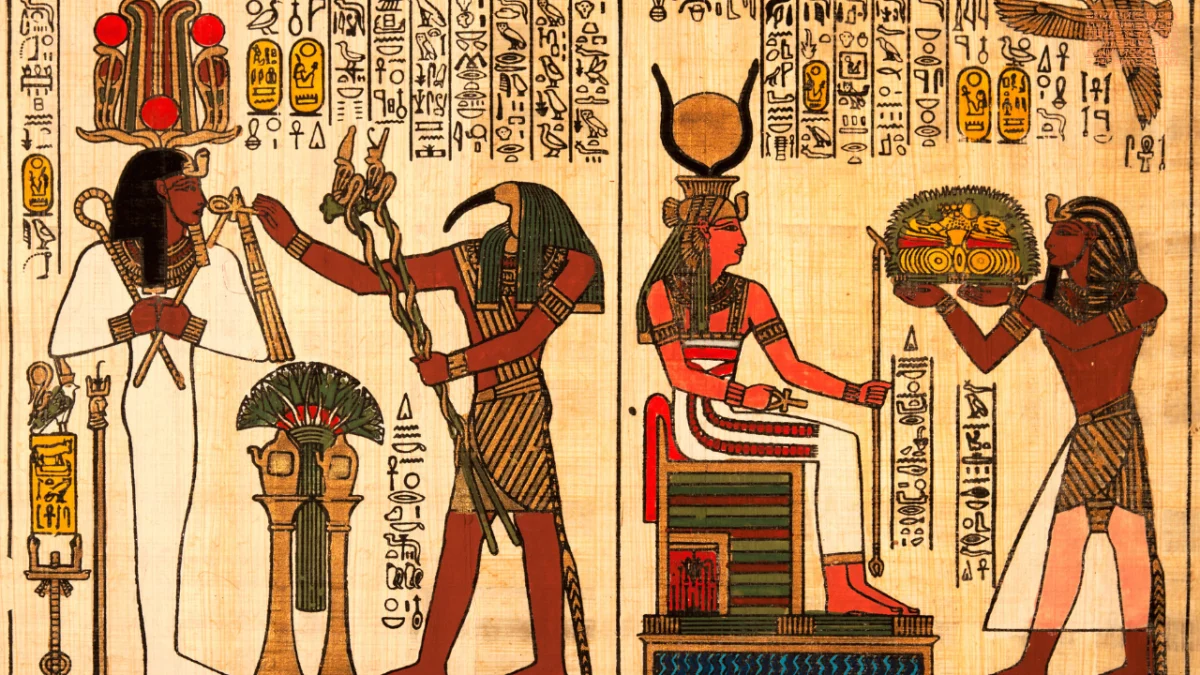
Egyptian Archaeology: Exploring the Secrets of Ancient Egypt
Have you ever wondered how a single piece of pottery can change history? Or how a sealed tomb can reveal the life of a ruler who lived more than 3,000 years ago? That is exactly what makes Egyptian archaeology one of the most exciting fields of science. Every excavation tells a new story. Sometimes it confirms what historians already know. Other times, it completely changes our understanding of ancient Egypt.
Egypt is more than the land of pyramids and mummies. Beneath its deserts lie forgotten cities, hidden temples, royal tombs, and everyday objects that once belonged to ordinary people. These discoveries help archaeologists understand how ancient Egyptians lived, worked, traded, worshipped, and built one of the world’s greatest civilizations.
Today, Egyptian archaeology is entering a new era. Modern tools such as satellite imaging, ground-penetrating radar, 3D scanning, and DNA research are helping scientists uncover sites without causing unnecessary damage. As a result, new discoveries continue to make headlines around the world.
In this guide, you’ll learn what Egyptian archaeology is, why it matters, how archaeologists explore ancient sites, and why every new discovery brings us one step closer to understanding the remarkable history of ancient Egypt.
What Is Egyptian Archaeology?
Egyptian archaeology is the scientific study of ancient Egypt through the physical evidence left behind by its people. Instead of relying only on old stories or written records, archaeologists examine tombs, temples, statues, pottery, jewelry, tools, inscriptions, and even small pieces of wood or fabric.
Every object tells part of a bigger story. A simple clay jar can reveal what people ate. A wall painting can show religious beliefs. A royal tomb can explain how pharaohs prepared for the afterlife.
Unlike the movies, archaeology is not about searching for treasure. It is about understanding history through careful research. Every artifact is recorded, photographed, measured, and studied before it is moved. Even the soil around an object can provide valuable clues about its age and purpose.
Egyptian archaeology covers thousands of years of history. From the first farming communities along the Nile River to the final years of the pharaohs, every period offers new discoveries that help researchers build a clearer picture of the past.
Why Egyptian Archaeology Still Fascinates the World
Few civilizations attract as much attention as ancient Egypt. The reason is simple. Many of its greatest secrets are still buried beneath the sand.
Every year, archaeologists announce discoveries that capture global attention. One excavation may uncover a beautifully painted burial chamber. Another may reveal a forgotten settlement where ordinary families lived thousands of years ago.
These discoveries do more than fill museums. They answer important historical questions. They help experts understand how pyramids were built, how cities were planned, how trade routes worked, and how religious beliefs shaped everyday life.
Many discoveries also challenge old ideas. Archaeologists sometimes find evidence that changes the timeline of important rulers or reveals unknown members of royal families. That is why Egyptian archaeology is always evolving.
A Journey That Began Thousands of Years Ago
People have admired Egypt’s monuments for centuries. Ancient Greek and Roman travelers wrote about the pyramids long before archaeology became a science.
Modern Egyptian archaeology began to grow during the nineteenth century. Researchers started documenting temples, statues, and tombs in greater detail. One of the biggest breakthroughs came when scholars learned how to read Egyptian hieroglyphics.
For the first time, inscriptions carved into temple walls could be understood. These texts revealed the names of kings, details about religious ceremonies, military victories, and daily life in ancient Egypt.
Early excavations were not always careful. Some valuable information was lost because researchers focused mainly on collecting spectacular artifacts.
Today, archaeological standards are very different. Every excavation follows scientific methods designed to protect historical sites and preserve information for future generations.
How Modern Archaeologists Explore Ancient Egypt
The image of an archaeologist holding a brush is still accurate, but modern archaeology involves much more than careful digging.
Before any excavation begins, researchers study satellite images, historical records, geological surveys, and aerial photographs. These tools help identify areas that may contain hidden structures beneath the surface.
Ground-penetrating radar has become one of the most valuable technologies in Egyptian archaeology. It allows scientists to detect underground walls, chambers, and pathways without disturbing the site.
Drones also play an important role. They capture detailed aerial photographs that help researchers map ancient settlements and monitor excavation progress.
Inside laboratories, specialists analyze pottery, bones, textiles, pollen, pigments, and ancient DNA. These scientific tests provide information that cannot be seen during excavation alone.
Thanks to these advances, archaeologists are learning more about ancient Egypt than ever before.
Why Every Discovery Matters
Not every discovery is a golden mask or a royal coffin.
Sometimes, the most important finds are the simplest ones.
A broken cooking pot can reveal eating habits. Animal bones can explain farming practices. Seeds preserved inside a storage jar can show which crops were grown thousands of years ago.
Even footprints preserved in dried mud can help researchers understand how workers built temples or transported heavy stones.
This is why archaeologists carefully document every object they find. History is often reconstructed from hundreds of small discoveries rather than one spectacular treasure.
Each excavation adds another piece to the puzzle.
Together, those pieces tell the story of one of humanity’s greatest civilizations.
Egyptian Archaeology Is Changing Faster Than Ever
The pace of discovery has increased dramatically over the last decade.
New excavation projects continue across Egypt, especially in famous regions such as Giza, Saqqara, Luxor, and the Valley of the Kings. Researchers are uncovering new tombs, burial shafts, temples, workshops, and ancient settlements that remained hidden for centuries.
Technology is making these discoveries faster and more accurate. Artificial intelligence helps researchers analyze large amounts of archaeological data. Three-dimensional models allow fragile monuments to be studied without physical contact. Digital mapping preserves archaeological sites for future generations.
These innovations are transforming Egyptian archaeology from traditional excavation into one of the world’s most advanced scientific research fields.
For historians, every new discovery offers another opportunity to better understand the people who built one of history’s most remarkable civilizations.
Major Archaeological Sites in Egypt
Ancient Egypt left behind thousands of archaeological sites. Some are world-famous. Others are still being explored today. Each site tells a different part of Egypt’s story.
From royal tombs to busy ancient cities, these places help archaeologists understand how people lived thousands of years ago.
Giza Plateau: Home of the Great Pyramids
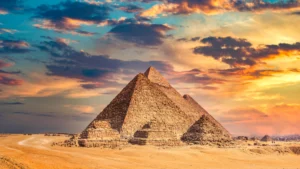
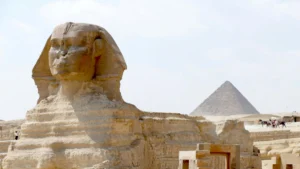
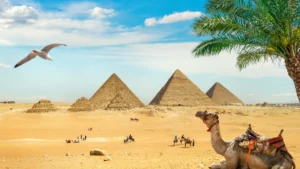
The Giza Plateau is the most famous archaeological site in Egypt. Located near Cairo, it is home to the Great Pyramid of Khufu, the Pyramid of Khafre, the Pyramid of Menkaure, and the Great Sphinx.
For centuries, people believed the pyramids had revealed all their secrets. That is no longer true.
Modern researchers continue to study hidden chambers, underground structures, and construction methods. Advanced scanning technology has helped scientists identify mysterious spaces inside the Great Pyramid without damaging the monument.
Even today, Giza remains one of the world’s most active archaeological research sites.
Valley of the Kings
Hidden among the rocky hills near Luxor, the Valley of the Kings served as the royal burial ground for many pharaohs during Egypt’s New Kingdom.
More than sixty royal tombs have been discovered here. Some belong to famous rulers such as Tutankhamun, Ramesses II, and Seti I.
Although the valley has been explored for decades, archaeologists still believe undiscovered tombs may exist beneath the desert floor.
Every excavation adds new information about royal funerals, burial customs, and life inside ancient Egyptian palaces.
Saqqara: Egypt’s Ancient Cemetery
Saqqara is one of Egypt’s oldest and largest archaeological sites.
It is best known for the Step Pyramid of Djoser, the world’s earliest large stone pyramid.
However, Saqqara is much more than a single pyramid.
The site contains thousands of tombs, burial shafts, temples, statues, animal cemeteries, and colorful wall paintings.
Recent excavations have uncovered sealed coffins, painted sarcophagi, and beautifully preserved burial chambers that remained untouched for centuries.
Many experts believe Saqqara will continue producing major discoveries for years to come.
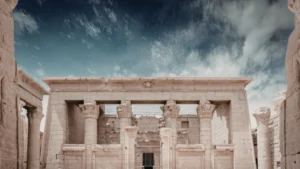
Luxor: The World’s Greatest Open-Air Museum
Many historians describe Luxor as the world’s largest open-air museum.
The city is surrounded by remarkable archaeological sites, including Luxor Temple, Karnak Temple, royal tombs, and ancient villages.
Excavations around Luxor continue almost every year.
Researchers regularly uncover statues, shrines, workshops, and residential areas that reveal how ordinary Egyptians lived alongside priests, craftsmen, and royal officials.
Luxor remains one of the most important centers for Egyptian archaeology.
Karnak Temple Complex
The Karnak Temple Complex is one of the largest religious sites ever built.
Construction continued here for more than 2,000 years, with different pharaohs adding new temples, halls, gateways, and statues.
Walking through Karnak is like reading a history book carved in stone.
Its walls record military victories, religious festivals, and royal ceremonies.
Archaeologists continue restoring damaged sections while searching nearby areas for hidden buildings connected to the temple.
Abu Simbel
The temples of Abu Simbel stand near Egypt’s southern border.
Built during the reign of Ramesses II, they are famous for their enormous statues carved directly into the mountainside.
During the 1960s, engineers moved the entire temple to protect it from rising water after the construction of the Aswan High Dam.
The successful relocation became one of the greatest preservation projects in archaeological history.
Today, Abu Simbel remains a symbol of both ancient engineering and modern conservation.
The Greatest Egyptian Archaeological Discoveries
Egypt has produced some of the most important archaeological discoveries ever made.
Some finds changed history overnight.
Others continue to raise new questions.
Let’s look at the discoveries that shaped our understanding of ancient Egypt.
Tutankhamun’s Tomb
Few discoveries are as famous as the tomb of King Tutankhamun.
When archaeologists opened the burial chamber in 1922, they found thousands of objects almost exactly where ancient workers had placed them.
The golden mask became a worldwide symbol of ancient Egypt.
But the discovery was much bigger than treasure.
The tomb revealed how royal burials were prepared, what objects accompanied a king into the afterlife, and how Egyptian craftsmen created masterpieces thousands of years ago.
Even today, researchers continue studying artifacts from the tomb using modern technology.
The Royal Mummies
Another remarkable achievement came with the discovery of royal mummies.
These preserved remains belong to some of Egypt’s most powerful rulers.
Scientific studies have revealed information about their age, health, diet, injuries, and family relationships.
DNA analysis has even helped researchers solve long-standing questions about royal bloodlines.
Each mummy tells a personal story that written history alone could never explain.
The Lost Golden City
One of the biggest discoveries in recent years was the uncovering of an ancient city near Luxor.
Often called the Lost Golden City, the site revealed houses, workshops, streets, bakeries, and everyday objects.
Unlike royal tombs, this discovery focused on ordinary life.
Researchers learned how workers lived, what they produced, and how communities functioned during one of Egypt’s most powerful periods.
The discovery reminded historians that ancient Egypt was built not only by kings but also by skilled workers, artists, and craftsmen.
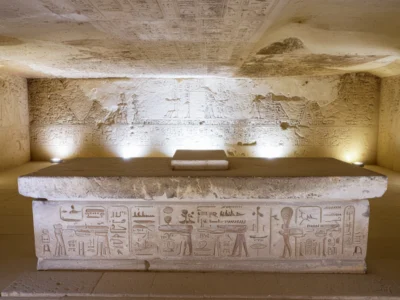
Ancient Egyptian Sorcerer Tomb Discovery
Among the latest discoveries attracting international attention is the Ancient Egyptian Sorcerer Tomb Discovery.
The burial site has generated interest because of its unusual inscriptions, symbolic artwork, and objects linked to ancient Egyptian religious practices.
Although researchers continue studying the evidence, discoveries like this help experts better understand spiritual beliefs, temple rituals, and the important role priests played in Egyptian society.
As scientific analysis continues, archaeologists expect to learn more about the identity of the individual buried inside the tomb and the historical period in which it was built.
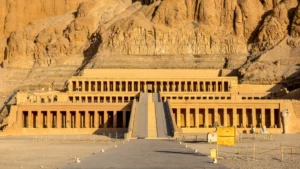
Hidden Tombs Beneath the Sand
Not every discovery begins with visible ruins.
Many important finds start with satellite images or radar scans.
Researchers often detect underground walls before digging even begins.
This modern approach has led to the discovery of hidden burial shafts, underground chambers, and forgotten cemeteries across Egypt.
Technology is helping archaeologists explore sites while protecting fragile monuments from unnecessary damage.
Why New Discoveries Continue Every Year
Many people think archaeologists have already found everything.
The opposite is true.
Experts believe a large part of ancient Egypt still lies underground.
Large sections of the Nile Valley have never been fully excavated.
Changing river channels, shifting desert sands, and growing cities have hidden many archaeological sites for thousands of years.
Every new research project has the potential to uncover another chapter of Egypt’s remarkable history.
As technology improves, archaeologists expect even more discoveries in the years ahead.
Ancient Egyptian Tombs: More Than Just Burial Places
When most people hear the word Egyptian tomb, they think of gold, mummies, and hidden treasures. In reality, ancient tombs were much more than that. They were carefully designed to protect the dead and help them begin what Egyptians believed was an eternal journey into the afterlife.
Every tomb tells a story. Some belonged to powerful pharaohs. Others were built for priests, officials, artists, or wealthy families. The size and design often reflected a person’s position in society.
For archaeologists, these tombs are like time capsules. Many have remained sealed for thousands of years. Inside, researchers find paintings, inscriptions, tools, furniture, jewelry, food offerings, and personal belongings that reveal how ancient Egyptians lived and what they believed.
Why Did Ancient Egyptians Build Tombs?
The ancient Egyptians believed that death was not the end of life.
They believed a person’s spirit continued to live after death. To prepare for that journey, the body had to be protected, and everything needed for the afterlife had to be placed inside the tomb.
That is why many tombs contained clothing, furniture, jewelry, statues, weapons, food, and religious objects.
Some royal tombs even included boats, chariots, and beautifully decorated furniture that reflected the owner’s status during life.
These objects were not placed there for decoration. Egyptians believed they would be needed in the next world.
Different Types of Egyptian Tombs
Egyptian tombs changed over time as the civilization grew.
Mastabas
The earliest tombs were called mastabas.
These rectangular mud-brick structures were built above underground burial chambers.
Although simple in appearance, they introduced many architectural ideas that later appeared in pyramids.
Pyramids
During the Old Kingdom, pyramids became the preferred burial places for kings.
The most famous examples are the pyramids at Giza.
For centuries, they represented the highest achievements of ancient engineering.
Even today, researchers continue studying how these massive structures were designed and built with remarkable precision.
Rock-Cut Tombs
Later pharaohs chose tombs carved directly into the cliffs.
Many of these are located in the Valley of the Kings.
Unlike pyramids, these tombs were hidden beneath the mountains to reduce the risk of robbery.
Their walls are covered with colorful paintings describing the journey to the afterlife.
Many chambers also contain detailed religious texts that guided the deceased through the next world.
Hidden Chambers Still Waiting to Be Found
One of the most exciting parts of Egyptian archaeology is the possibility that many tombs remain undiscovered.
Researchers believe large areas of ancient cemeteries are still buried beneath desert sand.
Instead of digging randomly, archaeologists now use advanced technology.
Ground-penetrating radar can detect underground walls and empty spaces.
Satellite images help identify unusual land patterns.
Three-dimensional scanning creates detailed maps before excavation begins.
These tools make discoveries safer while protecting fragile archaeological sites.
Pharaohs and Their Royal Burials
Ancient Egyptian pharaohs ruled as both kings and religious leaders.
Because of their special status, their burials were carefully planned years before their deaths.
Building a royal tomb often required thousands of workers, skilled craftsmen, artists, and engineers.
Every room served a purpose.
Some stored treasures.
Others contained religious objects.
Many walls were covered with scenes showing the pharaoh meeting the gods or traveling through the afterlife.
These paintings have survived for thousands of years and remain one of the richest sources of information about ancient Egyptian religion.
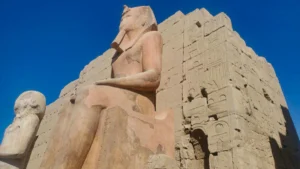
The Tomb of Tutankhamun
No royal burial has attracted more attention than the tomb of Tutankhamun.
Unlike many other royal tombs, much of it remained untouched for centuries.
When archaeologists entered the burial chambers, they found thousands of objects exactly where ancient workers had placed them.
The discovery transformed modern archaeology.
It revealed how royal funerals were organized and how carefully every object was chosen for the king’s journey into the afterlife.
Today, researchers continue studying these artifacts using digital imaging, conservation science, and laboratory testing.
Each new study reveals details that earlier generations could not see.
Why Many Royal Tombs Were Robbed
Although Egyptian builders tried to hide royal burials, many tombs were robbed long ago.
Gold, precious stones, and valuable objects attracted thieves even during ancient times.
Some robbers entered only a few years after a burial.
Others broke into tombs centuries later.
Because of this, many royal burials were discovered almost empty.
However, archaeologists still learn valuable information from damaged tombs.
Wall paintings, inscriptions, architecture, and burial layouts continue to provide important historical evidence.
Egyptian Mummies: Preserving Life for Eternity
Mummies remain one of the most recognizable symbols of ancient Egypt.
For Egyptians, mummification was not simply about preserving a body.
It was an essential religious practice.
They believed the spirit needed a well-preserved body in order to continue its journey after death.
The mummification process could take several weeks.
Specialists carefully prepared the body before wrapping it in layers of linen.
Protective amulets were often placed between the bandages.
Religious ceremonies completed the burial before the coffin was placed inside the tomb.
What Scientists Learn From Mummies
Modern science has completely changed the study of Egyptian mummies.
Researchers no longer unwrap them unless absolutely necessary.
Instead, they use CT scans, X-rays, DNA analysis, and other non-invasive techniques.
These methods reveal a surprising amount of information.
Scientists can estimate a person’s age, identify illnesses, examine injuries, and sometimes even determine family relationships.
Studies of mummies have also improved our understanding of ancient diets, diseases, and medical treatments.
Each examination adds valuable evidence to the growing field of Egyptian archaeology.
Modern Technology Is Changing Egyptian Archaeology
Egyptian archaeology has changed dramatically over the last few decades. In the past, archaeologists relied mostly on maps, digging tools, and careful observation. Today, technology helps researchers explore ancient sites faster and with far less risk of damaging valuable remains.
Many discoveries now begin in a laboratory or on a computer screen instead of in the desert. Scientists can study a site before anyone starts digging. This saves time and helps protect fragile monuments.
Ground-Penetrating Radar
Ground-penetrating radar (GPR) is one of the most useful tools in modern archaeology.
It sends radio waves into the ground and records how they bounce back. If there is a buried wall, chamber, or passage, the signals change.
This allows archaeologists to identify possible structures without disturbing the site.
Many excavation projects now use GPR before removing the first layer of sand.
Satellite Images and Drones
Satellite technology gives researchers a wider view of the landscape.
Ancient roads, canals, and settlements sometimes leave marks that are invisible from the ground but easy to spot from above.
Drones also play an important role.
They capture detailed aerial photos and create accurate 3D maps of archaeological sites. These maps help teams monitor excavation progress and record every stage of the project.
3D Scanning and Digital Models
Some temples and tombs are too fragile for frequent visits.
To protect them, archaeologists use laser scanners to create highly detailed digital models.
These models allow researchers to study inscriptions, artwork, and architectural details without touching the original structure.
Digital archives also help preserve Egypt’s cultural heritage for future generations.
DNA Research and Medical Science
Modern laboratories have opened new doors for Egyptian archaeology.
Scientists can study ancient DNA, examine bones, and analyze mummies using CT scans and other non-invasive methods.
This research helps answer important questions.
It can reveal family relationships, identify diseases, estimate age, and explain how ancient Egyptians lived.
As technology improves, researchers expect even more discoveries from remains that have already been excavated.
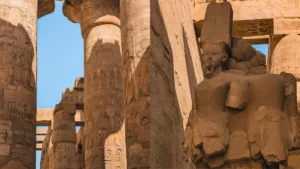
Challenges Facing Egyptian Archaeology
Although archaeology continues to make exciting discoveries, it also faces serious challenges.
Many ancient sites are extremely fragile.
Heat, wind, floods, and changing weather slowly damage monuments that have survived for thousands of years.
Human activity creates additional risks.
Urban growth, illegal excavations, and artifact trafficking threaten many historical sites across Egypt.
Protecting these locations requires cooperation between archaeologists, local communities, and government authorities.
Funding is another challenge.
Large excavation projects require skilled experts, modern equipment, conservation work, and years of research.
Without proper support, many important sites cannot be fully explored or preserved.
The Future of Egyptian Archaeology
The future of Egyptian archaeology looks promising.
Every year, researchers discover new tombs, workshops, temples, and settlements that expand our understanding of ancient Egypt.
Artificial intelligence is beginning to help archaeologists organize excavation records and analyze thousands of images more efficiently.
Machine learning can also identify patterns that might be missed during manual research.
Scientists believe many important discoveries are still waiting beneath the sands of Egypt.
Some experts even suggest that unknown royal tombs may remain hidden near famous archaeological sites.
Future discoveries will not only reveal new artifacts but also answer questions about Egyptian society, religion, architecture, trade, and everyday life.
The story of ancient Egypt is still being written.
Every excavation adds another chapter.
Frequently Asked Questions
What is Egyptian archaeology?
Egyptian archaeology is the scientific study of ancient Egypt through tombs, temples, monuments, artifacts, inscriptions, and other historical remains.
Why is Egyptian archaeology important?
It helps researchers understand one of the world’s oldest civilizations while preserving its history for future generations.
What are the most famous archaeological sites in Egypt?
The Giza Plateau, Valley of the Kings, Saqqara, Luxor, Karnak Temple, and Abu Simbel are among the country’s most important archaeological sites.
How do archaeologists discover hidden tombs?
Researchers use ground-penetrating radar, satellite images, drones, laser scanning, historical records, and careful excavation techniques to locate buried structures.
Are new discoveries still being made?
Yes.
Archaeologists continue to uncover new tombs, temples, workshops, settlements, and artifacts almost every year.
Modern technology has made these discoveries faster and more accurate.
Conclusion
Egyptian archaeology is much more than the search for ancient treasures.
It is the scientific effort to understand how one of history’s greatest civilizations lived, ruled, worshipped, and built monuments that continue to inspire the world.
Every discovery, whether it is a royal tomb, a simple clay pot, or a forgotten village, adds valuable knowledge to the historical record.
Modern technology has transformed archaeology, but patience, careful research, and preservation remain just as important as excavation itself.
As scientists continue exploring Egypt’s deserts and ancient cities, new discoveries will keep reshaping what we know about the past.
The sands of Egypt still hold many secrets, and the next great discovery could be closer than anyone expects.
Recommended High-Authority Sources
- Egyptian Ministry of Tourism and Antiquities
https://egymonuments.gov.eg/ - UNESCO World Heritage Centre – Memphis and its Necropolis
https://whc.unesco.org/ - The British Museum – Ancient Egypt Collection
https://www.britishmuseum.org/ - Smithsonian Institution – Archaeology & Ancient Egypt
https://www.si.edu/ - National Geographic – Archaeology
https://www.nationalgeographic.com/history/ - American Research Center in Egypt (ARCE)
https://www.arce.org/ - The Metropolitan Museum of Art – Ancient Egypt
https://www.metmuseum.org/ - The Griffith Institute, University of Oxford
https://www.griffith.ox.ac.uk/ - The Getty Conservation Institute
https://www.getty.edu/conservation/ - World Monuments Fund
https://www.wmf.org/


[…] ancient civilizations. Readers interested in that side of scientific discovery can explore Egyptian archaeology and the related Ancient Egyptian Sorcerer Tomb Discovery. These topics are different from asteroid […]