
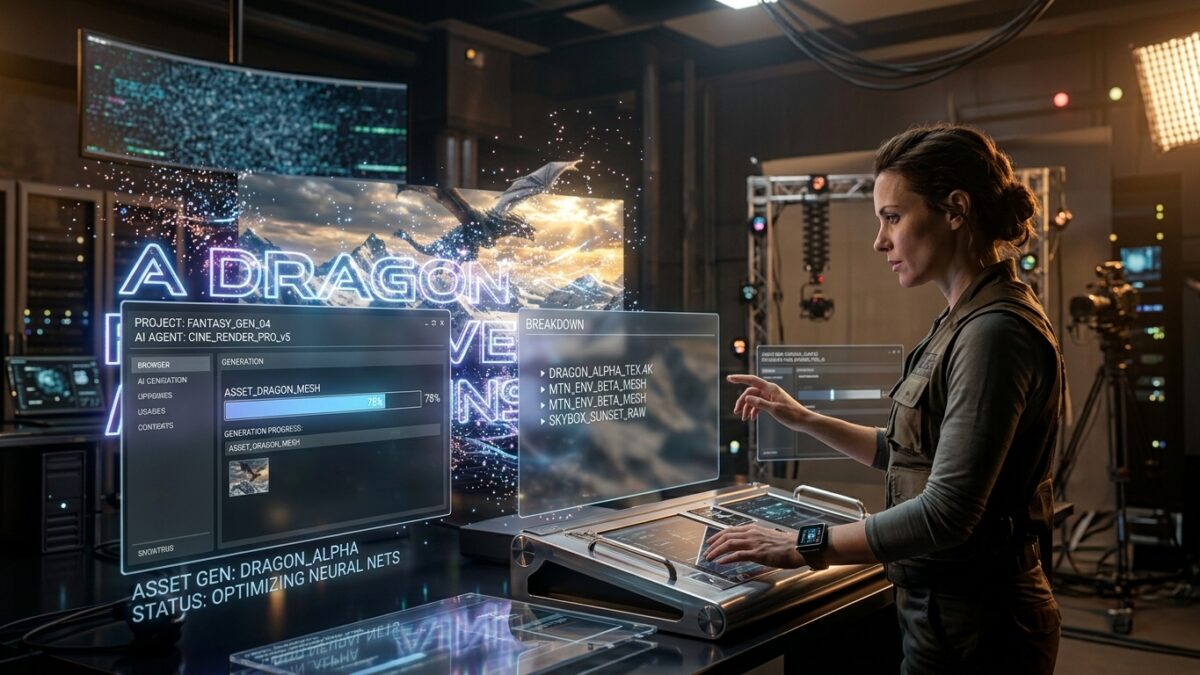
Google Veo 3 is an artificial intelligence model that creates high-definition cinematic video sequences directly from text prompts. You will learn how the system interprets camera directions, fixes common visual consistency errors, and fits into existing creative pipelines. This overview covers its core mechanics, workflow pairings, and practical production demands.
Key Takeaways
- Veo 3 turns natural language prompts into high-definition video clips with realistic motion dynamics.
- Temporal consistency algorithms prevent characters and environments from warping between frames.
- The model accepts cinematic directions such as specific camera pans, zooms, and lighting styles without requiring code.
- High-resolution AI video generation demands significant computational resources and data center energy.
Google DeepMind has expanded what machine learning can accomplish in visual media. Their video generation model produces high levels of cinematic detail and visual realism. The system interprets descriptive prompts so the output matches the creator’s planned scene. Using datasets and neural networks outlined in Google DeepMind’s official research publications, the model renders accurate motion dynamics and sharp frames. Solo creators can produce studio-style sequences without renting camera packages or soundstages.
The model provides practical options for rapid pre-production. Directors, marketing teams, and video creators can prototype storyboards within minutes instead of spending weeks on manual drafting. The system handles cinematic commands like tracking shots, rapid zooms, and lighting shifts. To speed up early assets, you can pair the engine with an AI design agent that generates still artwork while the video model renders movement. Combining these systems gives you control over each phase of production.
Modern production tools increasingly work as multi-stage systems. Text-to-video generation reflects the shifts seen in natural language tools over recent years. Reviewing an AI agent vs chatbot comparison shows how current software handles complex chains of tasks rather than single queries. For instance, you can draft video scripts with research tools, and checking NotebookLM reviews helps you organize source materials before generating footage. Structured research helps you create scripts that translate cleanly into video prompts.
High-resolution video synthesis comes with real infrastructure costs. Generating complex frames through machine learning requires heavy compute clusters and substantial electricity. As studio reliance on these models expands, resolving the AI energy crisis remains an urgent focus for infrastructure engineers and sustainability groups. Creators should stay aware of these physical constraints when planning large-scale rendering runs.

How Google Veo 3 Transforms Digital Media Production
Advanced Understanding of Cinematic Prompts
The system interprets plain language into specific visual controls. When you input a scene description, the software parses camera angles, lens movement, and art direction. Reports from publications like TechCrunch indicate that modern video models incorporate basic physical rules, which prevents background assets from dissolving or distorting. You do not need to write custom code or shader scripts. Plain descriptive sentences are enough to set up the scene.
Achieving Visual Consistency Across Frames
Early video generators struggled with frame-to-frame continuity. Faces altered shape between cuts, and solid objects shifted during basic motions. Veo 3 addresses this with temporal consistency algorithms that maintain spatial tracking across the entire clip. A subject walking past a crowded storefront stays visually stable from beginning to end. That stability makes the footage viable for actual narrative editing.
Enhancing the Creator Economy
Accessible video synthesis lowers the cost of independent media creation. Producing a short film or spec commercial previously required a full crew and location permits. Today, a solo editor can generate high-resolution shots from a desk. As noted on the YouTube Creator Blog, tools that reduce technical barriers help independent creators reach wider audiences with lower upfront expenses.

Frequently Asked Questions
What is Google Veo 3?
Google Veo 3 is an artificial intelligence model built to generate realistic, high-definition video clips from natural text prompts. It interprets descriptions of camera movement, lighting, and subjects to build complete scenes.
How does Veo 3 improve on earlier video models?
Veo 3 uses improved temporal consistency algorithms to prevent the warping and flickering that affected earlier generators. It also supports higher output resolutions and longer uninterrupted takes.
Can beginners use Veo 3 without technical skills?
Yes. The platform relies on natural language descriptions rather than code or 3D animation skills. Users only need clear descriptive sentences specifying subject action, lighting, and camera positions.
Conclusion
Google Veo 3 provides independent creators with tools that were once limited to big-budget studios. Its ability to retain visual consistency across frames and interpret camera movement makes text-to-video practical for actual production workflows. To test the technology, begin by writing a three-shot storyboard with clear camera movements and test how the model interprets your scene transitions.



[…] the production cycle. For instance, understanding the raw capabilities of advanced tools like Veo 3 shows how rapid video generation fits into a larger connected workflow. You can easily read more […]