Is the Strait of Hormuz Closed? Latest Status, Risks, and Global Impact
If you’re asking, “is the Strait of Hormuz closed?” the short answer is no. The strategically important waterway remains open to commercial shipping, although security risks can increase during periods of military tension in the Middle East.
The question has become one of the most searched topics because the Strait of Hormuz is the world’s most important energy chokepoint. Around one-fifth of global petroleum liquids consumption and roughly one-quarter of global seaborne oil trade pass through this narrow passage. Even rumors of a possible closure can send oil prices higher, disrupt financial markets, and raise concerns about inflation.
In this guide, you’ll learn the latest status of the Strait of Hormuz, why it matters to the global economy, what could happen if it were closed, and whether there are realistic alternatives for global shipping.
Is the Strait of Hormuz Closed Right Now?
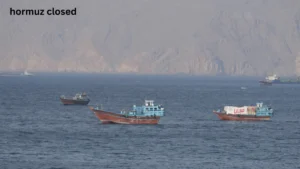
No. The Strait of Hormuz is not closed.
Commercial vessels, including oil tankers and LNG carriers, continue to transit the waterway. However, shipping companies often increase security measures whenever geopolitical tensions rise between Iran, the United States, Israel, or Gulf nations.
Although temporary navigation warnings, military patrols, or localized disruptions can occur, these are very different from a complete closure.
A full shutdown would require preventing thousands of commercial vessels from safely passing through one of the busiest maritime routes in the world. That would have immediate consequences for global energy supplies and international trade.
Quick Answer
| Question | Answer |
|---|---|
| Is the Strait of Hormuz closed? | No |
| Are oil tankers still using it? | Yes |
| Is shipping affected by tensions? | Sometimes |
| Could it close in the future? | Possible, but considered a high-risk scenario |
Why Is Everyone Asking “Is the Strait of Hormuz Closed?”
The search interest usually spikes whenever military conflict or diplomatic tensions escalate in the Middle East.
People begin searching because news headlines often mention:
- Military operations near the Persian Gulf
- Threats to international shipping
- Attacks on commercial vessels
- Rising crude oil prices
- Warnings from governments or shipping companies
Many readers assume these events mean the Strait has already been closed.
In reality, there is a major difference between:
- Higher security risks
- Temporary shipping delays
- Increased insurance costs
- A complete closure of the Strait
Most of the time, commercial traffic continues despite heightened tensions.
What Is the Strait of Hormuz?
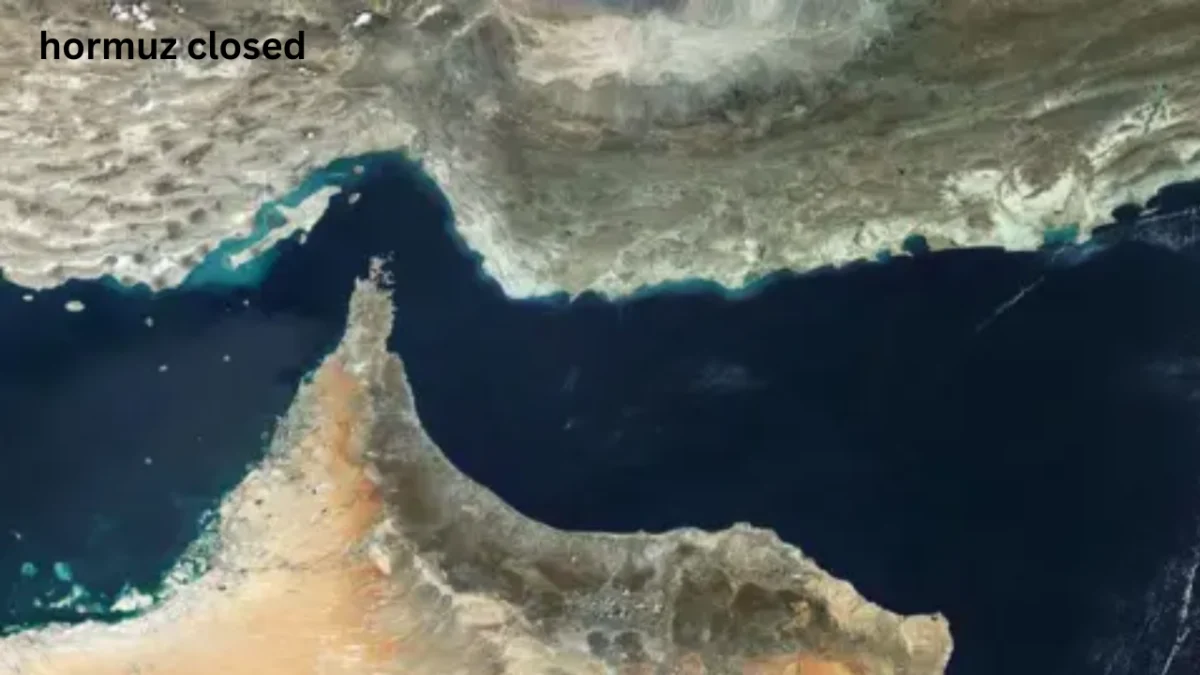
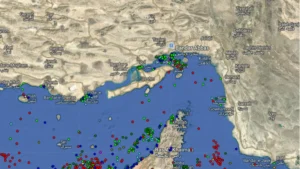
The Strait of Hormuz is a narrow waterway connecting the Persian Gulf to the Gulf of Oman and the Arabian Sea.
It lies between Iran to the north and Oman and the United Arab Emirates to the south.
Although relatively narrow, it serves as the primary export route for several of the world’s largest oil-producing countries.
These include:
- Saudi Arabia
- Iraq
- Kuwait
- Iran
- Qatar
- United Arab Emirates
- Bahrain
Without this maritime passage, much of the Gulf’s oil and liquefied natural gas (LNG) would struggle to reach international markets efficiently.
Why Is the Strait of Hormuz So Important?
The Strait of Hormuz is not important because oil is produced there.
It is important because it is the main gateway through which Gulf energy exports reach the rest of the world.
Every day, millions of barrels of crude oil, refined petroleum products, and LNG move through this narrow shipping corridor.
Its strategic importance comes from three key factors:
- Massive energy exports pass through a very small area.
- Alternative routes cannot handle the same volume.
- Many major economies depend on these shipments.
Even a short disruption can create uncertainty across global financial markets.
Key Facts About the Strait of Hormuz
| Fact | Details |
|---|---|
| Location | Between Iran and Oman/UAE |
| Connects | Persian Gulf to Gulf of Oman |
| Main cargo | Crude oil, petroleum products, LNG |
| Global significance | World’s most important oil chokepoint |
| Major importers | China, India, Japan, South Korea |
How Much Oil Passes Through the Strait of Hormuz?
The scale of energy moving through the Strait is enormous.
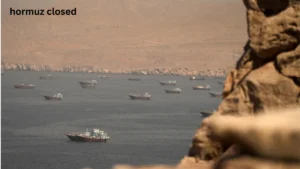
According to the International Energy Agency (IEA), approximately 20 million barrels of crude oil and petroleum products passed through the Strait of Hormuz each day in 2025.
That represents roughly:
- Around 25% of global seaborne oil trade
- Nearly 20% of worldwide petroleum liquids consumption
- Around 80% of shipments are destined for Asian markets
This means any disruption could affect countries far beyond the Middle East.
China, India, Japan, and South Korea are among the largest importers relying on this shipping route.
Why Can’t Ships Simply Use Another Route?
This is one of the biggest misconceptions.
Many people believe oil tankers could simply sail another way.
Unfortunately, it is not that simple.
Several pipeline networks exist outside the Strait.
Saudi Arabia and the United Arab Emirates have invested in alternative export infrastructure.
However, these pipelines can move only a fraction of the oil that normally passes through the Strait of Hormuz.
Even if every available bypass route operated at maximum capacity, millions of barrels per day would still be unable to reach international buyers.
That is why the Strait remains one of the world’s most strategically important waterways.
What Would Happen If the Strait of Hormuz Closed?
Although the Strait is currently open, experts closely monitor the possibility of a temporary or prolonged disruption.
A closure could trigger several immediate consequences:
- Oil prices could rise sharply.
- LNG markets could become volatile.
- Shipping insurance costs would increase.
- Fuel prices could climb worldwide.
- Inflation pressures could return.
- Stock markets could become more volatile.
Countries that rely heavily on imported energy would likely feel the impact first.
However, higher oil prices would eventually affect consumers around the world through transportation, manufacturing, and food costs.
Why Financial Markets React So Quickly
Oil markets are driven by expectations as much as physical supply.
Even if no ships are blocked, traders often react to the possibility of future disruptions.
That means:
- Crude oil prices can jump within hours.
- Energy stocks may rise.
- Airline stocks may fall.
- Shipping costs may increase.
- Investors move toward safer assets.
This explains why headlines about the Strait of Hormuz often influence markets before any actual supply shortage occurs.
Can Iran Legally Close the Strait of Hormuz?
One of the biggest questions behind the search “is the Strait of Hormuz closed” is whether Iran has the legal authority to shut the waterway.
The short answer is no—not unilaterally.
The Strait of Hormuz is an international maritime passage used by ships from around the world. Under international maritime law, commercial vessels generally have the right of transit passage through international straits used for global navigation.
That said, legal rights and geopolitical realities are not always the same.
During periods of conflict, military activity, naval operations, or security incidents can make shipping more dangerous even if the Strait remains legally open.
This is why governments and shipping companies closely monitor every development in the region.
Could Iran Physically Close the Strait?
Closing the Strait completely would be extremely difficult.
Although the shipping lanes are relatively narrow, thousands of commercial vessels use the route every year.
A prolonged closure would likely require:
- Naval blockades
- Sea mines
- Missile attacks
- Drone operations
- Continuous military enforcement
Such actions would almost certainly trigger a major international response because dozens of countries depend on this waterway for their energy supplies.
For this reason, many security experts believe a long-term closure is unlikely, although temporary disruptions remain possible during periods of heightened conflict.
Which Countries Would Be Most Affected?
The impact would extend far beyond the Middle East.
Many of the world’s largest economies rely heavily on oil and LNG shipped through the Strait of Hormuz.
Countries Most Dependent on Hormuz
| Country | Why It Matters |
|---|---|
| China | Largest importer of Gulf oil |
| India | Heavy dependence on Middle Eastern crude |
| Japan | Imports most of its energy |
| South Korea | Major LNG and crude importer |
| Singapore | Important regional refining hub |
European countries could also experience higher energy costs because global oil prices affect every market.
Even countries producing their own oil would likely see fuel prices increase due to the interconnected nature of global energy markets.
How Would a Closure Affect Oil Prices?
Oil prices respond to uncertainty.
Markets do not wait until supplies disappear.
If traders believe several million barrels per day could become unavailable, prices often rise immediately.
A prolonged disruption could lead to:
- Higher crude oil prices
- More expensive gasoline and diesel
- Increased airline fuel costs
- Rising shipping expenses
- Higher manufacturing costs
History has shown that geopolitical events near major oil-producing regions can move global markets within hours.
What About Natural Gas?
Many people focus only on oil.
However, the Strait of Hormuz is also one of the world’s most important routes for Liquefied Natural Gas (LNG).
Qatar is among the world’s largest LNG exporters.
Most of its LNG shipments pass through the Strait before reaching buyers across Asia and Europe.
If shipping were disrupted:
- Natural gas prices could increase.
- Electricity generation costs could rise.
- Industrial production could become more expensive.
- Fertilizer manufacturers could face higher input costs.
This is one reason governments monitor the Strait so closely.
Why Asia Has the Most to Lose
Around 80% of the oil transported through the Strait of Hormuz is shipped to Asian markets.
The biggest buyers include:
- China
- India
- Japan
- South Korea
These countries depend on reliable energy imports to power:
- Factories
- Transportation
- Electricity generation
- Manufacturing
- Heavy industry
A prolonged disruption would force buyers to compete for supplies from other regions, pushing global prices even higher.
Are There Alternative Shipping Routes?
Alternative routes exist.
However, none can fully replace the Strait of Hormuz.
Some Gulf producers use pipelines that bypass the Strait.
Examples include:
- Saudi Arabia’s East-West Pipeline
- UAE pipeline to Fujairah
These systems help reduce risk.
But they cannot transport the same volume of oil that normally passes through Hormuz every day.
That means the Strait remains irreplaceable for global energy trade.
How Would Ordinary People Feel the Impact?
Even people living thousands of miles away could notice the effects.
Higher energy prices eventually spread throughout the economy.
Consumers could pay more for:
- Gasoline
- Diesel
- Airline tickets
- Groceries
- Online deliveries
- Imported goods
- Electricity
Businesses may also experience higher transportation and production costs.
This is why investors, governments, and central banks pay close attention to developments around the Strait of Hormuz.
Can the United States Keep the Strait Open?
The United States maintains a significant naval presence in the Middle East alongside allies.
Its objectives include:
- Protecting commercial shipping
- Supporting freedom of navigation
- Deterring attacks on merchant vessels
- Maintaining stability in global energy markets
However, no military can completely eliminate geopolitical risk.
Even without a full closure, security incidents can cause shipping delays, higher insurance premiums, and increased market volatility.
Common Myths About the Strait of Hormuz
Myth 1: The Strait is already closed.
Reality: Commercial shipping continues, although security conditions can change during regional conflicts.
Myth 2: Oil can easily take another route.
Reality: Existing pipelines can replace only part of the normal shipping volume.
Myth 3: Only Middle Eastern countries would be affected.
Reality: Higher oil prices influence economies around the world.
Myth 4: The United States would not be affected.
Reality: Even though U.S. domestic oil production has increased, American consumers could still face higher fuel prices because oil is traded globally.
Latest Outlook
So, is the Strait of Hormuz closed?
At the time of writing, the answer remains no.
Commercial vessels continue to move through the Strait.
However, the situation remains highly sensitive.
Any escalation involving regional powers could quickly increase shipping risks and energy market volatility.
For that reason, governments, traders, shipping companies, and investors continue to monitor developments closely.